Brand Building Strategies Demystified
Why Brand Building Strategies Determine Who Wins in 2026
Brand building strategies are the long-term, deliberate actions that shape how your market sees, remembers, and trusts your business — before they ever talk to you.
Here’s the short answer if that’s all you need:
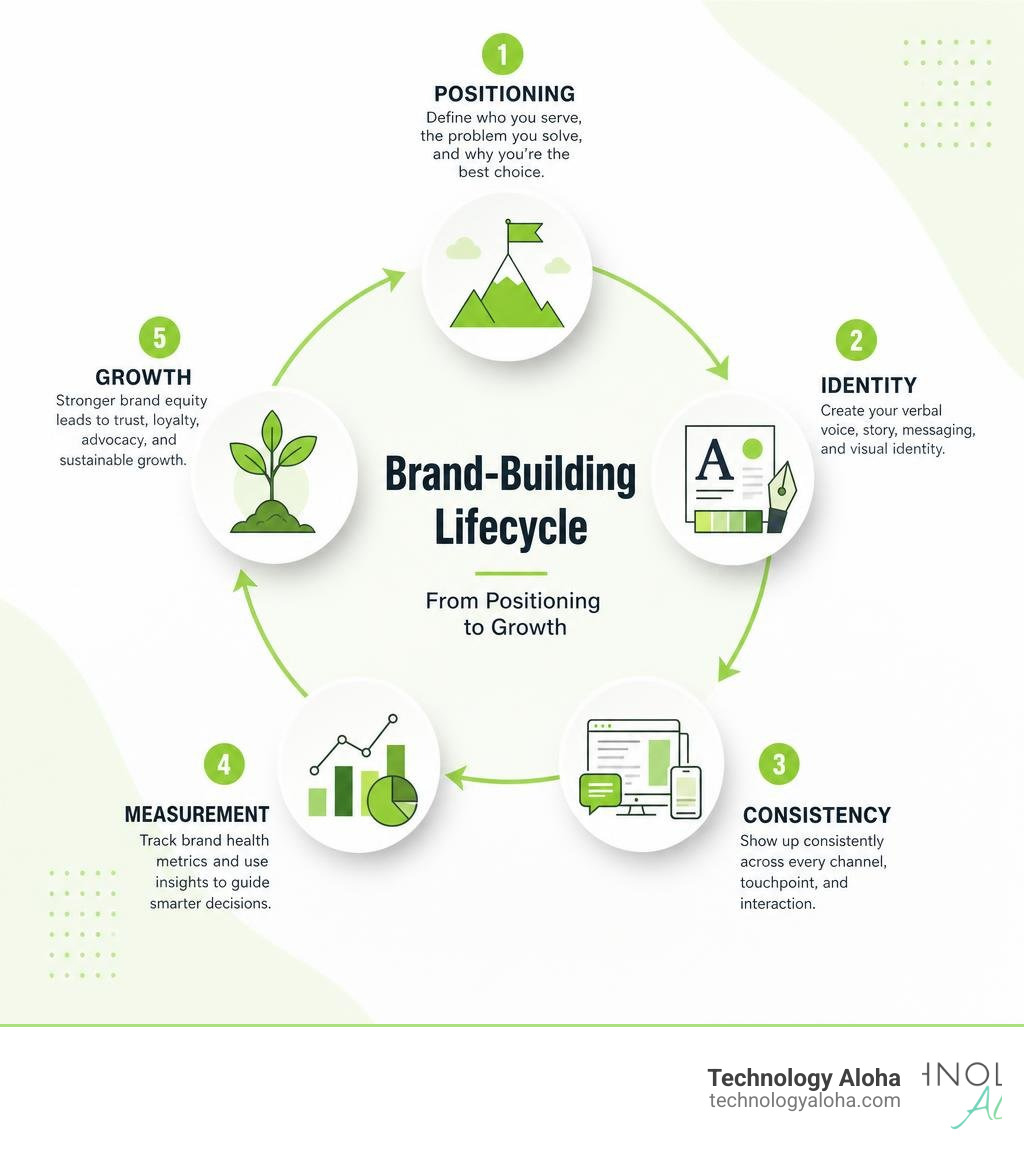
The core brand building strategies, in order of execution:
- Define your positioning — who you’re for, what problem you solve, and why you over the alternative
- Build your identity — verbal (voice, story, messaging) and visual (logo, colors, typography)
- Align with your audience — use research and intent data to stay relevant
- Show up consistently — across every channel, touchpoint, and interaction
- Measure and govern — track brand health metrics and protect consistency as you scale
That’s the skeleton. The rest of this guide puts muscle on those bones.
Now, why does this matter right now?
In 2026, paid media costs keep climbing. AI-generated content floods every channel. And buyers — whether they’re shopping for software or services — are more skeptical than ever.
Over 80% of consumers say they need to trust a brand before they’ll consider buying from it. Yet research shows consumers wouldn’t miss most brands if they disappeared tomorrow. That gap — between brands people trust and brands people tolerate — is exactly where strategy lives.
A weak brand doesn’t just hurt your marketing. It raises your customer acquisition cost, shortens customer relationships, and forces you to compete on price. A strong one does the opposite: it attracts the right clients, commands better margins, and compounds over time.
For small businesses especially, brand isn’t a luxury. It’s the clearest path to competing against bigger budgets.
Glossary for brand building strategies:
- Branding Strategy 101
- Brand Positioning and Differentiation
- Stop Making Style Guides and Start Building Visual Systems
The Core Pillars of Modern Brand Building Strategies
Too many businesses treat brand strategy as an aesthetic exercise — a decorative task delegated to a designer who is handed a blank slate and told to “make it look modern.” This is a fundamental mistake. Strategy is not the paint on the house; it is the blueprint of the foundation.
A true brand strategy is a commercial decision-making framework. It determines who pays more, who stays longer, and who recommends you to others. When executed correctly, companies with a strong brand strategy see a 23% average increase in revenue.
To build a brand that endures, we must treat it as an operating system. For a deep dive into these foundational concepts, explore our guide on Branding Strategy 101 and discover how to align your market presence with long-term growth in Mastering Brand Strategy and Development for Modern Marketing.
Aligning Brand Building Strategies with Business Objectives
A brand strategy that exists in a vacuum is useless. To drive revenue, your brand must be wired directly into your commercial priorities:
- Customer Acquisition Cost (CAC): Strong brands reduce CAC by 20–40% over time. When buyers already know and trust your name, your sales team spends less time introducing your company and more time closing deals.
- Customer Lifetime Value (LTV): Brands that deliver on their promises build deep customer loyalty. This reduces churn and lowers the pressure on acquisition funnels.
- Sales Velocity: Known brands close deals up to 24% faster because the trust hurdle has already been cleared before the first sales call.
To translate your business goals into brand priorities, you need a structured framework. You can download our comprehensive guide, Stop Guessing and Start Branding with This Strategy Framework PDF, to align your team on these commercial metrics.
Defining Vision, Mission, and Core Values
Every high-performing brand is guided by a clear Brand North Star. This is not a collection of poetic phrases to hang on an office wall; it is a set of operational constraints that guide daily business decisions.
- Brand Vision: A forward-looking, aspirational statement that defines what the world looks like when your business succeeds. It answers: Where are we going?
- Brand Mission: A practical, customer-centric statement that outlines what you do, who you do it for, and how you do it. It answers: What do we do every day to make the vision a reality?
- Core Values: The observable, non-negotiable behaviors that govern your team. If your values do not occasionally cost you money or cause you to turn down client opportunities, they are not values — they are marketing copy.
- Unique Selling Proposition (USP): A simple, provable, and highly differentiated statement of value. It explains exactly why a customer should choose you over the obvious alternative.
For a detailed breakdown of how these pieces fit together, read about The Most Important Elements of Your Brand.
Audience Alignment and Competitor Differentiation
You cannot build a brand for everyone. If you attempt to speak to every possible buyer, your messaging will become so diluted that it attracts no one. True differentiation requires sacrifice — choosing exactly who you are not for.
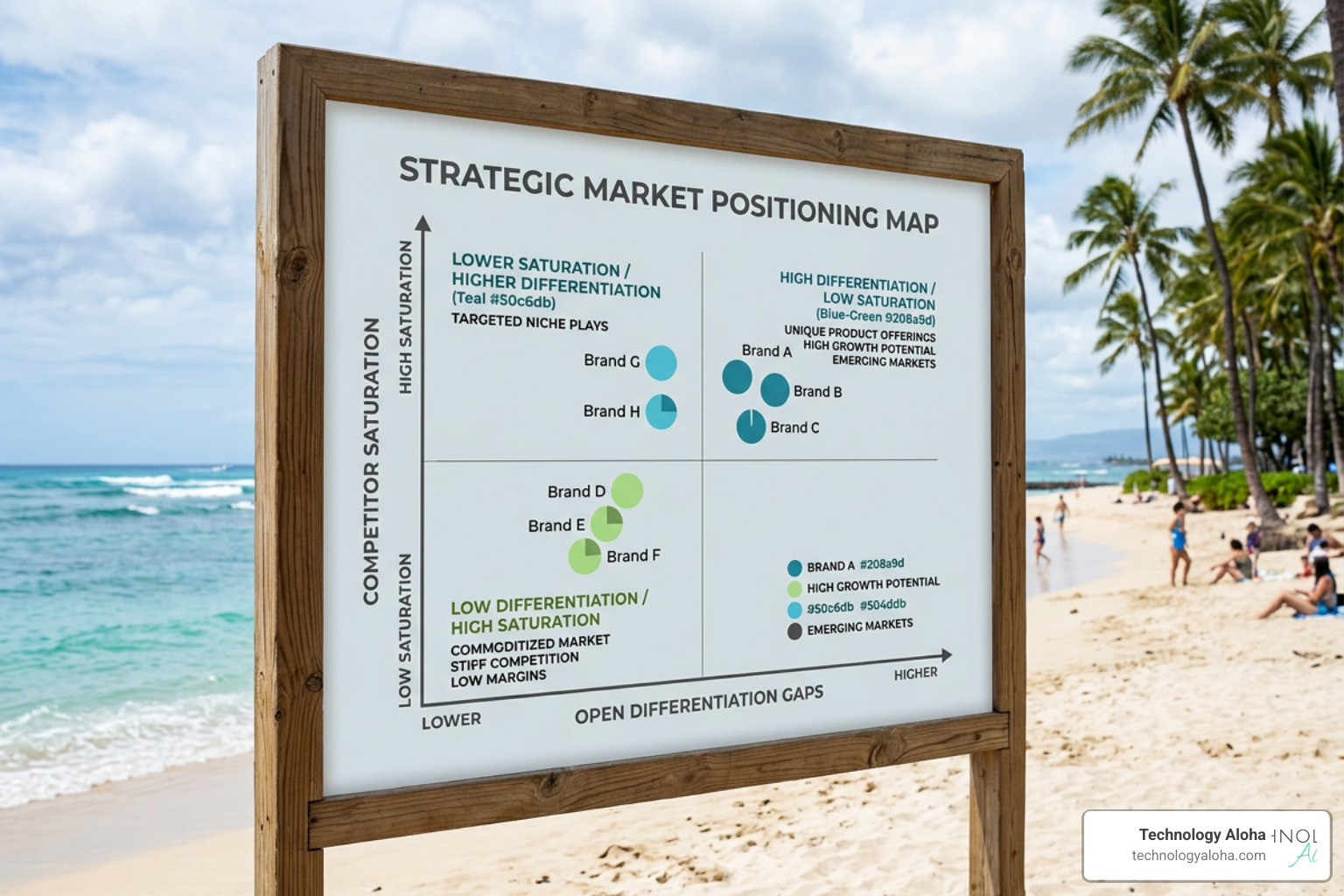
To establish a clear space in the market, we must look at how we position our offerings. Our guide on Brand Positioning and Differentiation details how to identify these open spaces and claim them before your competitors do.
Mining Intent Data and Market Research
Building a brand based on internal assumptions is a dangerous gamble. High-growth firms that conduct systematic research on their target client group grow faster and are significantly more profitable than those that do not.
To build an accurate picture of your audience, we combine two data sources:
- Qualitative Research: Conduct structured, one-on-one interviews with your best customers. Ask them to describe their challenges in their own words. The exact phrasing they use should form the basis of your messaging architecture.
- Intent Data: Analyze search patterns, behavioral signals, and third-party data to understand where your target buyers go when they are looking for solutions.
By mapping these insights, you can build buyer personas that reflect real-world behaviors rather than demographic stereotypes. Learn how to apply these insights in our strategy guide, How to Win Friends and Influence Markets with Brand Positioning and Differentiation.
Positioning Against the Status Quo
Your biggest competitor is rarely another company; it is the status quo — your prospect’s tendency to do nothing at all. To break through this inertia, your brand must establish a clear “wedge” — a single, highly defensible claim that sets you apart.
We evaluate positioning through three distinct strategies:
- Competitive Framing: Directly challenging the category leader by highlighting a fundamental flaw in their approach.
- Niche Specialization: Narrowing your focus to a specific industry, use case, or audience segment. As a specialist, you can command higher fees and close deals faster than generalists.
- Category Creation: Defining an entirely new category of solution, making existing competitors irrelevant by shifting the buyer’s evaluation criteria.
For local and growing enterprises, mastering these dynamics is essential. Read our handbook on Positioning and Branding for Small Business to learn how to claim your market wedge.
Designing the Verbal and Visual Identity
Once your strategy is defined, you can begin to design the assets that express it. Your brand identity is the sensory translation of your strategy — what your business looks, sounds, and feels like across every touchpoint.
Without a clear strategic foundation, visual identity work becomes a series of subjective arguments about personal preferences. To avoid this, we follow a strict process outlined in The DIY Guide to Creating a Brand Identity.
Translating Strategy into Visual Assets
A cohesive visual system is designed to perform under the worst conditions, not just the best. It must look as clean on a mobile screen as it does on a physical storefront.
- Logo Design: Your logo is not your brand; it is a mental shortcut for your brand’s reputation. It should be simple, scalable, and memorable. To ensure your design hits the mark, review our checklist of Answer These Simple Logo Design Questions to Nail Your Branding.
- Color Psychology: Colors trigger immediate emotional responses. For example, deep blues communicate security and trust, while vibrant greens evoke growth and sustainability. Discover how to choose your palette in Your Brand Colors Matter: How to Choose and What They Say About Your Organization.
- Typography: Limit your brand to two or three highly readable fonts. Use a clean, functional sans-serif for body copy to ensure readability on digital screens, paired with a distinct header font that carries your brand’s personality.
Crafting Brand Voice and Narrative
Your verbal identity is just as important as your visual assets. It is the specific way your business speaks, writes, and tells stories.
Your voice remains constant, while your tone adapts to the context of the conversation. To build deep connections with your audience, your messaging must utilize specific, resonant language. Explore how to build these verbal connections in Branding Words: Build Connection and Engagement into Your Brand.
For those looking to master the deep relationship between strategy, design, and market perception, we highly recommend reading The Brand Gap by Marty Neumeier, which remains the definitive resource on bridging the gap between business strategy and creative execution.
Proven Brand-Building Frameworks for 2026
Depending on your business model, target audience, and growth objectives, you will need to select a brand framework that matches your goals.
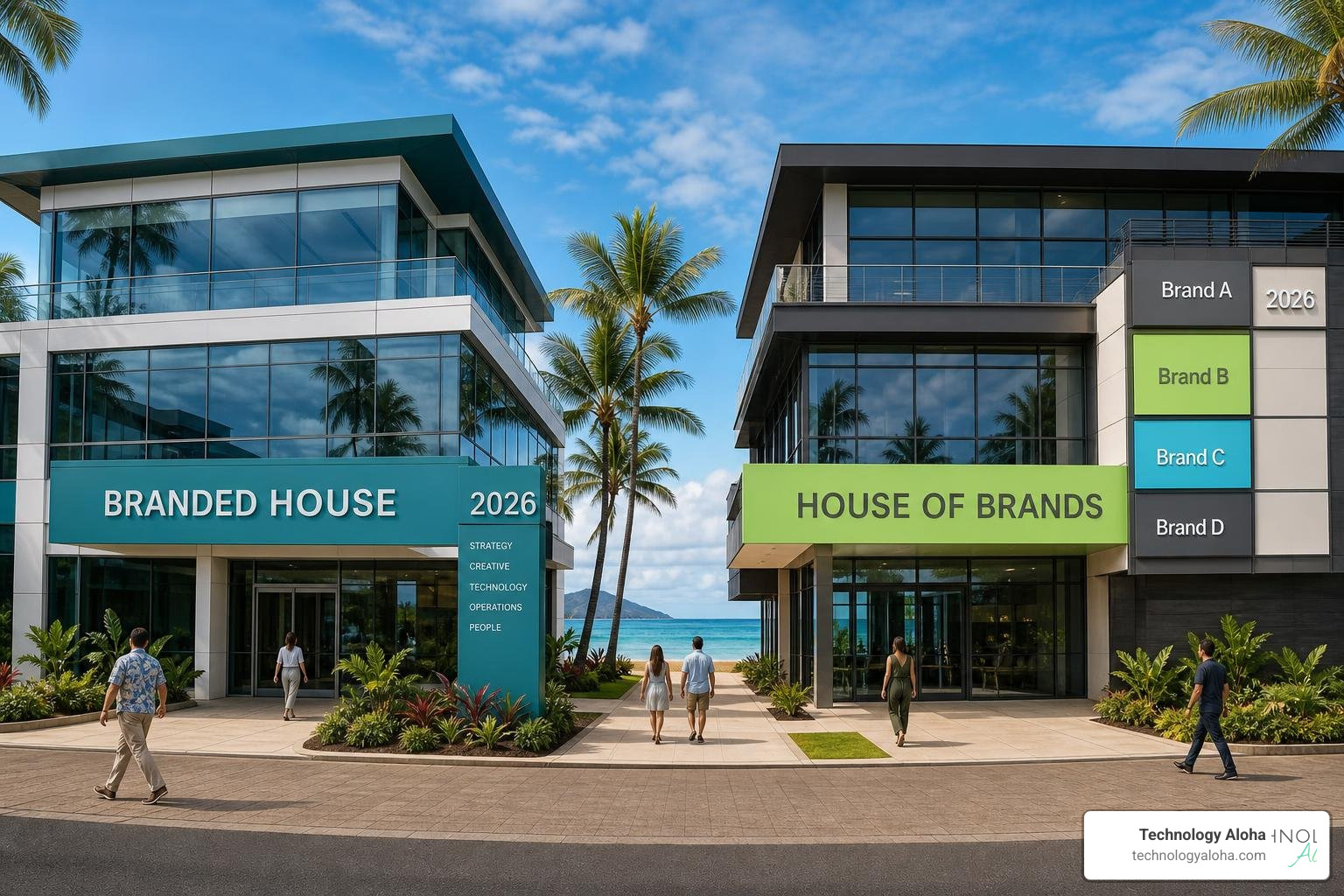
Whether you are executing product branding, corporate branding, or purpose-driven branding, your framework must align your internal culture with external expectations. To build a cohesive corporate identity, download our resource, Corporate Branding Strategy PDF: Building a Brand That Actually Sticks.
Executing Brand Building Strategies Across Channels
In 2026, the customer journey is highly fragmented. A buyer might discover your brand on a niche industry podcast, read a case study on your website, check your reviews on G2, and finally convert on their mobile device.
To maintain trust, your brand must deliver a seamless experience across all platforms. This requires:
- Omnichannel Consistency: Ensuring your messaging, visual assets, and values are identical whether a buyer interacts with you on social media, email, or a mobile app.
- A Robust Content Engine: Building topical authority content clusters that answer real-world buyer questions instead of publishing generic, AI-generated summaries.
- Digital PR: Securing high-quality mentions, guest appearances, and expert citations on trusted third-party platforms to build digital authority.
To ensure your brand remains unified across these digital environments, read our guide on Building a Cohesive Brand Presence from Web to Mobile.
For additional inspiration on modern execution, the Young Urban Project’s analysis of 15 proven brand building strategies offers excellent real-world tactics for growing brands.
B2B vs. B2C—Why Consumer Tactics Fail in Enterprise Contexts
One of the most common mistakes in B2B marketing is importing consumer branding tactics. B2C branding often relies on emotional mass appeal, impulse purchasing, and lifestyle alignment. In contrast, B2B branding is about risk mitigation, consensus building, and professional trust.
| Brand Dynamic | B2C Context | B2B Enterprise Context |
|---|---|---|
| Buying Group | Single consumer (or family unit) | 5–15 buying committee members |
| Sales Cycle | Minutes to days (impulse-driven) | 3–12 months of validation |
| Primary Driver | Emotional connection & lifestyle | Risk reduction, ROI, & efficiency |
| Key Channels | Social media, retail, mass advertising | Peer communities, review sites, analyst reports |
| Risk Level | Low ($50 purchase risk) | High (buyer’s career/budget risk) |
In B2B, buyers are not looking for a lifestyle brand; they are looking for a trusted expert who can help them solve complex operational challenges. For a deeper look at B2B execution, Bland AI’s guide on long-term brand-building strategies provides excellent insights into managing high-volume, professional touchpoints.
Measuring Brand Success and Maintaining Governance
The old saying that “brand is unmeasurable” is no longer true in 2026. While brand equity compounds over years, we can track leading indicators to ensure our strategy is driving business growth.
To build a healthy, sustainable brand, you must implement practical rules for your team. Start with 4 of the Best Insider Branding Tips for Your Small Business to simplify your operational rollout.
Tracking Signal Density and Conversion Lift
To measure the ROI of your brand strategy, we look at both leading (attitudinal) and lagging (behavioral) indicators:
- Share of Search: The volume of search queries for your brand name compared to your direct competitors. This is one of the most reliable leading indicators of market share growth.
- Conversion Lift: Tracking how much your conversion rates improve across your primary marketing funnels after launching your new positioning.
- Signal Density: Measuring how frequently your brand is cited alongside key industry topics across third-party validation nodes, such as review platforms, online communities, and industry publications.
By tracking these metrics, you can connect your creative assets directly to P&L outcomes. Learn how to unlock these benefits in our analysis of 4 Hidden Benefits of Having a Strong Branding Strategy for the New Year.
Scaling with Centralized Governance and AI
As your business grows, maintaining brand consistency across multiple channels and team members becomes a significant challenge. Consistent brand presentation increases revenue by up to 23%, yet manual quality control often fails as campaigns scale.
To protect your brand equity, we recommend:
- A Centralized Brand Style Guide: A living document that outlines your visual rules, voice guidelines, and approved messaging templates. Learn how to build one in Brand Style Guide: Your Key to a Consistent Brand Image.
- Entity Authority Optimization: Structuring your online content so that AI search engines and discovery platforms can easily retrieve, understand, and recommend your brand for relevant queries.
- Centralized Governance Tools: Using automated systems to manage your marketing assets, ensuring your team always uses the most current, approved versions of your logo, colors, and copy.
Frequently Asked Questions about Brand Building
What is the difference between brand strategy and brand identity?
Brand strategy is the underlying business plan that defines who your company is for, why you are different, and how you position your value. Brand identity is the tangible expression of that strategy — the visual system (logo, colors, typography) and verbal assets (voice, messaging) that make your strategy visible.
Strategy must always come first. Without it, your visual identity is just aesthetic guesswork. For more on this, read Small Business Branding and Positioning: Why Your Logo Is Not Your Brand.
How long does it take to see results from brand building?
Brand building is a compounding asset. While tactical marketing campaigns can drive immediate traffic, a comprehensive brand strategy typically takes 6–12 weeks to develop and implement, with measurable shifts in brand equity and organic inbound growth showing up over the following 6–12 months. Over a multi-year horizon, this equity becomes a highly defensible competitive moat.
How do local market dynamics affect brand strategy?
Geographic branding requires deep alignment with local community values and cultural contexts. In unique island markets like Hawaii, and specifically on Maui, successful branding requires a balance of professional expertise and genuine relationship building. Traditional mainland marketing tactics often fail if they ignore local community connections and regional values.
To align your brand with regional expectations, review the SBA Guide to Market Research and Competitive Analysis and study regional branding frameworks such as the [PDF] Made in Hawai’i Brand Development Plan. For practical insights on local business promotion, watch the discussion on Hawai’i Market 101: Insider Tips From Local Brands.
To build a brand that resonates nationally while respecting local roots, professional guidance can help you navigate these regional nuances.
Conclusion
Building a powerful brand is not about chasing temporary trends or designing a pretty logo. It is about making a deliberate set of choices that align your business objectives with your audience’s deepest needs. By combining systematic market research, a clear Brand North Star, and a cohesive visual identity, you can build a brand that commands pricing power, reduces acquisition costs, and drives predictable, long-term growth.
At Technology Aloha, we specialize in helping businesses bridge the gap between strategy and execution. We blend data-driven insights with cohesive branding and high-conversion web design to help your business stand out and scale.
If you are ready to align your brand with your business goals, explore our Top Branding Packages to Make Your Business Pop or contact us directly to learn more about our Technology Aloha Branding Services. Let’s build a brand that actually sticks.