All About Creating a Brand Management Plan
Why Every Organization Needs a Brand Management Plan
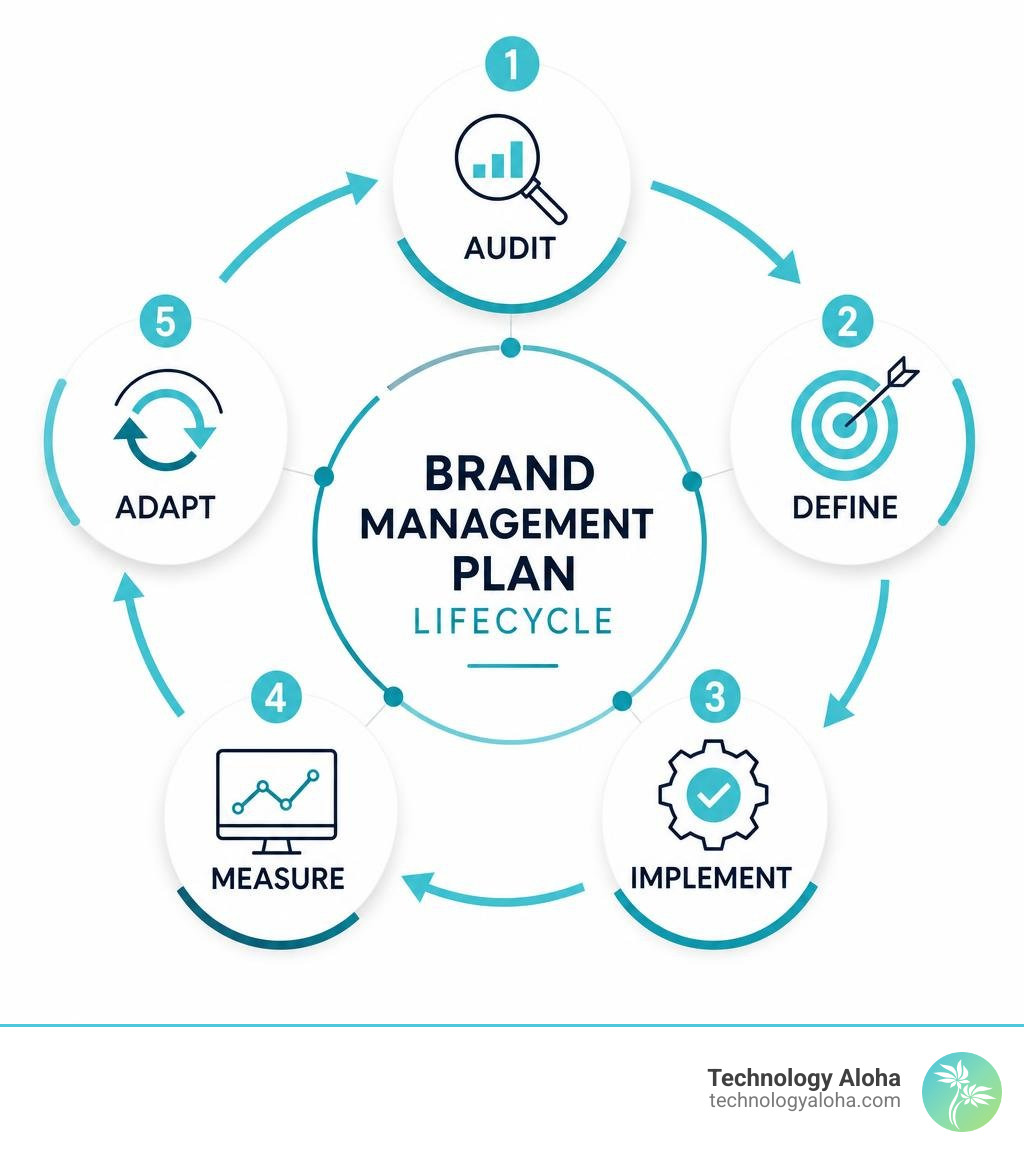
A brand management plan is a structured, written document that defines how your organization will build, protect, and consistently present its brand across every channel and touchpoint—over time.
If you’re short on time, here’s what a brand management plan covers:
- Brand audit – Where your brand stands today
- Core brand elements – Mission, values, positioning, voice, and visual identity
- Brand guidelines – Rules for how the brand is used internally and externally
- Implementation steps – Who does what, and when
- KPIs and metrics – How you measure whether it’s working
- Adaptation process – How you evolve the plan as your organization grows
Most organizations have a brand. Very few actively manage it.
The difference shows up fast. Inconsistent logos. Messaging that shifts depending on who wrote the email. Donor materials that look nothing like the website. These aren’t just aesthetic problems—they erode trust. And trust is what drives donations, volunteers, partnerships, and the people who need your services to actually walk through the door.
The research is clear: consistent brand presentation across platforms can increase revenue by up to 23%. When customers—or donors—feel genuinely connected to an organization, 57% increase their spending and 76% choose that organization over a competitor.
For nonprofit leaders, that’s not abstract. That’s the difference between a fully funded program and a funding gap.
A brand management plan doesn’t require a large marketing team or an enterprise budget. It requires clarity, consistency, and a documented process. That’s what this guide gives you.
Brand management plan terminology:
- A Comprehensive Guide to Brand Activation Plan
- A-Z Guide to Brand Reinforcement Strategies
- Step-by-Step Guide to Brand Strategy Plan
What is a Brand Management Plan?
A brand management plan is your organization’s operational control center. It translates high-level brand concepts into daily, actionable workflows. While creative campaigns focus on capturing short-term attention, brand management focuses on protecting long-term brand equity and establishing clear brand governance.
Without a plan, brand assets drift. Well-meaning team members create their own flyers, select their own fonts, and write copy that misses your core message. A formal plan stops this drift by assigning roles, defining rules, and providing the infrastructure needed to maintain a unified identity.
In academic research, such as A Conceptual Framework for Creating Brand Management Strategies, scholars identify twelve distinct dimensions of a brand. These dimensions range from visual shorthand devices (like logos) to complex relationship-building systems. The framework highlights that a brand acts as a crucial risk reducer for your audience. When people recognize and trust your brand, they feel confident engaging with you.
For a deeper dive into these fundamentals, explore our guide on Branding Strategy 101.
Brand Strategy vs. Brand Plan vs. Brand Management Plan
It is common in the marketing industry to use these terms interchangeably, but doing so creates confusion. Each serves a distinct purpose:
- Brand Strategy: This is your strategic blueprint. It defines the “what” and “why” of your brand. It outlines your target audience, brand positioning, values, and brand architecture. It rarely changes.
- Brand Plan (or Strategic Plan): This is your operational roadmap for business growth. It spans a specific time period (usually one to five years) and details market research, competitive assessments, financial goals, and specific marketing priorities.
- Brand Management Plan: This is the execution framework. It details how you maintain consistency, manage your brand assets, enforce guidelines, and monitor public perception. It is the practical manual your team uses to keep the brand aligned on a daily basis.
To understand how to map out these stages, refer to our Step By Step Guide To Brand Strategy Plan.
How to Conduct a Brand Audit and Research
You cannot manage what you do not measure. Before writing your plan, you must establish a baseline by auditing your current brand perception and assets.
A brand audit evaluates how your organization is currently perceived in the market compared to how you want to be perceived. It also identifies where your visual and written identity has fractured.
Start with a SWOT analysis focused strictly on your brand. What are your brand’s unique strengths? Where are the weaknesses in your current presentation? What market opportunities can your brand leverage, and what external threats (such as competing narratives or misinformation) must you mitigate?
To structure this process, we recommend utilizing the tools found in Bridging Branding and Strategic Planning – A Practical Toolkit, which helps align corporate-level objectives with brand-level execution.

Gathering Data to Inform Your Brand Management Plan
An effective audit relies on real data, not internal assumptions. Gather information from three primary sources:
- Stakeholder Surveys: Survey your board, staff, volunteers, donors, and the public. Ask open-ended questions to discover the emotional associations they have with your organization. Do they describe you the way you intend?
- Focus Groups: Host small, structured discussions with core supporters and beneficiaries. This is especially vital for local community organizations and food banks in Hawaii, where cultural nuances and regional trust are highly localized.
- Asset Audit: Review every active touchpoint. Look at your website, social channels, print brochures, email newsletters, and signage. Note every outdated logo, stretched graphic, and off-brand message.
This research helps you pinpoint the exact gaps in your market positioning. For a complete methodology on defining your unique space in the market, read our guide on Brand Positioning And Differentiation.
Key Steps to Develop and Implement Your Plan
Once your research is complete, you can begin drafting your plan. A successful plan focuses on a small number of high-impact strategic priorities.
Bloated plans often die in binders. Instead, utilizing a framework like the One-Page Brand Plan: Template & Step-by-Step Guide (2026) helps maintain organizational focus through the Power of Threes:
- 3 Core Strategies: Select exactly three strategic areas to focus your brand-building efforts over the next year (e.g., increasing digital donor engagement, unifying regional program messaging, or launching a targeted volunteer recruitment campaign).
- 3 Tactics Per Strategy: Assign exactly three concrete action plans to support each strategy. This results in nine focused projects.
- Clear Ownership and KPIs: Every tactic must have a designated owner, a strict timeline, and a measurable goal.
Step-by-Step Implementation Sequence
To put your plan into action, follow this logical sequence:
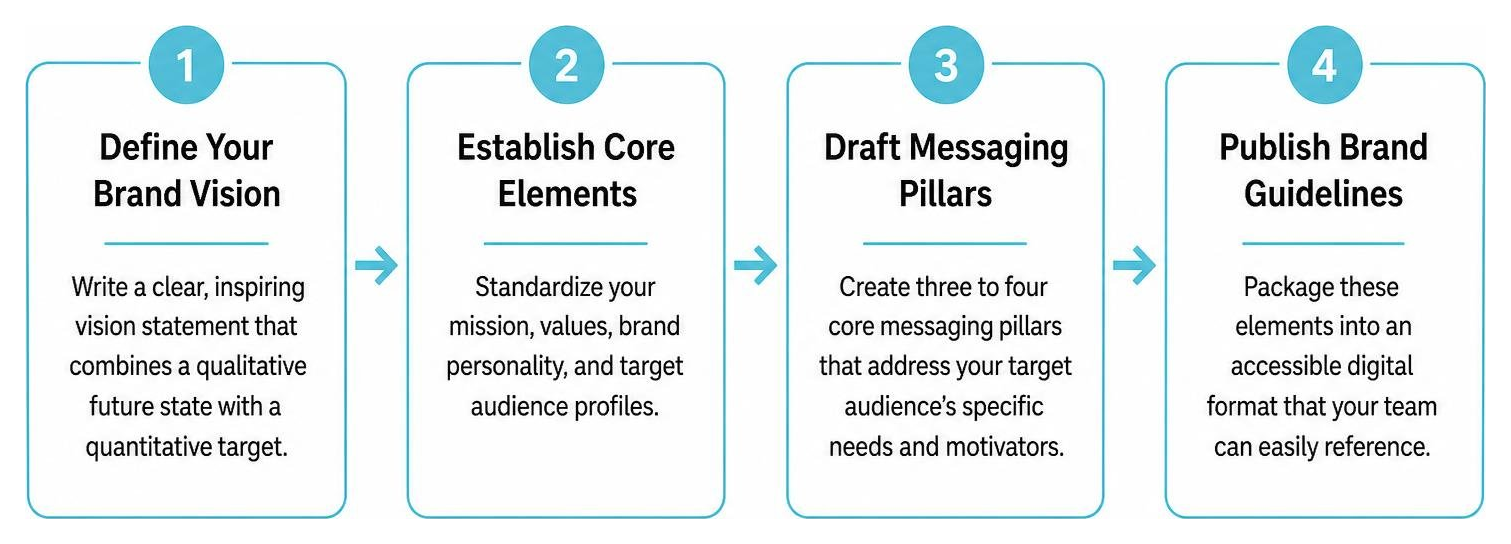
- Define Your Brand Vision: Write a clear, inspiring vision statement that combines a qualitative future state with a quantitative target.
- Establish Core Elements: Standardize your mission, values, brand personality, and target audience profiles.
- Draft Messaging Pillars: Create three to four core messaging pillars that address your target audience’s specific needs and motivators.
- Publish Brand Guidelines: Package these elements into an accessible digital format that your team can easily reference.
Ensuring Brand Consistency Across All Touchpoints
Consistency is the foundation of brand equity. When your visual and written presentation is fractured, your organization appears disorganized, which directly impacts donor confidence.
To maintain control without slowing down your team, implement these three practices:
- Establish Clear Brand Guidelines: Your guidelines should cover both visual standards (logo placement, color codes, typography) and editorial standards (tone of voice, preferred terminology, and messaging pillars). For advice on building a practical system, see our guide: Brand Style Guide Your Key To A Consistent Brand Image.
- Utilize Digital Asset Management (DAM): Stop letting employees search through old email threads for logo files. Centralize all approved assets, templates, and imagery in a single, searchable digital repository.
- Appoint Brand Custodians: Designate specific team members to act as brand custodians. They are responsible for reviewing external communications, answering internal questions, and updating brand assets when necessary.

Measuring Success: Metrics and KPIs
An effective plan requires continuous evaluation. You must track both short-term operational execution and long-term brand health.
We recommend establishing a dual-track measurement framework that separates business performance metrics from brand equity metrics:
| Metric Category | Key Performance Indicator (KPI) | What It Measures |
|---|---|---|
| Business Performance | Total Donations / Funding | Financial health and resource mobilization. |
| Business Performance | Customer / Donor Retention Rate | Long-term engagement and loyalty. |
| Business Performance | Cost Per Acquisition (CPA) | The marketing efficiency of your outreach campaigns. |
| Brand Equity | Net Promoter Score (NPS) | Audience satisfaction and likelihood to recommend your brand. |
| Brand Equity | Brand Awareness & Recall | How easily your target audience recognizes your organization. |
| Brand Equity | Internal Brand Consistency Score | The reduction in off-brand materials and internal asset questions. |
Track these metrics at regular intervals—monthly for business performance, and bi-annually or annually for deeper brand equity measures.
Frequently Asked Questions about Brand Management
What is the difference between brand management and marketing?
Marketing focuses on driving immediate attention, generating short-term demand, and executing campaigns. Brand management is a broader, long-term discipline. It defines the structural foundation that marketing campaigns attach to, managing the overall brand relationship, protecting long-term equity, and ensuring internal and external consistency.
How often should a brand management plan be updated?
Your core brand strategy should remain stable for several years. However, your operational brand management plan should be reviewed and updated annually during your planning cycle. This allows you to adjust your tactics based on changing market dynamics, audience feedback, and performance data while keeping your core brand promise steady.
What tools are best for managing brand consistency?
For small-to-medium organizations and nonprofits, you do not need expensive enterprise software. Focus on accessible tools: a centralized Digital Asset Management (DAM) system (like a shared cloud folder with strict permissions), pre-designed templates (using platforms like Canva with locked brand kits), and digital pattern libraries for your web presence to maintain visual consistency.
Conclusion
A successful brand management plan is not a luxury reserved for multinational corporations. For nonprofits and community organizations in Hawaii, it is an essential operational tool that protects your reputation, streamlines your workflows, and builds the deep public trust required to scale your impact.
At Technology Aloha, we understand that resource-constrained organizations need efficient, scalable systems. We provide specialized, scalable digital infrastructure for food banks and nonprofits, closing the survival gap through virtual donation platforms and high-conversion, user-centered websites. Our deep expertise in food bank operations, award-winning nonprofit design, and relentless focus on reducing donation friction helps increase both donor generosity and recipient access.
Ready to build a resilient brand and digital presence for your organization? Explore our branding services and let us help you design a sustainable framework tailored to your mission.