Why Every Small Business Needs a Branding Strategy
A strong branding strategy is the foundation that separates forgettable businesses from ones that attract loyal customers, charge premium prices, and grow with purpose.
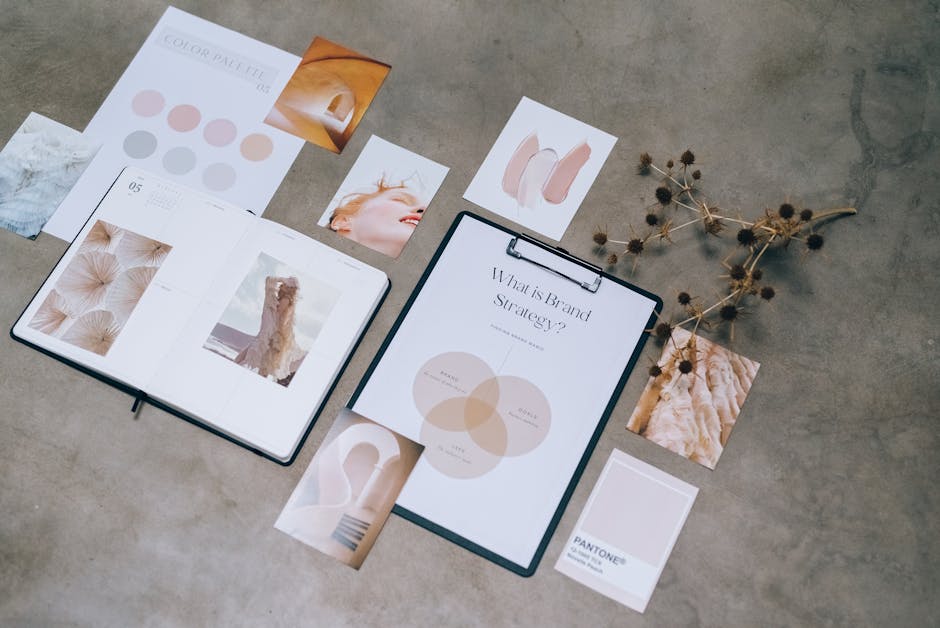
Here’s a quick answer to what a branding strategy is and what it includes:
| Element | What It Means |
|---|---|
| Brand Purpose | Why your business exists beyond making money |
| Target Audience | Who you serve and what they care about |
| Brand Positioning | How you stand out from competitors |
| Brand Voice & Tone | How you communicate with your audience |
| Visual Identity | Logo, colors, typography, and design |
| Brand Story | The narrative that connects you to customers |
| Consistency | Delivering the same message across every channel |
Think of your branding strategy as a long-term plan — not a logo, not a color palette, but the idea behind all of it.
Without it, your business blends into the background. Consider this: consumers say they would not miss 77% of brands if they disappeared tomorrow. That’s a wake-up call for any business owner.
The good news? A clear, intentional branding strategy changes that. It builds trust, creates recognition, and turns casual buyers into loyal advocates.
I’m Jillyn Dillon, founder of Technology Aloha, and I’ve spent over a decade helping small businesses build brand strategies rooted in competitive intelligence and market positioning. In this guide, I’ll walk you through everything you need to develop a branding strategy that actually works for your business.
What is a Branding Strategy and Why Does It Matter?
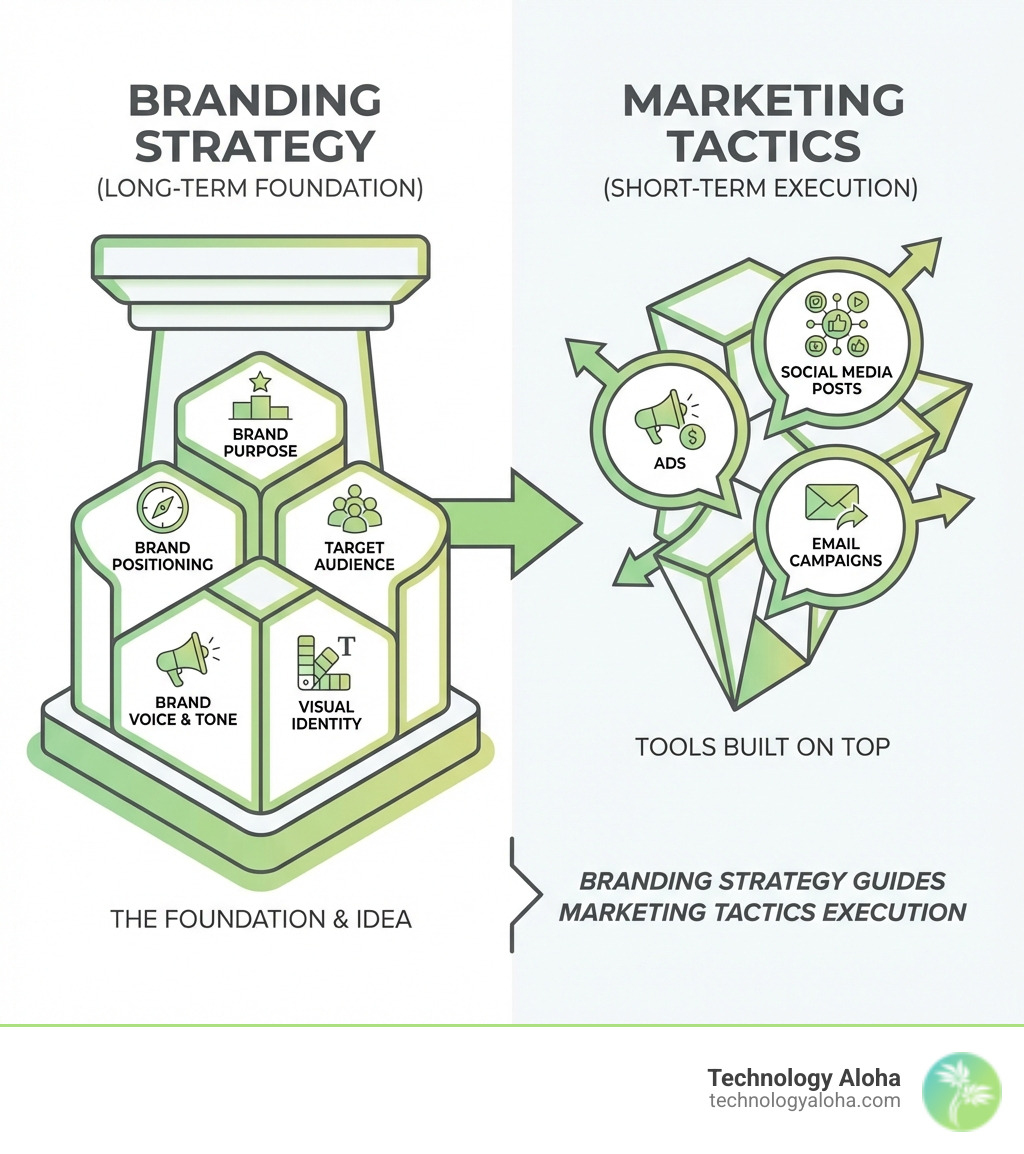
At its simplest, a branding strategy is a long-term plan for the development of a successful brand in order to achieve specific goals. It is the “North Star” that guides how your business is perceived in the marketplace. While many people confuse branding with a logo or a website, those are actually just the “clothes” the brand wears. The strategy is the personality, the values, and the reputation underneath.

Brand vs Marketing
It is easy to get these two confused, but they serve different roles. Marketing is the set of tools, processes, and strategies you use to actively promote your business—think of it as the “ask.” Branding, however, is the “being.” It is the long-term goal of shaping consumer perception. If marketing is a first date, branding is the reason they want a second one.
The Power of Trust
Why does this matter so much? Because over 80% of consumers say they need to trust a brand before they even consider making a purchase. In an era where we are bombarded with ads, trust is the only currency that truly scales. When you have a solid plan, you unlock hidden benefits of a strong branding strategy, such as increased customer loyalty, the ability to charge premium rates, and a more engaged team.
Defining the core of a branding strategy
The core of your strategy is built on three pillars: Identity, Values, and Mission. Without these, you risk falling into that heartbreaking statistic where 77% of 1800 brands could disappear and consumers wouldn’t care. To avoid being a statistic, you must build an emotional connection. People don’t just buy products; they buy into stories and shared values.
Who benefits from strategic branding?
- Personal Brands: Professionals who want to be seen as experts in their field.
- Small Businesses: Local shops and service providers looking to compete with larger corporations.
- Nonprofits: Organizations that need to build deep trust to secure funding and volunteers. We often discuss the importance of branding for your nonprofit because, in impact, your reputation is everything.
- Professional Services: Lawyers, accountants, and consultants whose business relies entirely on their perceived authority.
The Core Elements of an Effective Brand Identity
An effective brand identity is like a well-tailored suit—it should fit perfectly and tell the world exactly who you are before you even speak.
Purpose and Values
Your brand purpose is your “Why.” As Simon Sinek famously noted, people don’t buy what you do; they buy why you do it. Your values are the guardrails for your behavior. If you value “sustainability,” that should be evident in your packaging, your supply chain, and your office culture.
Brand Archetypes
Many successful brands use brand archetypes and Jungian psychology to create a relatable persona. Are you the “Hero” (like Nike), the “Explorer” (like Patagonia), or the “Sage” (like Google)? Identifying your archetype helps ensure your messaging feels human and consistent.
Developing a unique brand voice and tone
Your brand voice is your personality (steady, quirky, authoritative), while your tone is how that personality adapts to different situations.
- Messaging: What are the key points you want to hammer home?
- Consistency: Using the same branding words that build connection across your website, social media, and emails.
- Clarity: We always recommend The Plain English Approach to Business Writing by Edward P. Bailey, Jr. Jargon kills brands; clarity builds them.
The role of visual identity in your branding strategy
Visuals are the first thing a customer notices. This includes your logo, typography, and color palette. Did you know that your brand colors matter and can actually influence how people feel about your business? Blue often signals trust, while red can spark excitement or urgency.
To keep things professional, you need a brand style guide for consistency. This ensures that whether a customer sees your LinkedIn profile or your business card, they recognize it’s you. For a great example of how a professional bio can reinforce a brand, look at Katrina Christakis’ bio page. It’s clean, authoritative, and perfectly aligned with her firm’s identity.
Want to learn more about our branding services?
We can help your business establish a cohesive brand so that your look and messaging is consistent across all platforms.
A Step-by-Step Roadmap for Your Branding Strategy
Building a brand isn’t a weekend project; it’s a journey. Here is the roadmap we use to help our clients navigate the process.
Phase 1: Discovery and Research
You can’t know where you’re going until you know where you stand.
- Market Research: What are the current trends in your industry?
- Competitor Analysis: What are others doing well, and where are they failing?
- SWOT Analysis: Identify your Strengths, Weaknesses, Opportunities, and Threats.
- Niche Identification: We offer expert guidance on how to find a niche for your business because trying to be everything to everyone is a recipe for being nothing to anyone.
Phase 2: Identifying your target audience and positioning
Nearly 60% of consumers think businesses need to understand their needs better. To fix this, you need detailed buyer personas—fictional representations of your ideal customers.
- Unique Selling Proposition (USP): What is the one thing you do better than anyone else?
- Market Gap: Where is there an unmet need you can fill?
- Small Business Advantage: You don’t need a corporate budget to succeed. You can build a big brand for your small business by being more agile and personal than the “big guys.”
Phase 3: Execution across channels
Once the strategy is set, it’s time to launch.
- Website Design: Your site is your 24/7 salesperson. Focus on building your brand on your site through user-centric design.
- Social Media: Since over 90% of marketers utilize social media for brand awareness, you need to be where your audience lives.
- Content Marketing: Share your expertise. Be a teacher, not just a seller.
Impactful Tools and Skills for Building Brand Visibility
Visibility is the “engine” that drives your branding strategy. You could have the best brand in the world, but if nobody sees it, it doesn’t exist.
The Five Levels of Visible Experts
Research from Hinge shows that experts generally fall into five levels of visibility:
- Resident Expert: Known within their firm and by existing clients.
- Local Hero: Known within their local business community.
- Rising Star: Gaining regional or niche-specific recognition.
- Multi-Regional Star: Known across a larger geographic area or industry.
- Global Superstar: The elite experts who command the highest fees and media attention.
As you climb these levels, you benefit from the halo effect, where your personal reputation positively impacts your entire organization.
Impactful Tools
- Public Speaking: Often cited as the most impactful tool for building authority. If you’re nervous, Toastmasters is a fantastic resource for honing your skills.
- Writing a Book: The Visible Expert Revolution highlights how a book remains one of the most powerful “calling cards” for an expert.
- SEO & Email Marketing: These tools ensure you “own” your audience rather than just “renting” them from social media platforms.
Essential skills for brand execution
Execution requires a mix of “hard” and “soft” skills. You need strategic thinking to plan, writing and design skills to create, and networking skills to spread the word. We’ve put together 5 tips on how to create a professional brand as a small business owner to help you master these essentials.
Measuring Success and Refining Your Strategy
How do you know if your branding strategy is actually working? You have to move beyond “gut feelings” and look at the data.
| Metric | Brand Awareness | Brand Equity |
|---|---|---|
| Definition | How many people know you exist | The value of your brand’s reputation |
| KPIs | Website traffic, social reach, mentions | Premium pricing, customer retention, NPS |
| Goal | To be seen | To be preferred |
Key Performance Indicators (KPIs)
- Net Promoter Score (NPS): A simple but powerful metric that asks, “How likely are you to recommend us?” Learn more about NPS here.
- Brand Sentiment: Are people talking about you positively or negatively on social media?
- Customer Lifetime Value (CLV): Strong brands keep customers longer.
Applying universal principles to niche markets
Even luxury brands or tiny niche businesses follow certain “laws” of marketing. Research from the Ehrenberg-Bass Institute of Marketing Science suggests that growth almost always comes from increasing penetration (getting more buyers) rather than just increasing loyalty.
- Double Jeopardy: Small brands have fewer buyers who are also slightly less loyal. To grow, you must focus on being more visible to new people.
- Natural Monopoly: Larger brands tend to attract “light” category buyers, while small brands are often supported by “heavy” enthusiasts.
Avoiding common branding mistakes
The biggest brand killers are inconsistency and inauthenticity. In fact, 95% of Gen Z consumers have lower trust in brands compared to older generations. They can sniff out a “fake” purpose from a mile away.
Always listen to feedback. If your audience tells you your message isn’t landing, it might be time for a change. If you’re considering a shift, make sure you understand what you need to know when rebranding so you don’t lose the equity you’ve already built.
Frequently Asked Questions about Branding Strategy
What is the difference between brand strategy and marketing strategy?
Brand strategy is the “Who” and the “Why”—it’s your identity and long-term reputation. Marketing strategy is the “How” and the “When”—it’s the specific tactics (ads, emails, events) you use to reach people. Brand strategy is the foundation; marketing is the house you build on top of it.
How do I identify my brand’s unique positioning?
Start by looking at the intersection of three things: What you are great at, what your customers desperately need, and what your competitors are ignoring. That “sweet spot” is where your unique positioning lives.
How long does it take to see results from a new brand strategy?
Branding is a marathon, not a sprint. While you might see some immediate “wins” (like better engagement on a new website), a full branding strategy usually takes 6 to 12 months to truly take root in the minds of your target audience.
Conclusion
Developing a branding strategy is one of the most important investments you will ever make in your business. It’s the difference between being a commodity and being a category leader.
At Technology Aloha, we specialize in helping businesses like yours find their voice. By blending data-driven insights with user-centric design, we create cohesive brands that don’t just look pretty—they drive growth. Whether you are in Kahului, HI, or anywhere else in the islands, we are here to help you navigate the complexities of strategic positioning.
Ready to stop blending in and start standing out? Elevate your business with a professional branding strategy today. Let’s build something amazing together.