Why Brand Strategy and Development Decides Who Wins in Competitive Markets
Brand strategy and development is the long-term plan that defines what your business stands for, who it’s for, how it’s different, and how it communicates consistently across every touchpoint.

Here’s the short version:
| Question | What Brand Strategy Answers |
|---|---|
| Why do you exist? | Your purpose beyond making money |
| Who are you for? | Your specific target audience |
| What makes you different? | Your unique market position |
| How do you communicate? | Your voice, tone, and messaging |
| What do you look and feel like? | Your visual and verbal identity |
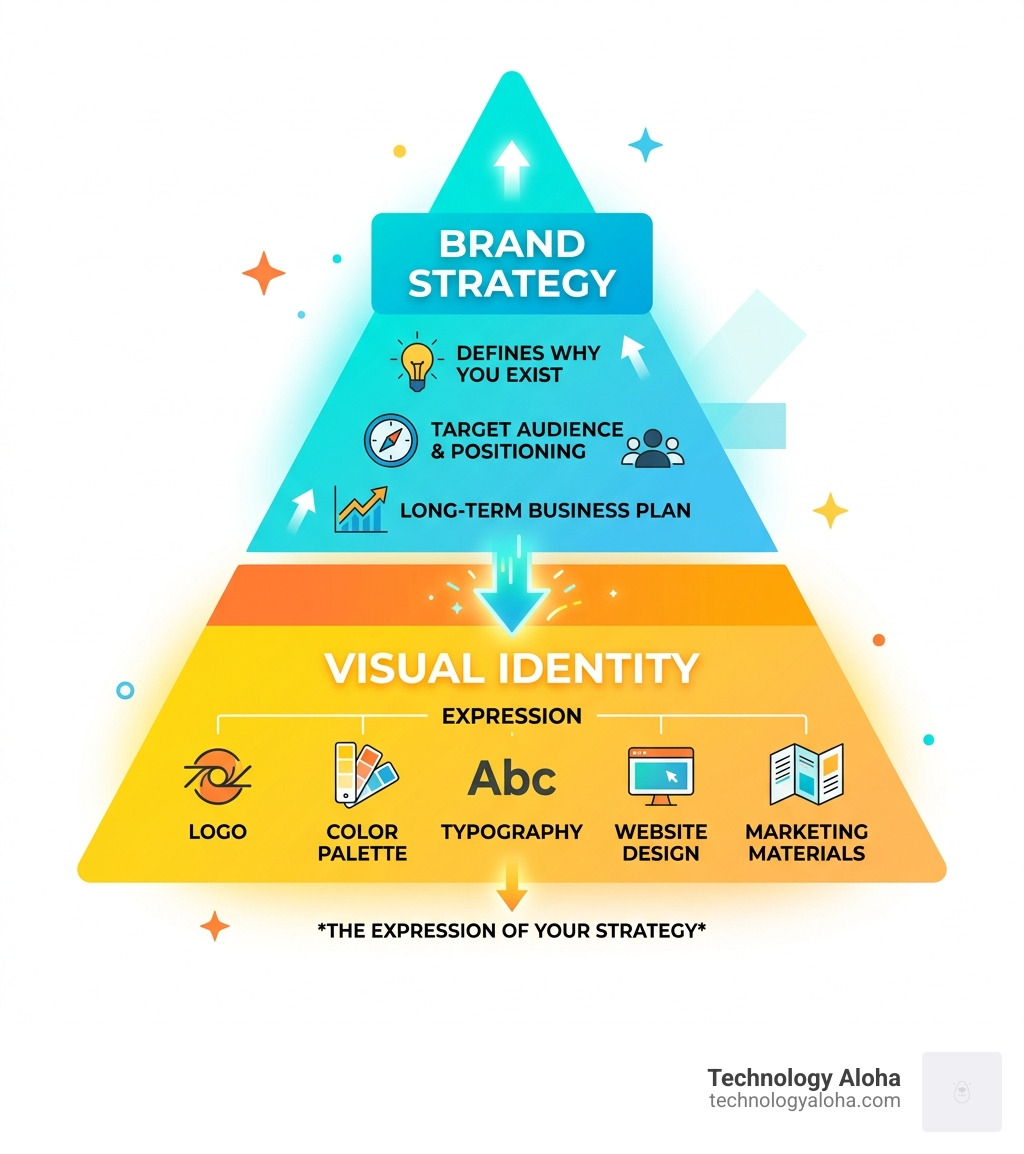
Brand strategy is not your logo, your color palette, or your website. Those are the expression of your strategy — not the strategy itself.
You have seven seconds to make a first impression. That’s it. And yet most small businesses spend months perfecting their logo while never answering the more important question: why should anyone care?
The numbers make the stakes clear. Over 80% of consumers say they need to trust a brand before they’ll consider buying from it. And consumers say they wouldn’t care if 77% of brands disappeared tomorrow. That’s not a design problem. That’s a strategy problem.
A strong brand strategy changes real business outcomes — not just perception:
- Strong brands acquire customers at 20–40% lower cost over time
- Companies with consistent brand presentation see 23% higher revenue
- Brands with high awareness can charge 13% pricing premiums
- Known brands close deals 24% faster
This guide walks you through exactly how to build one — from the ground up.
Basic brand strategy and development terms:
- Brand Positioning And Differentiation
- Branding Strategy 101
- The Most Important Elements Of Your Brand
Defining Brand Strategy and Development in 2026
In 2026, brand strategy and development has moved far beyond the marketing department. It is now a commercial decision framework that dictates how a business operates, hires, and grows. While Branding is often mistaken for the creative “wrapper” around a product, the strategy is the intellectual foundation that prevents expensive reworks and disconnected messaging.
At its core, brand strategy is about closing the “perception gap”—the distance between how you want your business to be seen and how the market actually experiences it. Without a documented Branding Strategy 101 approach, businesses default to reactive tactics, chasing every new social media trend or algorithm shift without a North Star.
For businesses in Hawaii, this strategic layer is even more critical. Organizations like the Hawaii Tourism Authority understand that a brand is a long-term architecture for perception. It’s not just about selling a service; it’s about managing a “gut feeling” that customers have about your company. If that feeling is inconsistent, trust evaporates.
Brand Strategy vs. Visual Identity
One of the most common mistakes in The Secret Sauce Of Branding And Web Development is starting with the logo. Designing a visual identity before the strategy is finalized is like painting a house that hasn’t been built yet—it is pure aesthetic guesswork.
- Brand Strategy is the intangible framework. It is the “why,” the “who,” and the “how” of your business. It is a set of decisions that creates a competitive advantage.
- Visual Identity is the tangible expression. It is the logo, the color palette, the typography, and the imagery.
Strategy must always come first. When you lead with strategy, every design choice—from the weight of a font to the primary brand color—becomes a logical decision rather than a personal preference. This sequential dependency ensures that your brand looks the way it does because of what it means, not just because it looks “nice.”
The Core Elements of a High-Performance Brand
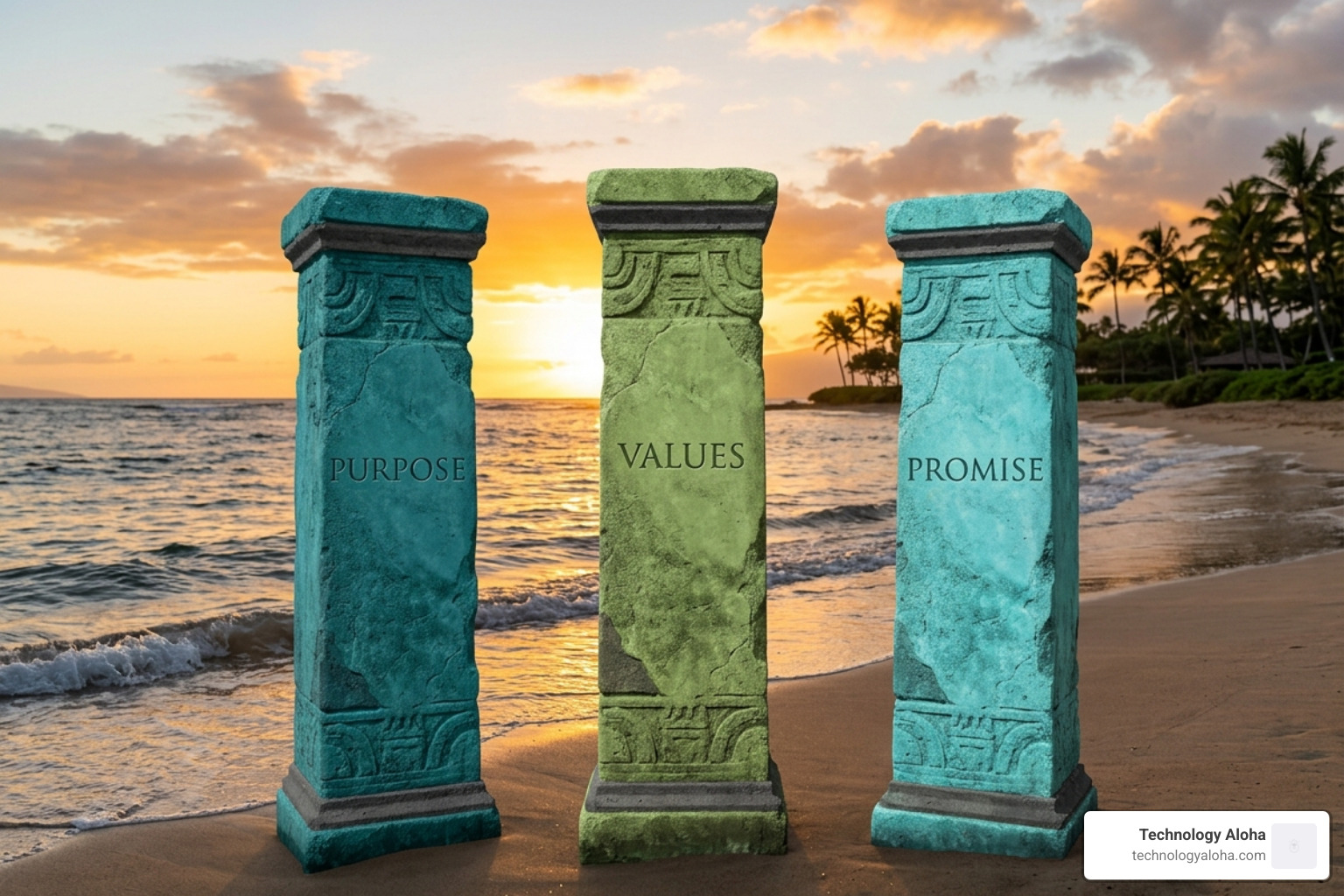
A high-performance brand is built on five core pillars. These elements ensure that your internal team and your external audience are aligned.
1. Brand Purpose Why do you exist beyond making a profit? As Simon Sinek argues in Start with Why, people don’t buy what you do; they buy why you do it. Your purpose should be strategic, inspiring, and enduring. It is the reason your employees show up and the reason customers choose you over a generic competitor.
2. Brand Values Values are not just words on a wall; they are behavioral guidelines. To be effective, values must be observable and actionable. They serve as a decision-making filter for your company. If a growth opportunity conflicts with your core values, the strategy dictates that you say “no.”
3. Brand Promise Your promise is the specific benefit your customers can expect every time they interact with you. It must be provable. If you promise “unmatched speed” but your website takes 10 seconds to load, you are eroding brand equity. Using specific Branding Words Build Connection And Engagement Into Your Brand helps solidify this promise in the minds of your audience.
4. Brand Personality Personality is how your brand would show up if it were a person. Many businesses use brand archetypes (like the Explorer, the Sage, or the Hero) to provide a shared vocabulary for this personality. This ensures that The Most Important Elements Of Your Brand remain consistent even as your team grows.
5. Voice vs. Tone While often used interchangeably, voice and tone serve different purposes in your communication strategy.
| Element | Definition | Consistency | Example |
|---|---|---|---|
| Voice | Your brand’s steady personality. | Never changes. | Professional, witty, or authoritative. |
| Tone | The emotional inflection of your voice. | Adapts to context. | Empathetic in support; excited in a launch. |
A 6-Step Roadmap for Strategic Growth
Building a brand from scratch—or refining an existing one—requires a disciplined process. You cannot brainstorm a strategy in a single afternoon. It takes 8–12 weeks of deep work to move from an audit to a finished playbook.
Step 1: The Brand Audit Before looking forward, you must look at where you are. Audit your current brand expression across all touchpoints: your website, sales materials, and social media. Are you sending mixed signals? Does your internal culture match your external marketing?
Step 2: Market and Competitor Research You cannot position yourself if you don’t know where the “open space” in the market is. Map your competitors. What are they claiming? If everyone is claiming “innovation,” that word has lost its value. Look for the gaps they are ignoring.
Step 3: Audience Personas and Psychographics Go beyond basic demographics like age and location. Focus on psychographics: What are their buying triggers? What are their fears? What problem are they really trying to solve? For many small businesses, Positioning And Branding For Small Business succeeds when you narrow your focus to a specific, underserved segment.
Step 4: Developing the Framework This is where you document your purpose, values, and positioning. If you are looking for a structured approach, Corporate Branding Strategy PDF: Building a Brand That Actually Sticks can help you build a brand that actually sticks. This framework becomes your “internal operating system.”
Step 5: Verbal and Visual Identity Only now do we move into design. Your visual identity should be a direct translation of your strategy. If your strategy is “stability and trust,” your design should reflect that through stable typography and clear layouts. Use 4 Of The Best Insider Branding Tips For Your Small Business to ensure your visual assets are professional and cohesive.
Step 6: Activation and Rollout A brand strategy that lives only in a PDF is useless. You must roll it out internally first. Ensure every employee can describe your company’s difference in the same words. Then, move to external activation across your digital and physical presence.
Building Your Brand Strategy and Development Framework
The most important part of your framework is the brand positioning statement. This is an internal tool—not a tagline—that acts as your North Star for daily decisions.
A standard template looks like this: For [target audience] who [specific need], [brand name] is the [market category] that [key benefit]. Unlike [competitors], we [unique differentiator].
When Small Business Branding And Positioning Why Your Logo Is Not Your Brand, you realize that positioning is about sacrifice. It is about choosing what not to do. If your positioning is broad enough to include everyone, it is too weak to attract anyone. Use 5 Tips For Choosing The Right Branding For Your Small Business to help you commit to a specific direction.
Measuring Brand Strategy and Development Success
How do you know if your strategy is working? You must track both leading and lagging indicators.
- Customer Acquisition Cost (CAC) Reduction: As your brand becomes better known, it should cost less to acquire a new customer because the “trust” work is already done.
- Sales Velocity: Known brands close deals 24% faster. If your sales cycle is shrinking, your brand strategy is doing its job.
- Brand Equity and Recognition: Are people searching for your brand name specifically? A 300% increase in branded searches is a clear sign of growth.
- Employee Retention: There are 4 Hidden Benefits Of Having A Strong Branding Strategy For The New Year, and one of the biggest is lower turnover. A strong employer brand can reduce turnover by 28%.
Frequently Asked Questions about Brand Strategy
How long does it take to develop a brand strategy?
A comprehensive brand strategy and development process typically takes 8–12 weeks. This allows for thorough stakeholder interviews, market research, and the synthesis of insights into a documented framework. While AI tools in 2026 have accelerated the data-gathering phase, the strategic “thinking” and alignment of leadership teams still require time to ensure the foundation is durable for the next 3–5 years.
What is the difference between brand strategy and marketing?
Brand strategy is about the “who” and the “why”—it defines your long-term identity and perception. Marketing is about the “how” and the “when”—it involves the short-term tactics and campaigns used to drive immediate action. Brand strategy sits upstream from marketing; marketing executes the strategy that the brand strategy defines.
When should a business consider rebranding?
You should consider a refresh or a full rebrand if you notice:
- Messaging Confusion: Your sales team and marketing team describe the company differently.
- Audience Drift: Your current customers no longer match your ideal buyer profile.
- Competitive Pressure: You are being commoditized and forced to compete only on price.
- Stalled Growth: Your marketing efforts are yielding diminishing returns because the brand no longer resonates.
Conclusion
At Technology Aloha, we believe that a brand is your most valuable business asset. We provide the data-driven insights and strategic positioning necessary to turn your business into a category leader. By blending cohesive branding with high-conversion designs, we help you move from reactive marketing to intentional, sustainable growth.
Mastering your brand strategy and development is the difference between being a forgettable option and a preferred choice. Whether you are building a new Brand Website Design Business Success foundation or learning How To Build Your Brand On Your Site, the goal remains the same: clarity, consistency, and connection.
Don’t leave your reputation to chance. Start by creating a Brand Style Guide Your Key To A Consistent Brand Image and documenting the strategy that will guide your business for years to come. If you’re ready to align your brand with your business goals, we are here to help you navigate the journey. Mastering your Branding starts with a single, strategic decision to do things on purpose.