Why Brand Identity Web Design Is the Foundation of Online Business Growth
Brand identity web design is the practice of building a website where every visual and structural decision — color, typography, layout, imagery — is driven by a deliberate brand strategy rather than personal preference or trend-chasing.

Here’s the short version of what it means and why it matters:
| Element | What It Means |
|---|---|
| Brand Identity | The visual and verbal system that makes your business recognizable — logo, colors, type, tone |
| Web Design | The structure, layout, and interaction design of your website |
| Combined | A website where every pixel reflects your brand’s values, positioning, and audience |
| The Goal | Build trust, recognition, and conversions — not just a pretty site |
This is not about making things look nice. It’s about making your business work online.
The numbers are hard to ignore. Ninety-four percent of first impressions are design-related. Consistent branding increases revenue by up to 33%. Companies that lead with design outperform market averages by 211% over ten years.
Yet most small business websites are built the other way around — design first, strategy never.
The result? A site that looks fine but doesn’t attract the right clients, doesn’t communicate your value clearly, and doesn’t convert.
Brand identity web design fixes that. It starts with who you are, who you serve, and what makes you different — then builds a digital presence that communicates all of that before a visitor reads a single word.
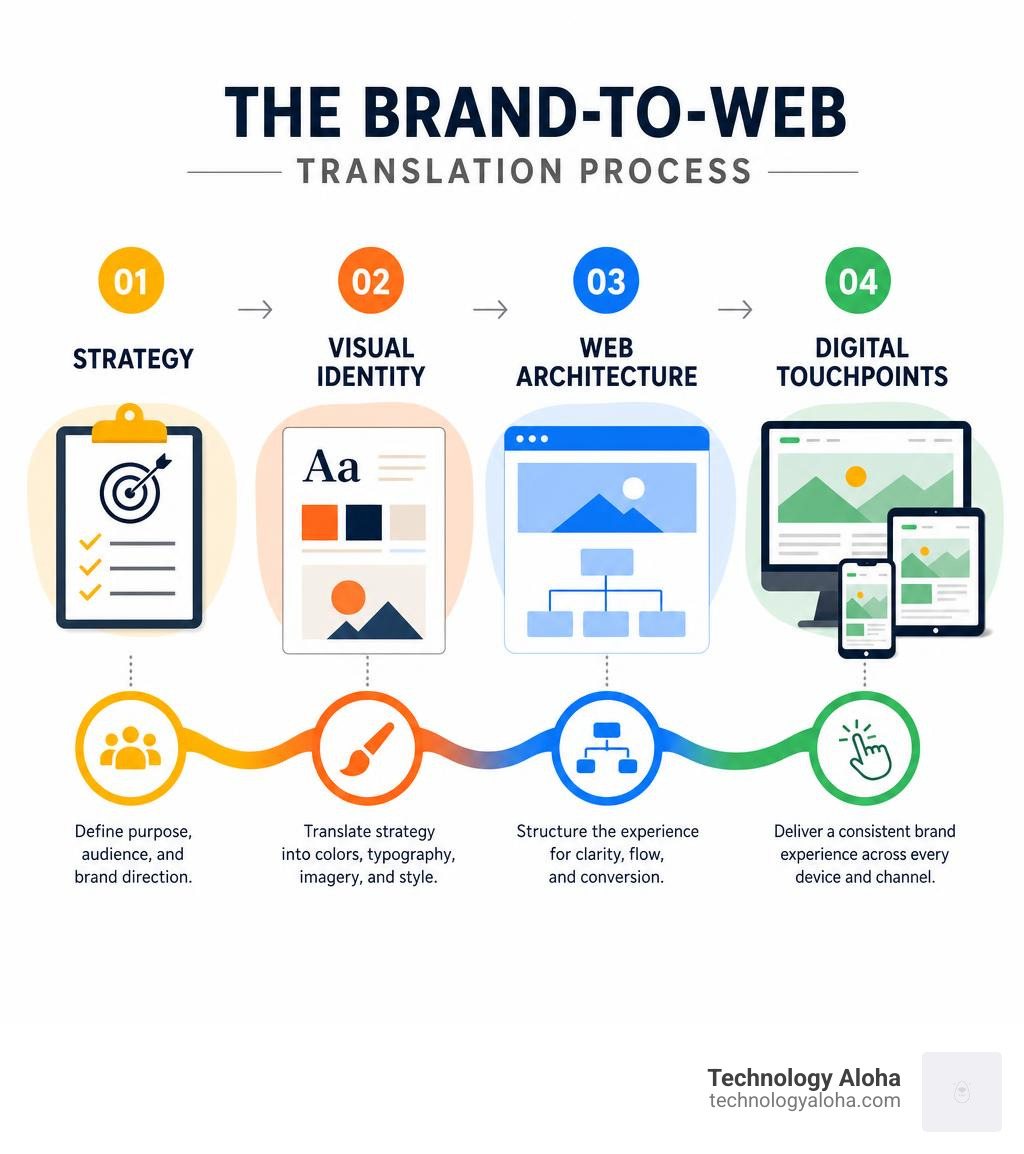
Brand identity web design further reading:
- Conversion-Focused Web Design: The Ultimate Guide
- How to Build a Conversion-Focused Web Design That Actually Works
- Nail Your Launch with This Conversion Checklist
The Strategic Power of Brand Identity Web Design
A website is often the very first interaction a potential customer has with your business. If your site looks like a generic template, your business is perceived as generic. When your visual presentation fails to match the actual quality of your services or products, you lose credibility before the relationship even begins.
Building a digital presence requires a deep understanding of how visual communication influences consumer behavior. Many companies treat their website as a digital brochure—an afterthought wrapped in a generic layout. True digital growth happens when your strategic positioning is baked directly into your online user interface.
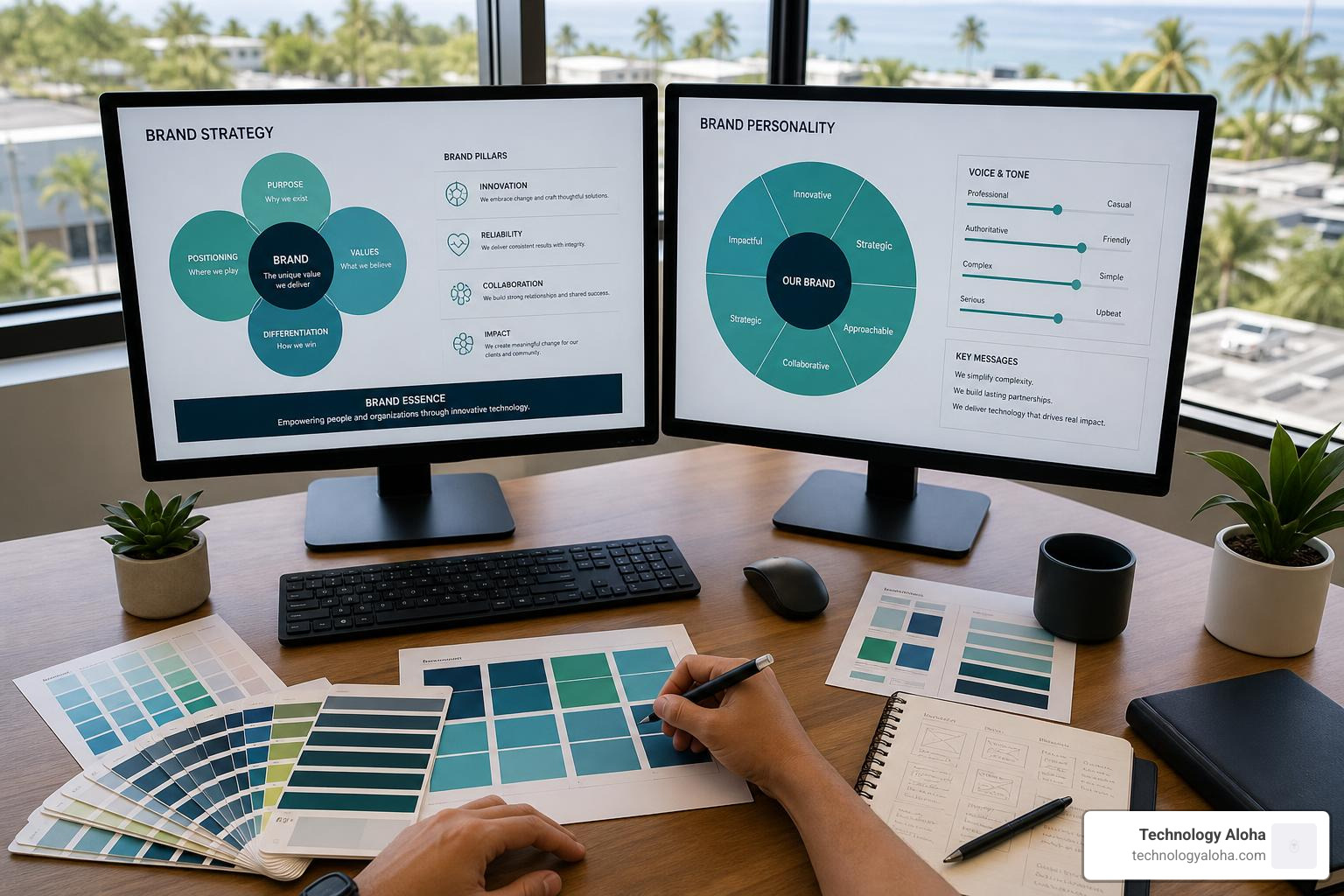
To establish a strong digital presence, you must first understand that a brand is not merely a collection of graphic assets. As we explore in our guide on Small Business Branding and Positioning: Why Your Logo Is Not Your Brand, your brand is the complete gut feeling a customer has about your business. The website is simply the interactive vehicle that delivers, validates, and amplifies that feeling online.
Defining Brand Identity Web Design vs. Standard Web Design
Standard web design focuses primarily on utility, layout, and basic functionality. It answers questions like: Does the menu work? Is the text readable? Can users find the contact page? While these functional elements are essential, they only represent half of the equation.
Brand identity web design elevates functional usability into an immersive visual narrative. It treats web design as brand infrastructure rather than mere surface-level decoration. Every decision—from the specific weight of a sans-serif typeface to the precise timing of an interactive animation—is traced back to your core brand strategy.
By integrating these disciplines, we create a digital environment where the user experience is intrinsically linked to your business’s unique value proposition. This integration is what we refer to as The Secret Sauce of Branding and Web Development, turning a simple web portal into a highly specialized conversion engine.
Why Visual Consistency Drives Trust and Revenue
Inconsistency is a silent killer of digital conversions. When a user experiences visual fragmentation—such as a website that looks completely different from your social media profiles or email newsletters—it triggers subconscious skepticism.
Maintaining a highly consistent visual presentation across all digital platforms can increase top-line revenue by up to 33%. This revenue lift occurs because visual consistency directly reinforces brand recall and builds consumer trust. When your digital touchpoints are unified, your audience feels secure in their decision to engage with your business.
A cohesive design system acts as a trust signal. It shows that your organization is disciplined, professional, and attentive to detail. To understand how these elements translate directly into market performance, explore the relationship between design consistency and Brand Website Design and Business Success.
Translating Strategy and Values into Digital Architecture
Before opening any design software, we must establish a clear strategic foundation. A highly effective brand website is always built from the inside out. This means your target audience, organizational values, and competitive differentiation must dictate the layout and visual structure of the site.
To bypass the typical guesswork that stalls many web projects, we recommend using a structured framework. You can utilize our Stop Guessing and Start Branding with This Strategy Framework PDF to clarify your positioning before diving into visual development.
Core Visual Elements of Brand Identity Web Design
To build a cohesive digital home, we must carefully select and configure the primary building blocks of your visual identity. Each element has a psychological role to play:
- Logo System: A modern website requires a flexible logo system, including primary marks, secondary horizontal layouts, and simplified submarks or favicons that remain legible at small sizes.
- Color Palette: Colors dictate the emotional tone of your website. We use primary colors to establish immediate brand recognition, secondary colors to build depth, and high-contrast accent colors reserved strictly for calls-to-action (CTAs).
- Typography: Fonts communicate your brand’s personality. A bold, clean sans-serif font conveys modern technical precision, while an elegant serif font establishes heritage and trust.
- Imagery and Photography: Custom, authentic imagery that showcases real human experiences will always outperform generic stock photography.
- Textures and Shapes: Geometric shapes, custom borders, and subtle background textures can guide a user’s eye down the page and add visual interest without cluttering the interface.
To dive deeper into how these components function collectively to shape public perception, read our breakdown of The Most Important Elements of Your Brand.
Applying Design Fundamentals for Maximum Impact
An exceptional brand website relies on timeless design principles to organize information and guide user behavior:
- Contrast: Using distinct color values and font weights ensures that critical elements—like your primary value proposition and conversion buttons—stand out immediately.
- Visual Hierarchy: By varying the size, weight, and spacing of your elements, you control the order in which a visitor processes information on a page.
- Unity: All sections of your website must feel like they belong to the same family. A unified layout uses consistent grid patterns, spacing, and button styles.
- Proximity: Grouping related elements together (such as a testimonial quote next to the speaker’s headshot) helps users make immediate cognitive connections.
Mastering these core layout concepts is essential for any business owner looking to build a professional online presence. For a practical, step-by-step approach to managing these visual fundamentals yourself, consult The DIY Guide to Creating a Brand Identity.
Balancing Brand Aesthetics with Usability and Motion
A common pitfall in web design is over-indexing on aesthetics at the expense of usability—or vice versa. An incredibly beautiful website that is slow, confusing, or difficult to navigate will ultimately fail to convert visitors. Conversely, a highly functional but visually bland website will fail to build brand equity or memorable connections.
| Aesthetic-First Design (The Pitfalls) | Usability-First Design (The Pitfalls) | Balanced Brand Identity Web Design (Our Approach) |
|---|---|---|
| Overly complex layouts that confuse users | Sterile, generic templates that lack personality | Intuitive, familiar navigation structures |
| Slow loading times due to massive unoptimized assets | Poor brand recall and low emotional connection | Optimized, custom graphics that load instantly |
| Hidden navigation in the name of “minimalism” | Hard to differentiate from direct competitors | Clear visual hierarchy wrapped in unique brand styling |
Achieving this balance requires keeping user experience (UX) at the forefront of your creative process. To understand how to seamlessly weave your brand’s unique style into a highly functional user journey, read our guide on How to Build Your Brand on Your Site.
Designing for User Experience Without Losing Brand Soul
To design a high-performing website, we must adhere strictly to modern web accessibility standards (such as the Web Content Accessibility Guidelines (WCAG)) and mobile-first responsiveness. This means ensuring high color contrast for readability, implementing proper keyboard navigation, and designing flexible layouts that scale beautifully from a large desktop monitor down to a smartphone screen.
At the same time, we must infuse your brand’s distinct personality into the copy and micro-copy. The words you choose for your buttons, form labels, and error messages are just as important as your visual assets. To learn how to craft a compelling, cohesive voice that resonates with your target audience, explore our insights on Branding Words: Build Connection and Engagement into Your Brand.
The Role of Motion, Micro-interactions, and Multimedia
In 2026, static websites can feel lifeless. Incorporating subtle motion and micro-interactions can elevate your website from a flat page to an engaging, premium experience.
- Micro-interactions: Subtle hover states on buttons, smooth form validation animations, and gentle transitions when opening menus provide immediate visual feedback and make the site feel responsive and polished.
- Video and Multimedia: Using background video loops or interactive product showcases can tell a complex story in seconds. However, these assets must be highly optimized to prevent performance lag.
- Sound Design: While rare, some immersive brand microsites utilize highly curated ambient sounds to deepen emotional engagement. This must always be self-initiated or easily muted to avoid frustrating the user.
When implemented with restraint, motion and multimedia reinforce your brand’s narrative. When overdone, they distract users and slow down page speeds. For a deeper look at integrating interactive elements into your broader marketing mix, read about Mastering Brand Strategy and Development for Modern Marketing.
Scaling Your Brand Across Digital Touchpoints
Your website is the anchor of your digital presence, but it does not exist in a vacuum. Your customers will likely interact with your brand across social media, email campaigns, online directories, and search engines before and after visiting your site.
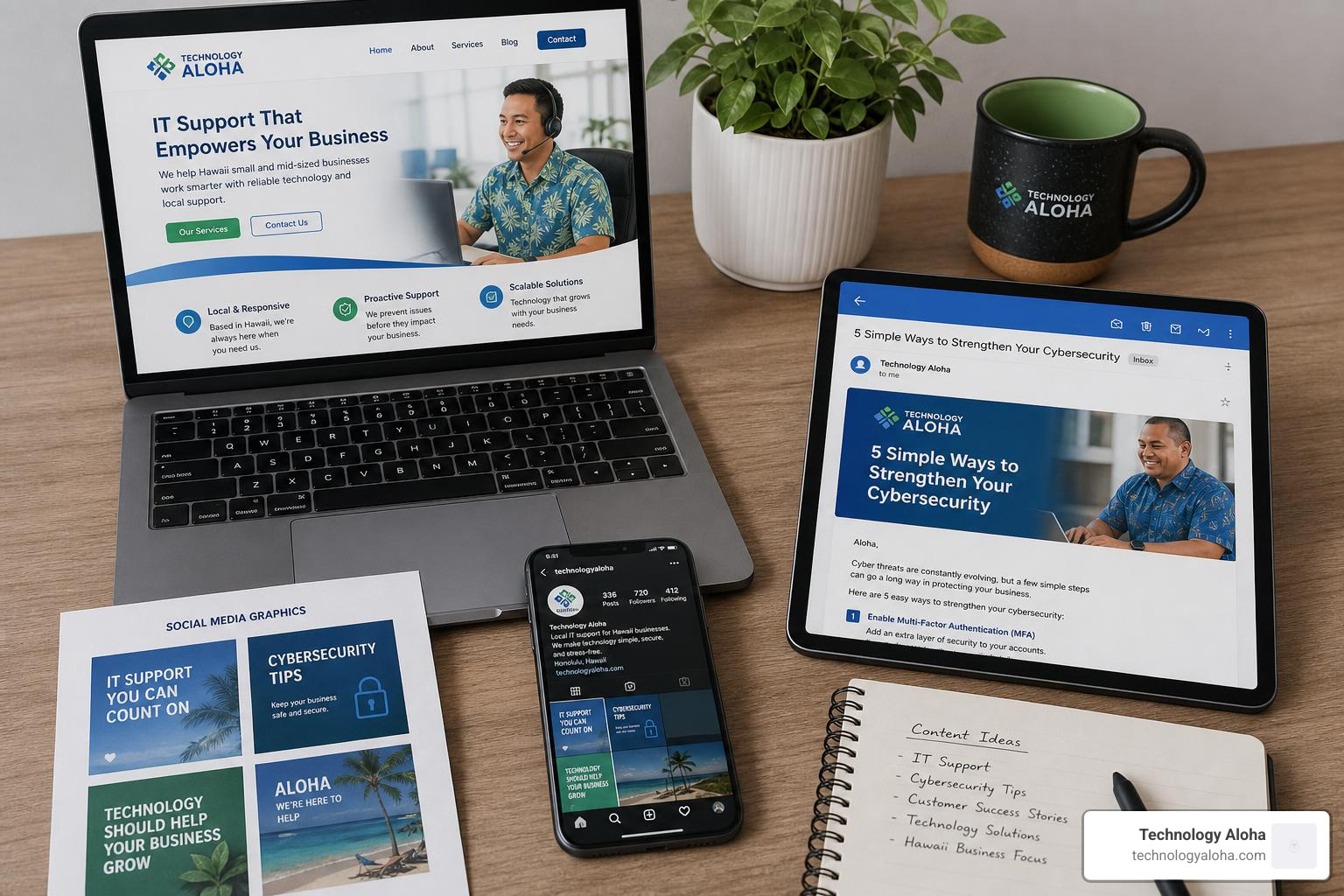
To build a recognizable brand, you must maintain a unified visual and verbal identity across every single touchpoint. This seamless transition is what separates market leaders from companies that struggle to gain traction. To learn more about defining your unique market position and keeping it consistent, read our strategic guide on Brand Positioning and Differentiation.
Creating Modular Guidelines and Templates
As your business grows, your team will need to create new digital assets—such as social media graphics, slide decks, and PDF guides—on a daily basis. To maintain consistency without requiring a professional designer for every single asset, you must build a scalable design system.
We recommend developing a comprehensive digital brand book and a library of modular templates in Figma or Canva. These templates should include preset grid systems, approved font pairings, and a defined color palette. By establishing clear rules for asset creation, non-designers on your team can quickly produce on-brand materials that match the high standard set by your website.
Common Mistakes in Digital Brand Translation
When translating a physical or conceptual brand identity to the web, many companies make critical errors:
- Over-complication: Trying to pack every brand element, texture, and logo variation onto the homepage, which overwhelms the user.
- Ignoring Performance: Using massive, uncompressed custom fonts and unoptimized images that slow your site down to a crawl.
- Inconsistent Assets: Allowing different team members to create landing pages or social graphics using unapproved colors or fonts.
- Relying on Stock Photo Tropes: Using generic, staged photos of people in suits shaking hands, which immediately erodes authenticity and trust.
Measuring the Business Impact of a Brand Redesign
Investing in brand identity web design is not an aesthetic luxury—it is a strategic business decision. To justify and maximize this investment, you must track concrete performance metrics before and after your redesign.
The real-world data behind a professional, strategy-led redesign is compelling:
- 82% increase in average user engagement time.
- 43% increase in conversion events per active user.
- 25% increase in organic search traffic following the launch of a cohesive visual identity and optimized website.
Key Performance Indicators for Brand Websites
To accurately measure the success of your new brand website, look beyond basic traffic numbers and focus on these key performance indicators (KPIs):
- Engagement Rate & Time on Page: Are visitors sticking around to read your content and explore your brand story, or are they bouncing immediately?
- Conversion Rate: Is a higher percentage of visitors taking action, such as booking a call, signing up for a newsletter, or purchasing a product?
- Brand Recall and Direct Traffic: Are you seeing an increase in users typing your exact business name into search engines or browser bars, indicating strong offline or multi-channel recall?
- Trust Signals: Are users interacting with trust-building elements like case studies, video testimonials, and detailed service breakdowns?
The Professional Design Process and Deliverables
A professional brand web design project is a structured, collaborative journey. It typically involves several key phases and deliverables:
- Discovery & Strategy: In-depth workshops to define your business goals, target audience, and brand voice.
- Information Architecture & Wireframing: Mapping out the structural skeleton of the website to optimize user flows and conversion paths.
- Visual System Design: Creating custom mood boards, typographic hierarchies, color systems, and UI components.
- Development & Optimization: Translating design files into clean, fast, mobile-responsive code.
- Launch & Implementation Support: Providing your team with the training, templates, and documentation needed to keep the site updated and consistent.
Frequently Asked Questions about Brand Web Design
Do I need a complete brand strategy before designing my website?
Yes. Trying to design a website without a brand strategy is like trying to build a house without architectural blueprints. Your visual system—including your color palette, typography, and layout—must express something specific about your market positioning and speak directly to your target audience. Without that strategic clarity, web design is merely decoration.
How do we maintain brand consistency without an in-house designer?
The key is to invest in a robust, modular design system from the start. A professional agency will provide you with a comprehensive digital brand book, clear usage guidelines, and a library of custom templates (such as Figma or Canva files) that your team can easily use to create on-brand assets without breaking the visual system.
How often should a company update its brand identity website?
While design trends change, a well-structured, strategy-led brand website should last three to five years. You should consider a significant update or redesign when your business undergoes a major shift in positioning, when you target a new audience segment, or when technological advancements require performance and accessibility upgrades to maintain a premium user experience.
Conclusion
Your website is the digital front door of your business. In a highly competitive online landscape, a generic template is no longer enough to build trust, command premium pricing, or drive consistent growth. By investing in strategic brand identity web design, you transform your website from a passive online placeholder into a powerful, cohesive conversion engine that works for your business 24/7.
At Technology Aloha, we combine data-driven insights with cohesive branding and high-conversion designs to help businesses in Kahului, HI, and across the nation grow. We specialize in building strategic, user-centric digital experiences that are designed to be felt and built to perform.
Ready to build a digital presence that truly reflects the quality of your business? Let’s discuss your project. Explore our Web Design Services or check out our comprehensive Branding Services to take the first step toward strategic digital growth.