X No-Nonsense Tips for Marketing Plan Ideas for Small Business
Why Every Small Business Needs a Real Marketing Plan — Not Just a To-Do List
The best marketing plan ideas for small business owners aren’t complicated — but they do need to be deliberate.
Here’s a quick answer if you’re short on time:
Top marketing plan ideas for small businesses in 2026:
- Define one clear business outcome — a specific, measurable goal like “25 new leads per month”
- Know your audience before picking channels — demographics, pain points, buying triggers
- Pick 2–3 channels only — local SEO, email marketing, and one social platform cover most small businesses well
- Build a content repurposing system — one piece of content should feed multiple channels
- Create a referral and partnership network — word of mouth still outperforms most paid tactics
- Measure weekly, adjust quarterly — track revenue, conversion rate, and ROI above all else
Most small businesses don’t fail because of a bad product. They fail because they market without a plan — posting occasionally, running untargeted ads, and hoping word of mouth fills the gap.
The numbers back this up. Nearly half of small businesses spend more than five hours a week on marketing. Without a plan, that’s potentially 20+ hours wasted every month with nothing to show for it.
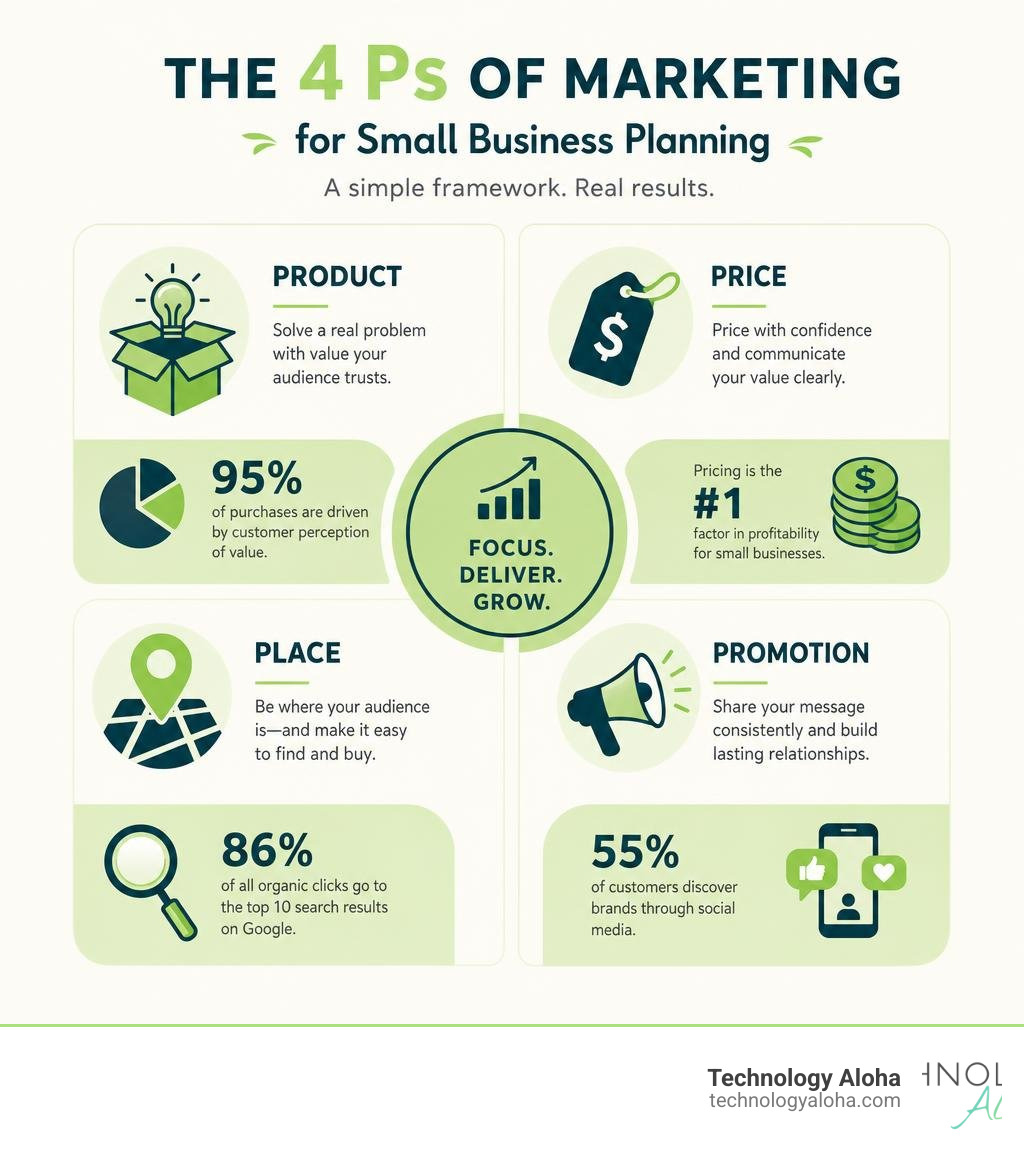
And the competitive stakes are real. The first ten websites in Google’s search results capture 86% of all organic clicks. Meanwhile, 55% of customers worldwide discover brands through social media — and use it to research before they buy.
The good news? You don’t need a massive budget. You need a focused system.
This guide breaks down the most effective, no-fluff marketing plan ideas — built for small business owners who want results, not theory.
Marketing plan ideas for small business further reading:
- The Best Ways to Market Small Business Success
- A Practical Guide to Marketing Plan Examples for Small Business
- The No-Nonsense Guide to Creating Your Small Business Market Strategy
1. Define Your One Core Business Outcome First
The single biggest mistake small businesses make is starting with tactics. They say, “We need to post on TikTok,” or “We should run Google Ads.”
But tactics without a target are just noise. Before you write a single social media post, you must define one core business outcome.
A successful marketing plan begins with clear, documented objectives. We recommend using the SMART goal framework:
- Specific: Clearly define what you want to achieve.
- Measurable: Attach a concrete number to the goal.
- Achievable: Keep it realistic based on your current resources.
- Relevant: Ensure it directly impacts your business growth.
- Time-bound: Set a firm deadline.
Instead of setting a vague goal like “get more exposure,” aim for something precise: “Generate 25 qualified leads per month via search marketing by Q3 2026.”
By focusing on one outcome, you eliminate guesswork. Every marketing decision you make should directly support this single objective. If a marketing activity does not move you closer to your core outcome, cut it.
To understand how to align your business goals with actionable marketing steps, check out An Essential Guide to Marketing Plan for Small Business.
2. Build Your Marketing Plan Ideas for Small Business Around a Specific Audience
Many small business owners assume their target market is “everyone.” This is an expensive mistake. When you try to speak to everyone, you end up connecting with no one.
Effective marketing plan ideas for small business are always built around a highly specific audience. You must understand who your customers are, where they spend their time, and what triggers them to make a purchase.
Understanding the local landscape is critical, especially when establishing your business footprint. If you are operating in our home state, the Guide to Starting a Business in Hawaii – Hawaii Department of Business, Economic Development & Tourism provides valuable context on regional market dynamics and foundational business compliance.
Identify Your Ideal Customer Profile
To build an Ideal Customer Profile (ICP), look past basic demographics like age and location. Focus on their pain points, values, and buying behaviors:
- What problem are they trying to solve? (e.g., A busy parent in Kahului needs quick, healthy meal options.)
- What is their primary barrier to purchase? (e.g., Is it price, trust, or convenience?)
- How do they research solutions? (e.g., Do they read Google reviews, ask friends on Facebook, or search on YouTube?)
Once you understand these drivers, you can craft messaging that directly addresses their needs. For a step-by-step breakdown of how to position your business to stand out from local competitors, read The No-Nonsense Guide to Creating Your Small Business Market Strategy.
Map the Customer Journey Stages
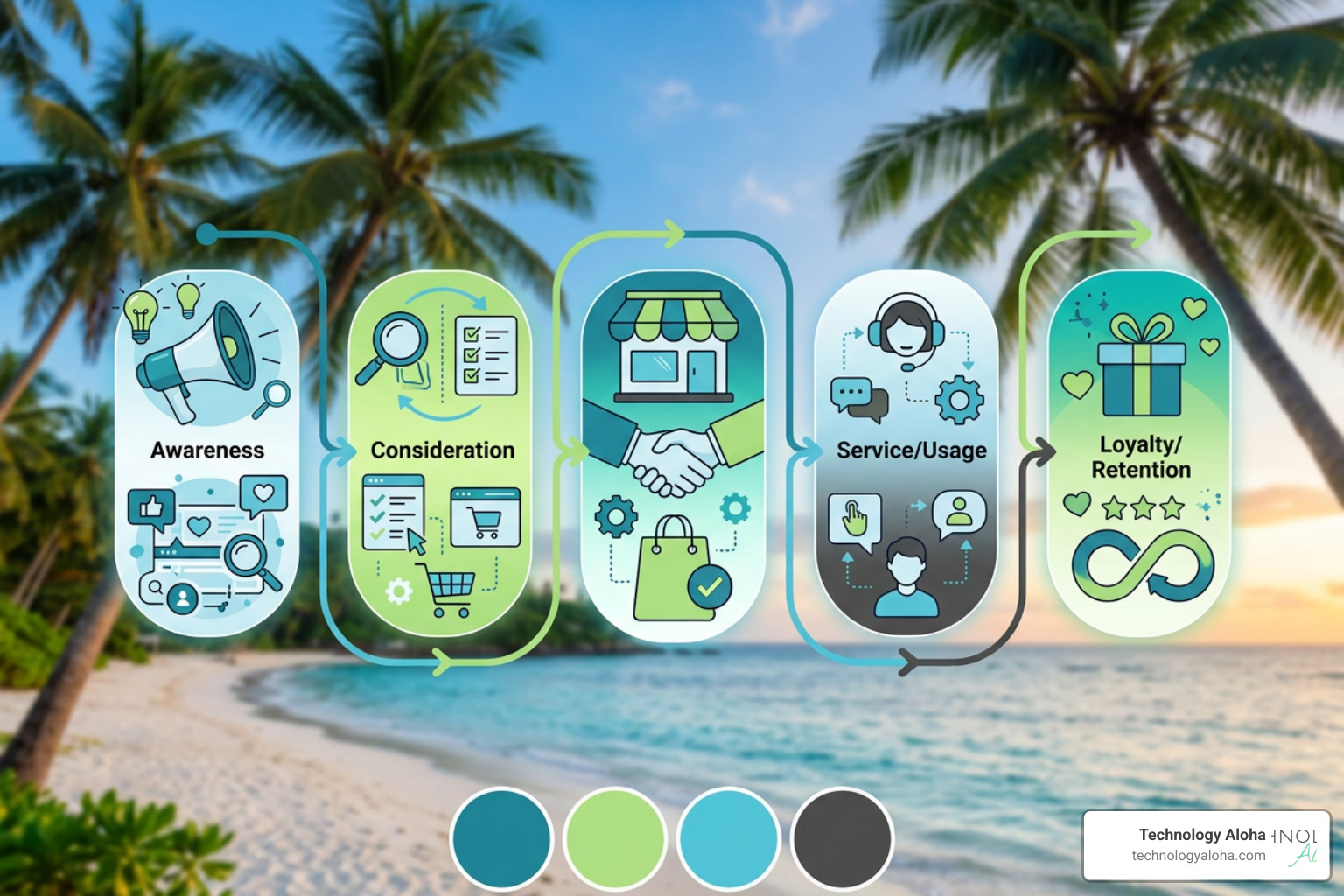
Your audience does not go from discovering your brand to buying from you in a single step. They move through a distinct customer journey:
- Awareness: The customer realizes they have a problem and discovers your business.
- Consideration: The customer evaluates your products or services against competitors.
- Conversion: The customer makes a purchase decision.
- Retention (Delight): The customer experiences your service and becomes a repeat buyer or advocate.
By mapping your marketing tactics to these stages, you ensure you are delivering the right message at the right time. For additional support and local mentorship in refining your business model, you can leverage the Business Resources – Patsy T. Mink Center for Business & Leadership.
3. Limit Your Execution to Two or Three High-Impact Channels
You do not need to be everywhere. For small businesses with limited time and budgets, attempting to manage eight different marketing channels leads to burnout and poor results.
Focus your energy on two or three high-impact channels where your target audience is most active.
| Marketing Channel | Primary Benefit | Best For | Resource Level Required |
|---|---|---|---|
| Organic Search (SEO) | High-intent traffic; long-term sustainable growth. | Capturing customers actively searching for solutions. | Medium to High (Time-intensive) |
| Social Media | Brand discovery; community building and engagement. | Showcasing visual work, building trust, and local reach. | Medium (Requires consistency) |
| Email Marketing | Direct communication; exceptionally high ROI. | Nurturing leads, driving repeat sales, customer retention. | Low (Highly automatable) |
Focus on High-Impact Digital Marketing Plan Ideas for Small Business
For most small businesses, the strongest digital foundation consists of search engine optimization (SEO), content marketing, and email marketing.
- SEO & Content Marketing: By creating helpful, educational blog posts that answer common customer questions, you build search authority. This drives organic, high-intent traffic to your website without ongoing ad spend.
- Email Marketing: Unlike social media platforms, you own your email list. It is your most reliable marketing asset. Use automated email sequences to welcome new subscribers, share valuable tips, and send personalized offers.
Learn how to piece these digital elements together by reading The Small Business Guide to Digital Marketing Success.
Leverage Local SEO and Google Business Profile
If your business relies on local customers, local search marketing is your most powerful tool. Nearly 46% of all Google searches have local intent, and “near me” searches with purchase intent continue to grow.
To dominate local search:
- Claim and Optimize Your Google Business Profile: Fill out every section, list your correct hours, add high-quality photos of your local team, and keep your services updated.
- Maintain NAP Consistency: Ensure your business Name, Address, and Phone number are identical across your website, social media, and online directories.
- Proactively Gather Reviews: Nearly 95% of people read reviews before making a purchase. Reviews on your site can increase conversion rates by 270%. Send automated follow-up texts or emails to clients immediately after a successful transaction, asking for a review.
For direct guidance on how to optimize your local search presence, follow the official steps in How to Improve Your Local Ranking on Google – Google Business Profile Help.
4. Create a Content Repurposing Engine and Referral System
Creating fresh marketing content from scratch every day is exhausting. Instead, build a content repurposing engine.
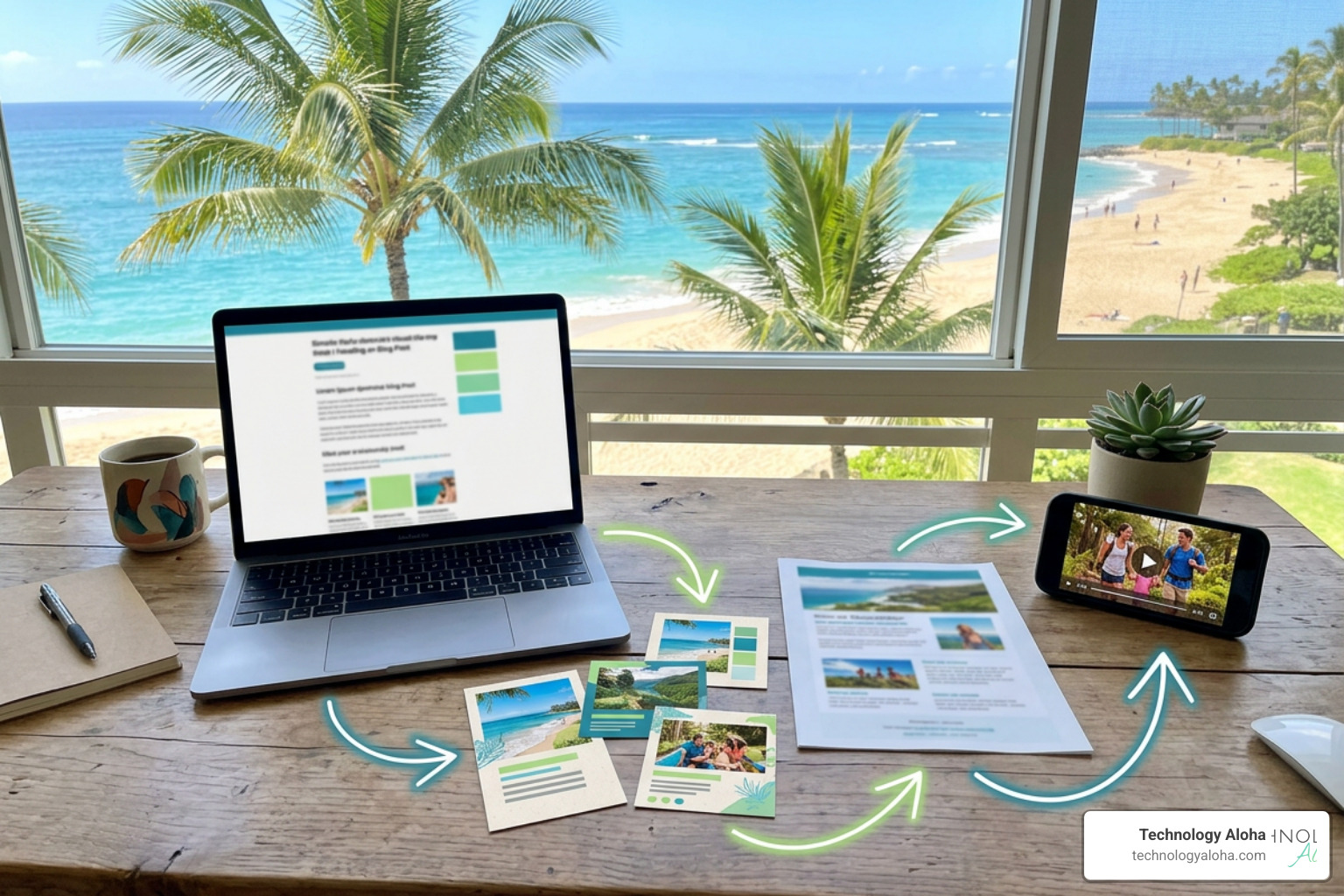
Start with one comprehensive piece of “pillar content” each month — such as an in-depth blog post addressing a major customer pain point. Then, break that single asset down into smaller, highly shareable pieces:
- Transform 3 key points into individual social media posts.
- Summarize the main takeaway into an educational email newsletter.
- Record a quick 60-second video explaining the core concept for social media.
- Add the main tip as a regular update on your Google Business Profile.
This systematic approach saves time and ensures consistent, high-quality messaging across all platforms. If you are tired of generic advertising and want creative, engaging ways to present your brand, check out New Marketing Ideas for Small Business Owners Who Hate Boring Ads.
Build a Referral and Partnership Network
Word-of-mouth remains one of the most effective ways to attract new customers because people trust recommendations from people they know.
Do not leave referrals to chance. Build a structured referral and partnership network:
- Offer Referral Incentives: Create a simple “refer-a-friend” program where both the existing customer and the new lead receive a discount or a complimentary service.
- Form Strategic Partnerships: Partner with non-competing, complementary local businesses. For example, a local wedding photographer can partner with a florist or a hair stylist to cross-promote services to the same target audience.
- Engage with the Community: Participate in local events, sponsor community initiatives, or host educational workshops. Building real-world relationships directly translates into digital trust and brand loyalty.
For more practical tips on expanding your local network and driving organic growth, refer to Top 4 Marketing Tips for Small Businesses.
5. Establish a Measurement Cadence and Use a Structured Template
A marketing plan is not a static document you write once and store in a drawer. It is a living system that requires regular review and adjustment.
To keep your plan on track, you must distinguish between leading and lagging indicators:
- Leading Indicators (Activity): These measure your marketing actions. Examples include the number of blog posts published, emails sent, or social media updates posted.
- Lagging Indicators (Outcomes): These measure the actual results of your activities. Examples include website conversion rates, qualified leads generated, repeat customer rates, and total revenue.
We recommend establishing a strict review cadence:
- Weekly: Check leading indicators to ensure your team is executing tasks on schedule.
- Monthly: Analyze KPI trends, conversion rates, and traffic sources to see what is working.
- Quarterly: Adjust your strategic tactics based on performance data and market shifts.
For a comprehensive framework on how to build and maintain a consistent marketing workflow, read How to Build a Successful Marketing Process.
Actionable Marketing Plan Ideas for Small Business Templates
Using a structured template keeps your marketing organized and holds your team accountable. Your template should clearly outline:
- Your Core Goal: The primary SMART objective.
- Target Audience: A brief description of your ideal customer profile.
- Selected Channels: The 2–3 platforms you will focus on.
- Weekly Campaigns: The specific marketing actions to execute.
- KPI Scorecard: The metrics you will track to measure success.
To see real-world examples of how small businesses structure their strategic plans, explore A Practical Guide to Marketing Plan Examples for Small Business.
Frequently Asked Questions About Small Business Marketing Plans
How much budget should a small business allocate to marketing?
According to guidelines from the U.S. Small Business Administration (SBA), small businesses with revenues under $5 million should allocate 7% to 8% of their gross revenue to marketing, assuming net profit margins are in the 10% to 12% range.
For early-stage startups looking to grow quickly, this figure may rise to 10% to 15%. If you are on a tight budget, prioritize low-cost, high-return organic tactics like local SEO and email marketing before investing heavily in paid advertising.
For more detailed information on managing your business finances and sales strategies, visit Marketing and sales | U.S. Small Business Administration – SBA.
How much time should a small business owner spend on marketing?
Research indicates that nearly half of all small business owners spend 5 to 10 hours per week on marketing activities.
To prevent marketing from consuming your entire workweek, automate repetitive tasks (like email campaigns and social media scheduling) and focus exclusively on your 2–3 chosen channels.
How long does it take to see results from local SEO?
While minor optimizations to your Google Business Profile can yield visibility improvements in 2 to 4 weeks, a comprehensive local SEO and content marketing strategy typically takes 3 to 6 months to drive consistent, organic website traffic and lead generation.
SEO is a long-term investment, but unlike paid ads, the traffic it generates does not stop the moment you turn off your budget.
Conclusion
Building a successful marketing plan does not require a corporate-sized budget or a team of fifty people. It requires clarity, focus, and consistency. By defining one core outcome, understanding your local audience, and mastering a few select channels, you can build a marketing system that consistently brings in new customers.
At Technology Aloha, we help small businesses in Kahului, Maui, and throughout Hawaii transition from scattered, reactive marketing to structured, data-driven systems. We combine cohesive branding with high-conversion web designs to ensure your digital marketing directly drives business growth.
Ready to stop guessing and start growing? Explore our Strategic Marketing Strategy Services and let us build a clear, high-performing plan tailored to your business.