Why Most New Business Marketing Ideas Fall Flat — and What Actually Works in 2026
New business marketing ideas don’t have to be expensive to work. If you’re short on time and just want the best options, here they are:

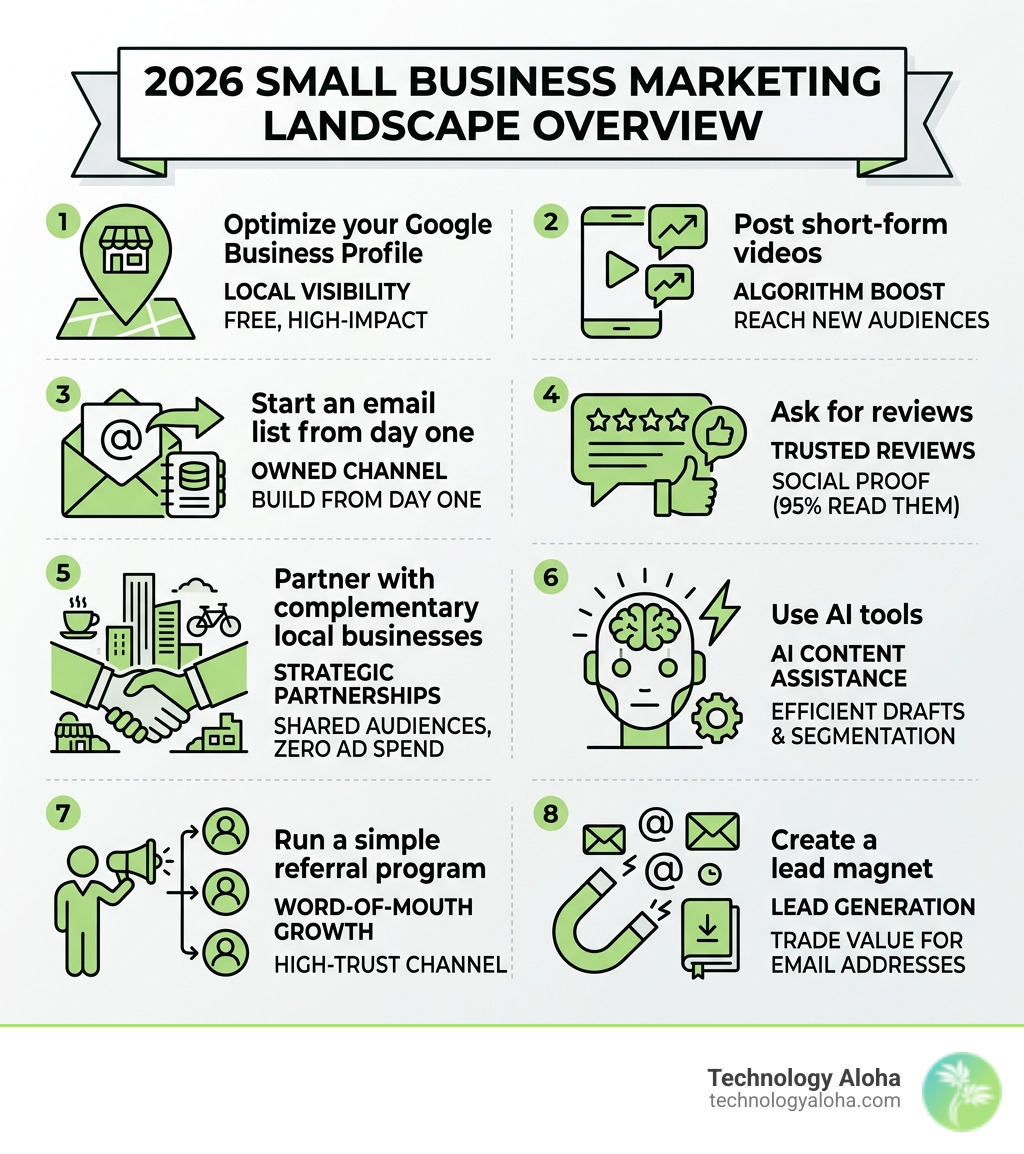
Top marketing ideas for new businesses in 2026:
- Optimize your Google Business Profile — free, local, and high-impact
- Post short-form videos on TikTok or Instagram Reels — platforms push content to new audiences
- Start an email list from day one — it’s the one channel you own outright
- Ask for reviews — nearly 95% of people read them before buying
- Partner with complementary local businesses — shared audiences, zero ad spend
- Use AI tools for content drafts, segmentation, and chatbots — at a fraction of traditional agency costs
- Run a simple referral program — word-of-mouth is still the highest-trust growth channel
- Create a lead magnet — trade value for email addresses, then nurture automatically
Marketing is the top challenge for small businesses — cited by 37% of established merchants in Shopify’s 2026 merchant survey. That tracks. You can build something genuinely good and still hear nothing but crickets.
The problem usually isn’t the product. It’s visibility — and the mistaken belief that visibility requires a big budget.
It doesn’t. Not in 2026.
Social media algorithms now reward authenticity over ad spend. AI tools have made professional-level content accessible to solo operators. And email marketing still delivers the highest ROI of almost any channel — because it’s a direct line you control, not borrowed attention on someone else’s platform.
The businesses winning right now aren’t the loudest ones. They’re the most consistent ones — showing up in the right places, for the right people, with a clear message.
That’s what this guide is built around: ideas that are practical, repeatable, and grounded in how customers actually behave — not how pitch decks say they do.
Related content about new business marketing ideas:
- The Best Ways to Market Small Business Success
- Where to Advertise Your Small Business Online: A Digital Roadmap
- The Small Business Guide to Digital Marketing Success
High-Impact New Business Marketing Ideas for 2026
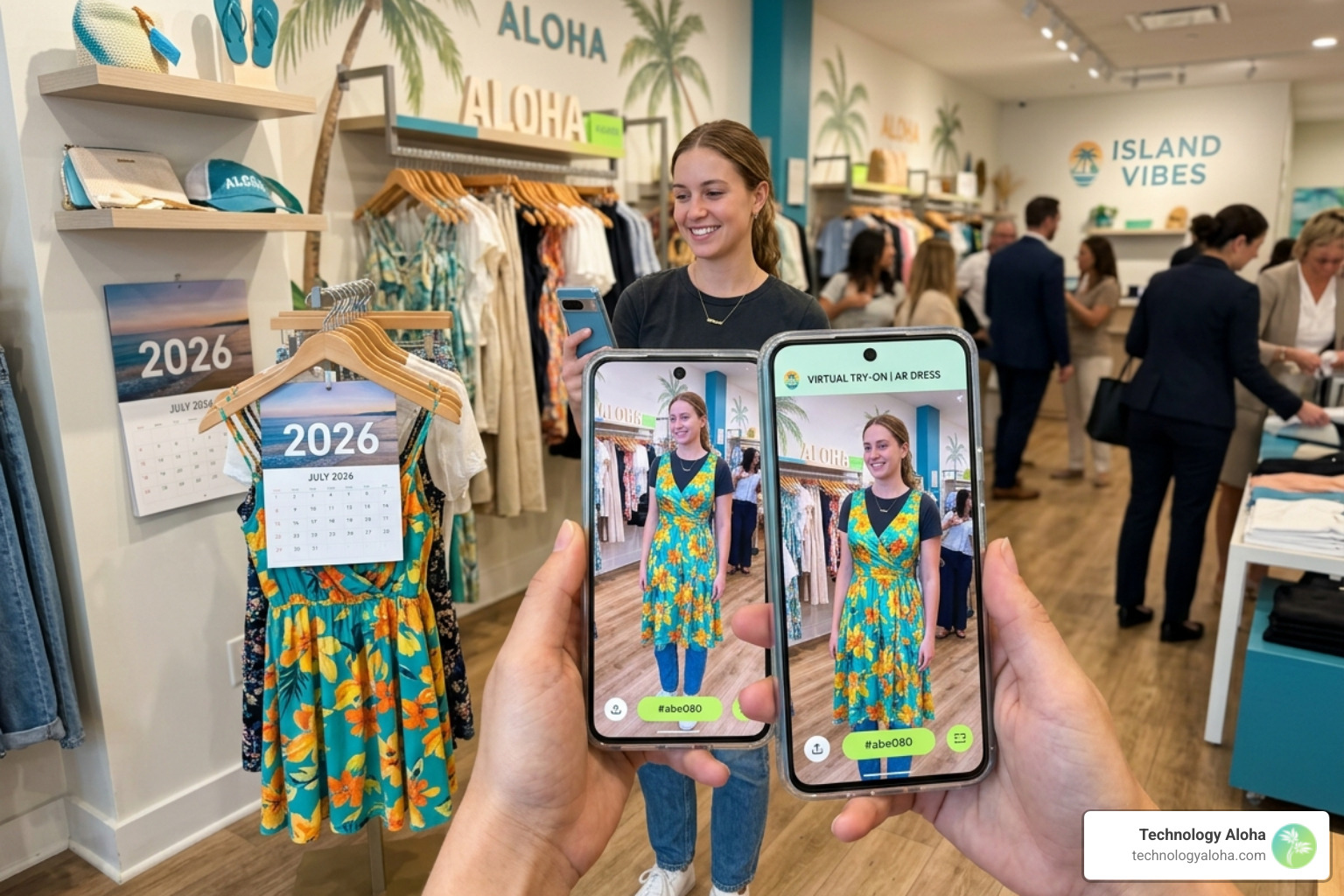
As we navigate 2026, the marketing landscape has shifted away from “shouting at everyone” toward “talking to the right someone.” High-impact marketing today relies on a blend of emerging technology and radical common sense. We are seeing a massive surge in the use of Artificial Intelligence (AI) and Augmented Reality (AR) to bridge the gap between physical and digital storefronts.
For a new business, the goal isn’t just to be seen; it’s to be relevant. This requires an omnichannel strategy—ensuring your brand message is consistent whether a customer finds you on a search engine, a social feed, or via a QR code in a local shop. Predictive analytics, once reserved for enterprise giants, are now available to us through affordable software, allowing us to anticipate customer needs before they even articulate them.
Before you spend a dime on ads, you need a foundation. Understanding How To Create A Marketing Strategy For Your New Business is the difference between a calculated investment and a shot in the dark. A solid strategy acts as a blueprint, aligning your team and resources toward measurable goals like conversion rates and ROI.
Implementing AI-Driven New Business Marketing Ideas
AI is no longer a futuristic concept; it is a daily utility. In 2026, we use AI to transform marketing from a static broadcast into a dynamic conversation. AI-driven tools can now handle predictive behavior analysis, allowing us to serve content that changes based on a user’s previous interactions.
Chatbots have evolved into sophisticated brand ambassadors that provide instant customer support and lead qualification 24/7. Automated segmentation ensures that your “New Customer” email doesn’t go to someone who has been buying from you for three years. When applying these tools, remember the 6 Marketing Principles for Hawaiʻi – Hawaii Business Magazine—authenticity and community respect are paramount. Even when using AI to draft content, we must edit for a human voice that reflects our local values and unique brand personality.
Personalization and Sustainability Trends
Consumers in 2026 are skeptical of “faceless” corporations. They prioritize brands that align with their personal values, particularly regarding sustainability and ethical practices. This isn’t just a trend; it’s a requirement for long-term loyalty.
Ethical branding involves more than just a recycled logo. It means setting and meeting Environmental, Social, and Governance (ESG) goals. Whether it’s sourcing ingredients from local organic farms or utilizing carbon-neutral shipping, these choices become part of your new business marketing ideas. Personalization goes hand-in-hand with this; by using data-driven insights, we can tailor messaging so that a 35-year-old urban professional interested in eco-friendly products receives a completely different experience than a retiree looking for reliable local services.
Dominating Local Search and Social Proof
If you operate in a specific geography, like Kahului or the broader Hawaii area, local SEO is your most powerful asset. “Near me” searches—such as “buying chocolate near me” or “places to buy construction equipment near me”—have exploded in recent years. People expect their smartphones to know exactly where they are and what they need.
Your Google Business Profile (GBP) is the digital front door to your business. Optimizing it means more than just listing your hours; it requires high-quality photos, regular updates, and active engagement with your community.
Low-Budget New Business Marketing Ideas for Local Growth
You don’t need a massive budget to win at local search. Start by claiming every relevant local directory listing and ensuring your Name, Address, and Phone Number (NAP) are identical across the web. Community networking remains a “gold dust” strategy—attending local meetups or sponsoring a neighborhood event can yield surprising results that digital ads can’t touch.
For a deeper dive, The Small Business Guide To Digital Marketing Success outlines how to integrate these offline efforts with your online presence. For example, using QR codes at a physical event to drive people to a local landing page can bridge the gap between a handshake and a digital conversion.
Leveraging Reviews and Testimonials
Social proof is the currency of the digital age. Nearly 95% of consumers read reviews before making a purchase, and displaying those reviews on your site can increase conversion by a staggering 270%.
We recommend a systematic approach to review management:
- Automate the ask: Send a follow-up email or SMS immediately after a positive interaction.
- Respond to everything: Replying to negative reviews with grace and a solution shows prospective customers that you care about the experience, not just the sale.
- Encourage User-Generated Content (UGC): When a customer posts a photo of your product, ask to feature it. UGC acts as a high-trust testimonial that feels much more authentic than a staged ad.
Content Evolution: Video and Community Engagement
In 2026, content is still king, but the crown has moved to video. Approximately 73% of consumers would rather watch a short video to learn about a product than read a long article. Platforms like TikTok, Instagram Reels, and YouTube Shorts are discovery engines. They don’t just show your content to your followers; they push it to people who have never heard of you based on their interests.
To make this work, focus on educational and entertaining content rather than “hard sell” commercials. Share “how-to” tips, product walkthroughs, or industry insights. For more tactical advice, check out 10 Content Marketing Tips You Should Implement Today to ensure your video efforts contribute to your overall SEO goals.
Humanizing Your Brand Through Storytelling
People buy from people. Humanizing your brand means pulling back the curtain. Share behind-the-scenes footage of your team, explain why you started the business, and highlight your “why.”
Employee advocacy is a hidden gem in new business marketing ideas. When your team shares their genuine excitement about a project on LinkedIn or Instagram, it carries more weight than a corporate post. This authentic narrative builds a brand voice that feels like a neighbor, not a machine.
Micro-Influencer Collaborations
You don’t need a celebrity to promote your business. In fact, micro-influencers—those with 1,000 to 10,000 followers—often have much higher engagement rates and more loyal audiences.
Collaborating with a niche influencer who truly uses and loves your product is cost-effective and builds immediate authority. For a local Hawaii business, this might mean partnering with a local surf instructor or a well-known community organizer. These partnerships are about trust, not just reach.
Automated Nurturing and Referral Systems
The most expensive part of marketing is acquiring a new customer. The most profitable part is keeping one. Automation allows us to nurture relationships without spending ten hours a day on manual outreach.
A well-structured How To Create A Marketing Strategy For Your New Business includes automated systems for email and SMS that trigger based on customer behavior. If a visitor leaves a cart, an automated reminder can bring them back. If they haven’t purchased in 90 days, a “we miss you” discount can reignite the relationship.
Building and Nurturing an Email List
Your email list is the only marketing asset you truly own. Unlike social media, where an algorithm change can wipe out your reach overnight, your email list is a direct line to your customers.
To build your list:
- Create a Lead Magnet: Offer a free guide, a discount code, or an exclusive video in exchange for an email address.
- Segment your list: Group subscribers by their interests or purchase history to ensure you only send relevant content.
- Focus on value: Your newsletter should be 80% helpful information and 20% promotion. If you only send sales pitches, people will unsubscribe.
Proven Referral and Advocacy Programs
Word-of-mouth is the original viral marketing. A structured referral program incentivizes your best customers to become your sales team.
Effective programs often use a “double-sided” incentive—for example, “Give $15, Get $15.” This rewards both the existing customer and the new lead. Beyond discounts, consider a loyalty program that offers early access to new products or “insider” perks. This fosters a sense of belonging that keeps customers coming back long after the initial sale.
Frequently Asked Questions about Small Business Marketing
What are the most effective low-budget marketing strategies in 2026?
The most effective low-budget strategies involve leveraging existing platforms and your community. Optimizing your Google Business Profile, consistently posting short-form videos (TikTok/Reels), and building an email list are high-ROI activities that cost more in time than in money. Additionally, partnering with non-competing local businesses for cross-promotion is a powerful way to reach new audiences for free.
How can small businesses use AI without high costs?
Small businesses can use AI through affordable, subscription-based tools for tasks like content drafting, image generation, and basic data analysis. Many email marketing platforms now have built-in AI for subject line optimization and send-time personalization. Chatbots for basic customer service are also increasingly accessible and can save hours of manual work.
Why is optimizing for Google Business Profile essential for growth?
With “near me” searches increasing by over 500% in recent years, your Google Business Profile is often the first thing a potential customer sees. A complete profile with positive reviews, accurate contact info, and recent photos significantly increases your chances of appearing in the “Local Map Pack,” which drives the majority of local search traffic.
Conclusion
At Technology Aloha, we believe that the best new business marketing ideas are the ones that blend data-driven insights with a human touch. Success in 2026 isn’t about having the biggest budget; it’s about having the clearest strategy and the most cohesive branding.
Whether you are looking to tighten your website conversions, dominate local search, or build an automated lead machine, we are here to help you navigate the complexities of the digital landscape. By focusing on high-conversion designs and user-centric experiences, we ensure that your marketing efforts don’t just generate noise—they generate growth.