Why Business Growth Web Strategies Are the Difference Between Thriving and Stalling Online

Business growth web strategies are the systems, channels, and tactics you use online to attract customers, convert leads, and scale revenue sustainably.
Here are the core strategies that actually move the needle:
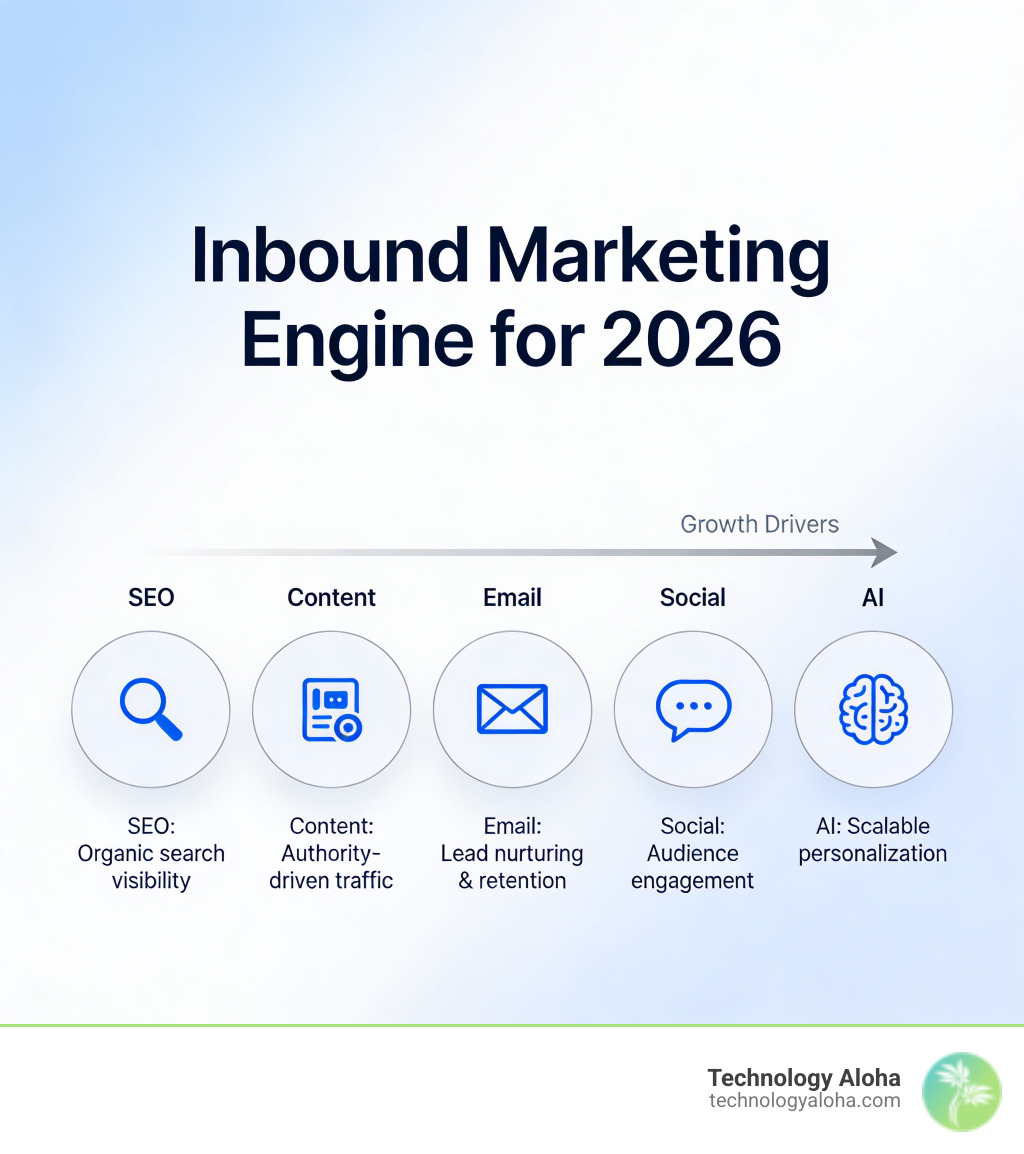
- SEO – Get found in search without paying per click
- Content marketing – Build authority and drive organic traffic through blogs, video, and more
- Email marketing – Retain customers and nurture leads with high-ROI campaigns
- Social media marketing – Engage audiences and build community on the right platforms
- Paid advertising – Generate immediate visibility with Google Ads and social ads
- Omnichannel marketing – Connect every touchpoint into one seamless customer experience
- AI and personalization – Scale relevance without scaling headcount
- Referral marketing – Turn happy customers into your cheapest acquisition channel
If your website isn’t pulling its weight, you’re not alone. Most small businesses have a site that exists — but doesn’t work. It doesn’t rank. It doesn’t convert. It doesn’t reflect what the business has become.
The good news: the internet has never offered more leverage for businesses willing to use it strategically.
Consider this — 72% of one software company’s organic traffic came entirely from SEO-focused blog content. Not ads. Not cold outreach. Just well-structured content, built around what their customers were already searching for.
That’s the kind of compounding return that web strategies, done right, can deliver.
But “doing more online” isn’t the answer. The businesses that grow are the ones that choose the right channels, align them with clear goals, and measure what actually matters — not vanity metrics like impressions or follower counts.
This guide breaks down exactly how to do that — from building a solid digital foundation to running advanced tactics like AI-driven personalization and account-based marketing.
Defining Your Digital Foundation and Business Growth Web Strategies
A high-growth business is not built on a series of random acts of marketing. It is built on a foundation. Before we talk about TikTok trends or AI prompts, we must talk about the infrastructure that supports them.
The Digital Foundation: More Than Just a Website
Your digital foundation consists of your website, your content management system (CMS), and your analytics stack. If your website is slow, confusing, or looks like a relic from 2012, no amount of traffic will save you. We focus on creating a user-centric website interface because growth is impossible if your visitors can’t find the “Buy” button.
Setting SMART Goals
Vague goals like “get more customers” lead to vague results. Successful business growth web strategies require SMART objectives:
- Specific: Increase website leads by 30%.
- Measurable: Tracked via GA4 conversions.
- Achievable: Based on current traffic and conversion rate optimization (CRO).
- Relevant: Aligned with our revenue targets.
- Time-bound: Within the next six months.
Identifying Buyer Personas and Competitive Audits
You cannot sell to everyone. We identify your target audience by creating detailed buyer personas based on real data—their pain points, their search habits, and their decision-making triggers. Following this, we conduct competitive audits. We aren’t just looking at what they do; we are looking for what they miss.
The Necessity of Responsive Design
With mobile traffic exceeding 55% of global visits, your site must be flawless on every screen. Responsive web design isn’t a luxury; it is a requirement for search engine rankings and user retention. If a site takes longer than three seconds to load, 53% of users will leave. That is not just a bounce rate; that is lost revenue.
The Four Pillars of Organic Expansion
Growth is not a monolith. In business theory, there are four distinct ways to expand. Understanding which pillar you are leaning on allows us to tailor your web strategy accordingly.
| Growth Type | Definition | Web Strategy Example |
|---|---|---|
| Organic | Growth from internal operations and sales. | Using SEO-focused blogs to drive 72% of traffic. |
| Strategic | Growth through partnerships or alliances. | Co-branding content with a complementary Hawaii business. |
| Internal | Improving efficiency to boost margins. | Automating lead nurturing to reduce sales cycle time. |
| Acquisition | Buying other companies for market share. | Integrating a competitor’s domain to capture their traffic. |
Organic Growth: The Compounding Asset
Organic growth is the most traditional method. It relies on internal marketing efforts to boost sales of existing products. For example, 77% of internet users still read blogs, making content a primary driver of organic expansion.
Strategic Partnerships and Brand Equity
Strategic brand partnerships accelerate results by combining your internal knowledge with specialized expertise. This builds brand equity faster than working in a silo.
Internal Efficiency and Acquisition
Internal growth focuses on operational efficiency—using your website to automate customer service or lead qualifying. Acquisition growth, meanwhile, is about purchasing market share. When one company acquires another, they don’t just get the physical assets; they get the digital footprint, the email list, and the backlink profile.
High-Impact Channels for Sustainable Lead Generation
Once the foundation is set, we turn to the channels that actually deliver leads. The goal is to create an inbound marketing engine where your audience finds you.
The 80/20 Rule of Content and Social Media
We follow the 80/20 rule: 80% of your content should be valuable, educational, or entertaining, while only 20% should be promotional. This builds trust. When you provide value first, the sale becomes the natural next step. Content marketing in SEO works because it answers the questions your customers are actually asking.
Video and Influencer Partnerships
Video is a quick and effective way to get your message across. 86% of marketing professionals use video as a tool, and 78% say it has directly increased sales. In 2026, short-form video and influencer partnerships are essential for personalizing marketing at scale.
Referral Marketing: The Trust Factor
84% of people trust recommendations from people they know more than brand advertising. A digital referral program lowers your customer acquisition cost (CAC) by turning your current clients into your sales team.
Mastering SEO as a Business Growth Web Strategy
Search Engine Optimization (SEO) is the art of being the answer to a searcher’s problem. It is a long-term play, but it is one of the most durable business growth web strategies available.
- Technical SEO: Ensuring your site architecture is sound. Every page should be no more than three clicks from the homepage.
- On-Page SEO: Optimizing metadata, headers, and internal linking.
- Local SEO: For businesses in Kahului or Maui, ranking locally is vital. It involves optimizing your Google Business Profile and using city-specific keywords.
- Off-Page SEO: Building authority through backlinks and digital PR.
Core Web Vitals and Search Intent
Google’s official Core Web Vitals targets are now ranking factors. We aim for a Largest Contentful Paint (LCP) under 2.5 seconds. Beyond speed, we must master search intent. Does the user want to buy (transactional), or are they just looking for information (informational)? We align our content with what they actually want.
Content Marketing and the Power of Blogging
Is blogging dead? Hardly. Blogging leads to 55% more website visitors. It allows us to write blog posts that rank and establish thought leadership. By applying content marketing to your SEO strategy, we create “citation magnets” that attract links and leads naturally.
Email Marketing and Customer Retention
Email marketing yields the second-highest ROI of any channel. With 92% of consumers using email daily, it is your direct line to your audience.
- List Segmentation: Segmented campaigns generate 50–100% higher click-through rates.
- Nurture Journeys: Automated workflows introduce your brand and keep you top-of-mind without manual effort.
- Customer Lifetime Value (CLV): It costs 5–7x more to acquire a new customer than to keep an old one. Email is the ultimate retention tool.
Advanced Tactics: AI, Omnichannel, and ABM in 2026
The digital landscape in 2026 is defined by two things: artificial intelligence and the death of the traditional click.
The Rise of Zero-Click Searches
Zero-click searches now comprise 60% of Google queries. This means users find their answers directly on the search results page. To grow, we must optimize for “AI Overviews” and featured snippets, ensuring our brand is the one providing the answer even if the user doesn’t click through to our site.
Account-Based Marketing (ABM)
Account-based marketing (ABM) is a targeted growth strategy where marketing and sales teams work together to create personalized buying experiences for high-value prospects. Instead of casting a wide net, we use a harpoon to catch the “big fish” that drive massive revenue.
Leveraging AI and Personalization in Business Growth Web Strategies
Nearly 50% of consumers now use AI-powered search. This shift requires us to evolve.
- Predictive Analytics: Using data to publish content 60–90 days before peak search volume.
- AI-Powered SEO Tools: 84% of marketers use AI to align content with search intent.
- Personalization at Scale: AI allows us to send a personalized message to 10,000 people as easily as we send it to one.
Integrating Paid Advertising for Quick Wins
While SEO is a marathon, paid advertising is a sprint. Google Ads and social media ads deliver immediate visibility.
- The SEM Auction: Search engine marketing (SEM) involves bidding on keywords to appear at the top of results.
- PPC vs. SEO: PPC delivers quick conversions; SEO provides durable traffic. The best business growth web strategies use both.
- Calculating Click-Through Rate: We monitor how to calculate click-through rate to ensure our ad spend isn’t being wasted on irrelevant clicks.
Measuring Success and Avoiding Growth Pitfalls
If you don’t measure it, you can’t manage it. We move beyond vanity metrics—like “likes”—and focus on what impacts the bottom line.
Using GA4 and Attribution Modeling
Google Analytics 4 (GA4) is essential for tracking the customer journey. We use attribution modeling to understand which touchpoints actually led to a sale. Was it the first blog post they read, or the third email we sent?
Common Pitfalls in Digital Growth
Many businesses fail because they:
- Ignore Search Intent: Creating content people aren’t searching for.
- Neglect Mobile Optimization: Forgetting the 55% of users on phones.
- Over-Rely on One Channel: If your only traffic comes from Facebook, you are one algorithm change away from bankruptcy.
- Prioritize Paid Over Organic: Burning cash on ads without building a lasting SEO asset.
- Fail to Refresh Content: Letting your best-performing pages go stale.
Avoiding common pitfalls requires a data-driven approach. We make decisions based on analytics, not intuition.
Frequently Asked Questions about Business Growth Web Strategies
What is a digital marketing strategy and why is it essential for growth?
A digital marketing strategy is a comprehensive plan to reach customers online by increasing brand awareness and converting leads. It is essential because it allows you to spend your finite budget on the channels that offer the highest ROI, rather than guessing where your customers are.
How long does it take to see measurable results from organic web strategies?
Organic strategies like SEO and content marketing are long-term investments. You will typically begin to see increases in search impressions after 4–6 months, with significant traffic and conversion growth following at the 12-month mark.
What are the most common pitfalls to avoid when scaling online?
The most frequent mistakes include ignoring search intent, neglecting mobile optimization, and failing to refresh content. Additionally, many businesses make the mistake of scaling their ad spend before they have achieved a high conversion rate on their website, effectively “pouring water into a leaky bucket.”
Conclusion
At Technology Aloha, we believe that business growth web strategies should be as unique as the businesses they serve. Whether you are in Kahului or anywhere across Hawaii, your digital presence should be a reflection of your brand’s excellence.
We provide the strategic positioning, cohesive branding, and customized marketing strategy needed to turn a static website into a high-conversion engine. By blending data-driven insights with user-centric design, we help you step into the light and achieve the growth your business deserves.
Ready to build a digital presence that actually works? Let’s start a conversation.