Creative Graphic Design is the First Thing Clients Judge You By
Creative graphic design is the strategic use of visuals—color, typography, shape, and layout—to communicate your brand’s message and drive business results.
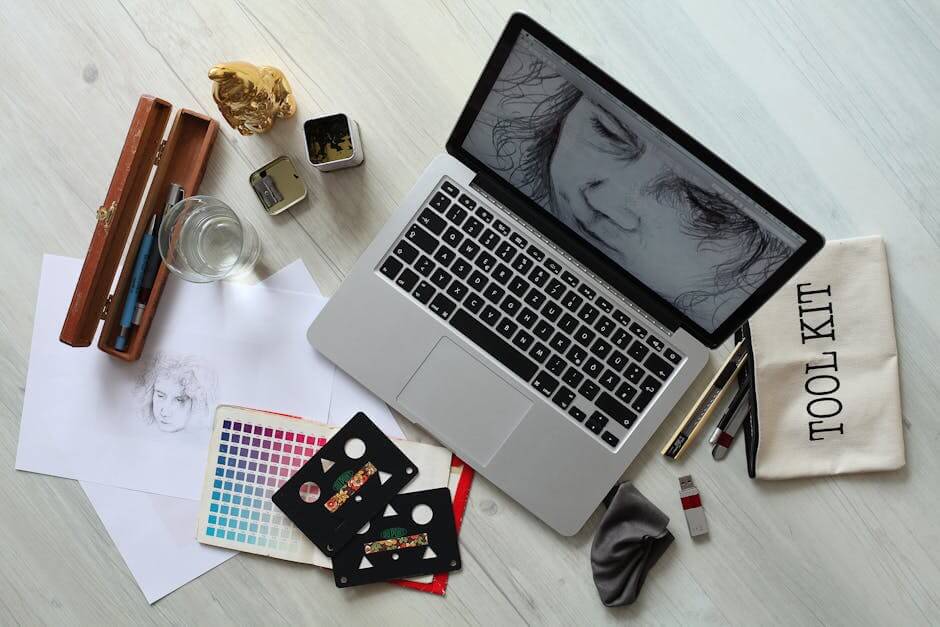
If you’re looking for professional graphic design solutions, here’s what you need to know fast:
What creative graphic design covers:
- Branding and visual identity — logos, style guides, color systems
- Marketing design — ads, social media, email campaigns, landing pages
- Publication design — magazines, reports, editorial layouts
- Packaging design — product presentation and shelf appeal
- Illustration — custom visuals that tell a story no stock photo can
Why it matters for your business:
- Builds immediate brand trust with new visitors
- Improves website user flow and conversion rates
- Supports SEO through image optimization and visual hierarchy
- Differentiates you in crowded, competitive markets
Think about the last time a website or product made you stop and pay attention. Odds are, design had everything to do with it.
For small businesses, weak design is expensive. It signals low credibility before a single word is read. According to leading design publications, over 2.1 million professional designs are shared on Dribbble alone—which means your competitors have access to the same inspiration you do. The difference is execution.
Design isn’t decoration. As Inês Ayer, Creative Manager at Google DeepMind and a juror for the Core77 Design Awards, put it: design should shape futures, not decorate them. That’s the standard worth aiming for.
This guide walks through the tools, principles, and strategies behind effective creative graphic design—so you can make smarter decisions for your brand.
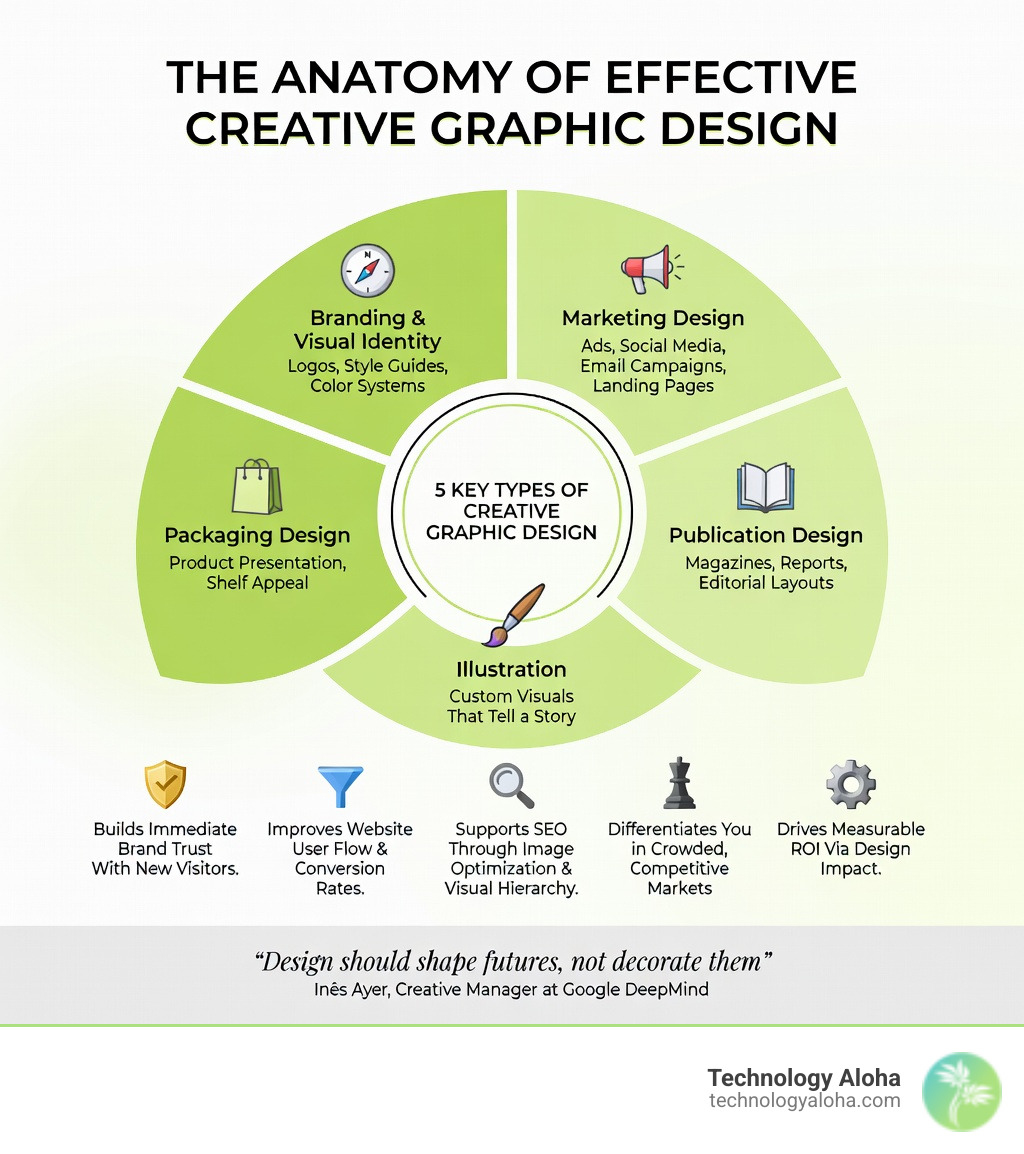
The Anatomy of Effective Creative Graphic Design
Effective creative graphic design is more than just a collection of pretty images. It is a calculated arrangement of elements designed to lead the eye and trigger a specific action. To understand why some designs work while others fall flat, we have to look at the “anatomy” of the work.
Color Theory and Typography
Color is the most immediate way to evoke emotion. It isn’t just about picking a favorite shade; it’s about understanding the perception of color schemes. In the classic text Interaction of Color, we learn that color is rarely seen as it is physically; it changes based on its surroundings. We use this to create contrast and guide your customers toward your most important information.
Typography is the voice of your brand. Whether you choose a sturdy serif or a clean sans-serif depends on the “attitude” you want to project. Choosing the right font requires balancing history, user experience, and visual weight. For those looking to dive deeper into the mechanics of letters, Thinking With Type is an invaluable resource for understanding how words function as visual elements.
Visual Hierarchy and Balance
Visual hierarchy tells the viewer what to look at first. We achieve this through size, color, and placement. Without a clear hierarchy, a design becomes “noise.”
Balance and harmony provide stability. Whether a design is symmetrical (formal and organized) or asymmetrical (dynamic and modern), it must feel intentional. We also use negative space—the “empty” areas—to give the elements room to breathe. Space is not “wasted” area; it is a tool used to prevent overwhelm and highlight your call to action.
Texture, Line, and Shape
Lines and shapes form the skeletal structure of any design. Sharp angles can imply precision and technology, while rounded shapes feel more organic and approachable. Texture adds a tactile quality to digital work, making a flat screen feel more human and “real.”
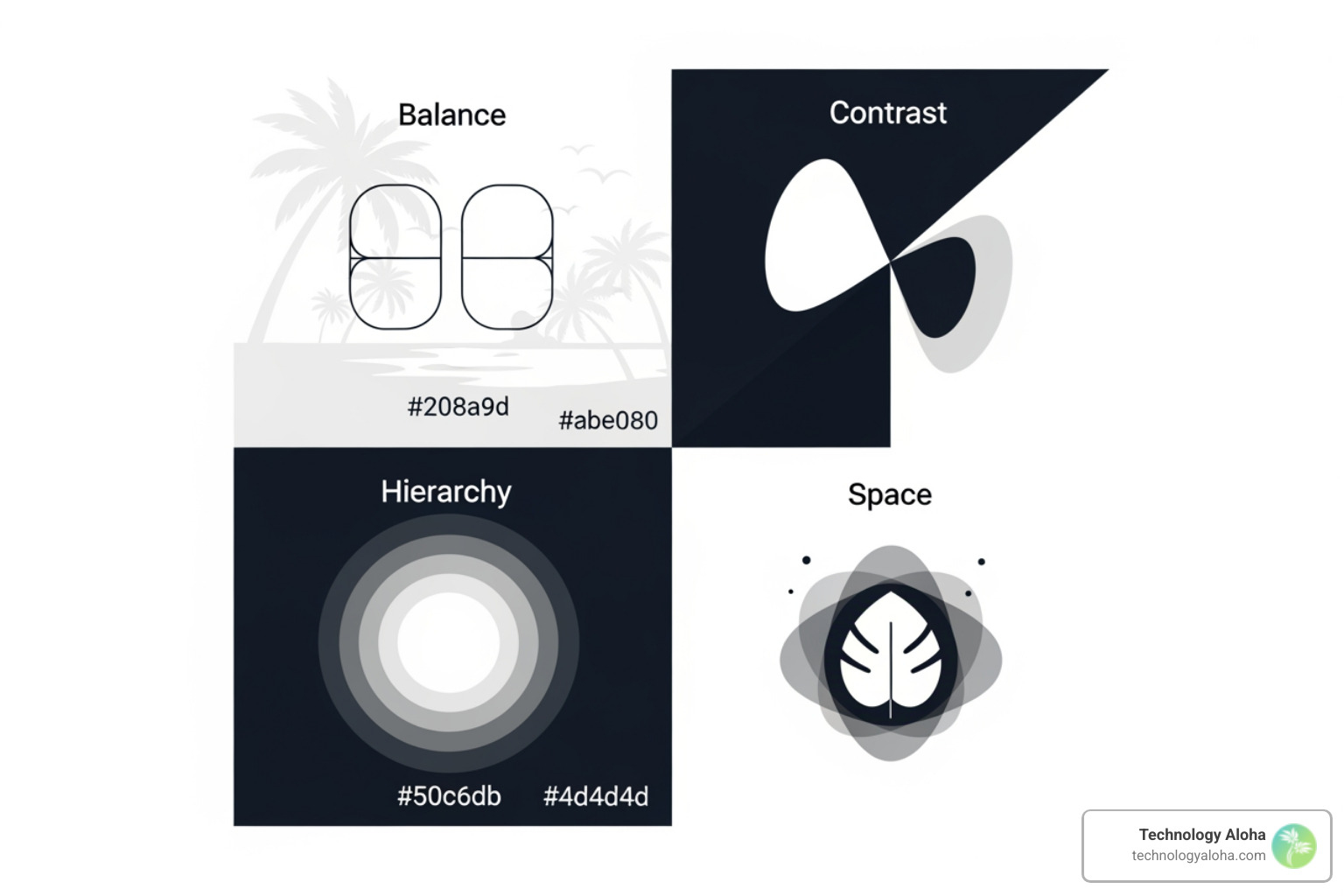
Branding and Visual Identity in Creative Graphic Design
Your brand is not just your logo; it is the “gut feeling” someone has about your business. However, that feeling is built on a foundation of visual cues. In creative graphic design, branding is the process of creating a cohesive language that speaks for you when you aren’t in the room.
Logo Design: The Anchor
A logo is the shorthand for your entire business. To get it right, you need to move past “I’ll know it when I see it.” We recommend you Answer These Simple Logo Design Questions to Nail Your Branding to identify your core values before the first sketch is even made. A great logo must be scalable, memorable, and appropriate for your industry.
The Power of Style Guides
Consistency is how you build visual equity. If your Instagram looks like a tropical paradise but your website looks like a sterile laboratory, you lose trust. A Brand Style Guide: Your Key to a Consistent Brand Image ensures that every person who creates content for your business uses the same hex codes, the same fonts, and the same “vibe.”
Your colors are a massive part of this. As we discuss in our guide on why Your Brand Colors Matter, the palette you choose tells a story about your organization’s personality—whether that’s the reliability of deep blues or the growth-oriented energy of #abe080.
AI Integration and Human-Centered Creative Graphic Design
The industry is currently facing a massive shift with the rise of Generative AI. Tools like Figma and Adobe’s AI features allow for faster iteration, but they also bring new challenges. Research from Creative Boom suggests that while AI can speed up the “making,” it cannot replace the “thinking.”
The Tension of Speed
There is a risk in the modern design world: speed. When we prioritize speed over depth, aesthetics often win over ethics. Memorable work comes from a place of vulnerability and curiosity—things a machine cannot yet replicate. Industry experts from the Core77 Design Awards emphasize that the best projects are often the ones where the designer shows the “honest journey”—the doubts, the detours, and the singular perspective that only a human can provide.
Human-Centered Design
Human-centered design focuses on emotion and usability. It’s about asking, “How will this make someone feel?” rather than just “How does this look?” Whether we are designing a wayfinding system for a metro or a new packaging concept, the goal is to bridge the gap between complex technology and simple human needs. If you want a quick checklist of what to do (and what to avoid), Graphic Design Rules: 365 Essential Dos and Don’ts offers practical advice for keeping your work grounded and effective.
Distinguishing Graphic Design from UX/UI
One of the most common points of confusion for business owners is the difference between graphic design and UX/UI design. While they overlap, their goals are distinct.
| Feature | Graphic Design | UX/UI Design |
|---|---|---|
| Primary Focus | Visual communication & storytelling | Usability & user interaction |
| Output | Static visuals (logos, ads, layouts) | Interactive flows (apps, websites) |
| Goal | To convey a message or emotion | To solve a functional problem |
| Key Element | Aesthetics and brand identity | Information architecture and flow |
Graphic design is about clarity and guiding attention. UX (User Experience) and UI (User Interface) are about the “how” of the journey. For example, when we look at 12 Creative Out-of-the-Box Web Design Ideas, we are looking at how graphic elements can enhance the user’s experience without making the site harder to navigate.
The Business Impact: SEO and Digital Marketing
Many people view creative graphic design as a purely “top of the funnel” activity—something to get attention. In reality, it has a profound impact on your technical performance, specifically your SEO and conversion rates.
Site Speed and Image Optimization
Search engines like Google care about how fast your site loads. High-resolution images that aren’t optimized can tank your site speed. We use modern formats and compression techniques to ensure your visuals look crisp without slowing down your user’s experience.
Visual Hierarchy and Mobile Responsiveness
Google rewards sites that are easy to use. A clear visual hierarchy helps search engines understand the structure of your content. Furthermore, mobile responsiveness is no longer optional. Your design must adapt seamlessly to different screen sizes to maintain brand trust.
Conversion and Trust
Design is the silent ambassador of your brand. If a website header is cluttered or confusing, users bounce. Following 5 Tips on Creating an Attractive Website Header Design can drastically reduce bounce rates. When you pair great design with high-quality Copywriting & Editing, you create a powerful engine for conversion.
Essential Skills and Tools for Modern Designers
The tools of the trade have evolved significantly since the days of the 15th-century printing press. While the Industrial Revolution brought us mass-produced visuals, the digital revolution has democratized design.
The Toolkit
- Figma: Now the industry standard for collaborative design and prototyping.
- Canva: With over 20,000 templates, it is a powerful tool for quick, templated marketing assets.
- Adobe Creative Cloud: The “heavy lifter” for professional-grade illustration and photo manipulation.
- Inspiration Hubs: Sites like Dribbble and Behance allow us to stay on top of global trends and see what’s working in real-time.
The “Soft” Skills
Technical skill is only half the battle. Successful designers must be master storytellers and problem solvers. As explored in Powered by Design, design thinking is about creating impactful, inclusive, real-world solutions. It requires communication skills to translate a business owner’s vision into a visual reality.
Frequently Asked Questions about Graphic Design
How does creative graphic design impact my website’s SEO?
It impacts SEO in three main ways: site speed (through image optimization), user engagement (reducing bounce rates), and visual hierarchy (helping search engines understand content importance). A mobile-responsive design also ensures you aren’t penalized by Google’s mobile-first indexing.
What is the difference between branding and graphic design?
Branding is the strategy and the “soul” of your business identity. Creative graphic design is the visual execution of that strategy. Branding is the plan; graphic design is the action.
Why is packaging design considered a powerful space for innovation?
Packaging is one of the few areas where design becomes a multi-sensory experience. It involves touch, weight, and even sound (the “unboxing” experience). In a digital-heavy world, physical packaging offers a tangible connection to a brand that screens cannot replicate.
Conclusion
At Technology Aloha, we believe that great design is data-driven. We don’t just make things look good; we use strategic positioning and cohesive branding to drive business growth. Whether you are in Kahului or anywhere else in Hawaii, your business deserves visuals that reflect your hard work and your unique story.
By blending human-centered intentionality with modern digital tools, we help you turn “just a business” into a memorable brand. Ready to level up? Explore our Graphic Design services and let’s start building your secret sauce.