Why the Right Branding Package for Small Businesses Changes Everything
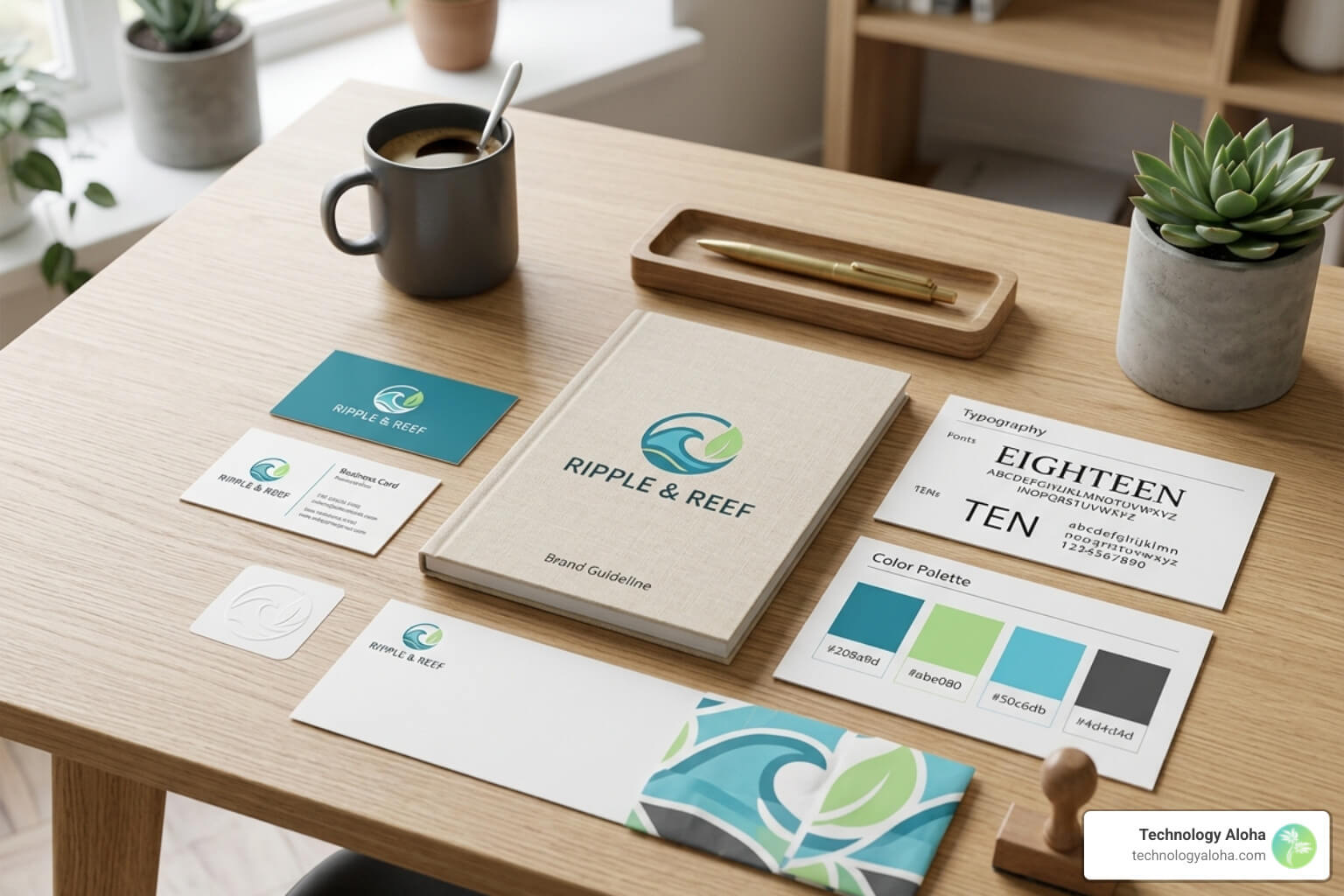
A branding package for small businesses is a bundled set of visual and strategic assets—logo, color palette, typography, and usage guidelines—that work together to give your business a consistent, professional identity across every touchpoint.
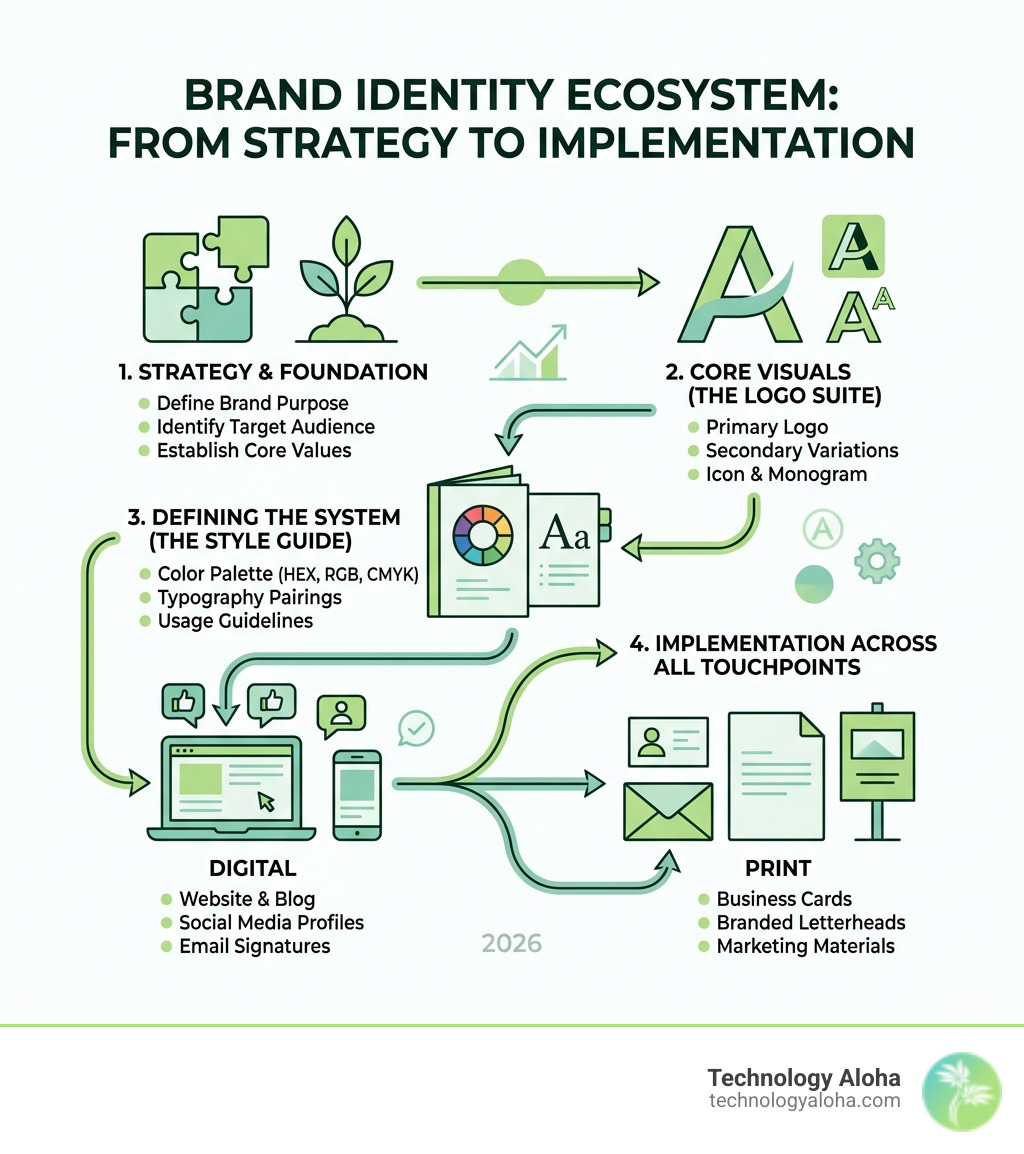
Here’s what a standard branding package typically includes:
| Element | What It Does |
|---|---|
| Logo suite | Primary, secondary, and icon variations for different uses |
| Color palette | HEX, RGB, and CMYK codes for print and digital consistency |
| Typography system | Font pairings and hierarchy for headings, body text, etc. |
| Brand style guide | Rules for how to apply every element correctly |
| Supporting assets | Business cards, email signatures, letterheads, social media kits |
Most packages fall into one of these tiers:
- Logo only — minimal, fast, and low cost
- Semi-custom suite — pre-designed templates personalized with your details
- Full identity package — custom strategy, visuals, and guidelines built from scratch
- Boutique agency package — includes brand strategy, messaging, and launch support
The difference between a brand that gets remembered and one that gets ignored often comes down to cohesion—not budget. A logo without a system behind it is just a graphic. A branding package gives that logo a world to live in.
That’s the problem most small business owners face: they invest in a logo, skip the system, and end up with inconsistent visuals across their website, social profiles, and print materials. Customers notice, even when they can’t name what feels off.
This guide compares the real options—what’s included, what it costs, and what actually moves the needle for small businesses in 2026.
Branding package for small businesses terms to remember:
- branding for a small business
- how to create a brand identity
- positioning and branding for a small business
The Anatomy of a Branding Package for Small Businesses
A professional branding package for small businesses is more than a zip file of images; it is a toolkit for growth. Think of it as the DNA of your company’s public face. Without a complete set of assets, your marketing efforts will eventually feel disjointed, making it harder to build the recognition necessary for long-term success.
Logo Suite
A single logo is never enough. In 2026, your brand needs to live on everything from a tiny favicon in a browser tab to a massive vinyl banner. A comprehensive suite includes:
- Primary Mark: The main version of your logo used on your website and signage.
- Secondary Mark: A horizontal or stacked version for different layouts.
- Submarks and Icons: Simplified versions for social media profile pictures, watermarks, and small-scale applications.
Typography Hierarchy
Fonts carry emotional weight. A branding package defines which fonts are used for headlines, subheadlines, and body copy. This ensures that whether a customer is reading a blog post or a physical brochure, the “voice” remains the same.
Color Palette
Consistency in color is non-negotiable. Your package should provide a primary palette and a set of secondary accent colors. These must be defined across different color spaces (HEX for web, CMYK for print, and RGB for screens) to ensure your “ocean blue” doesn’t turn into “muddy teal” when it hits the printer.
For a deeper dive into these components, check out The Most Important Elements Of Your Brand.
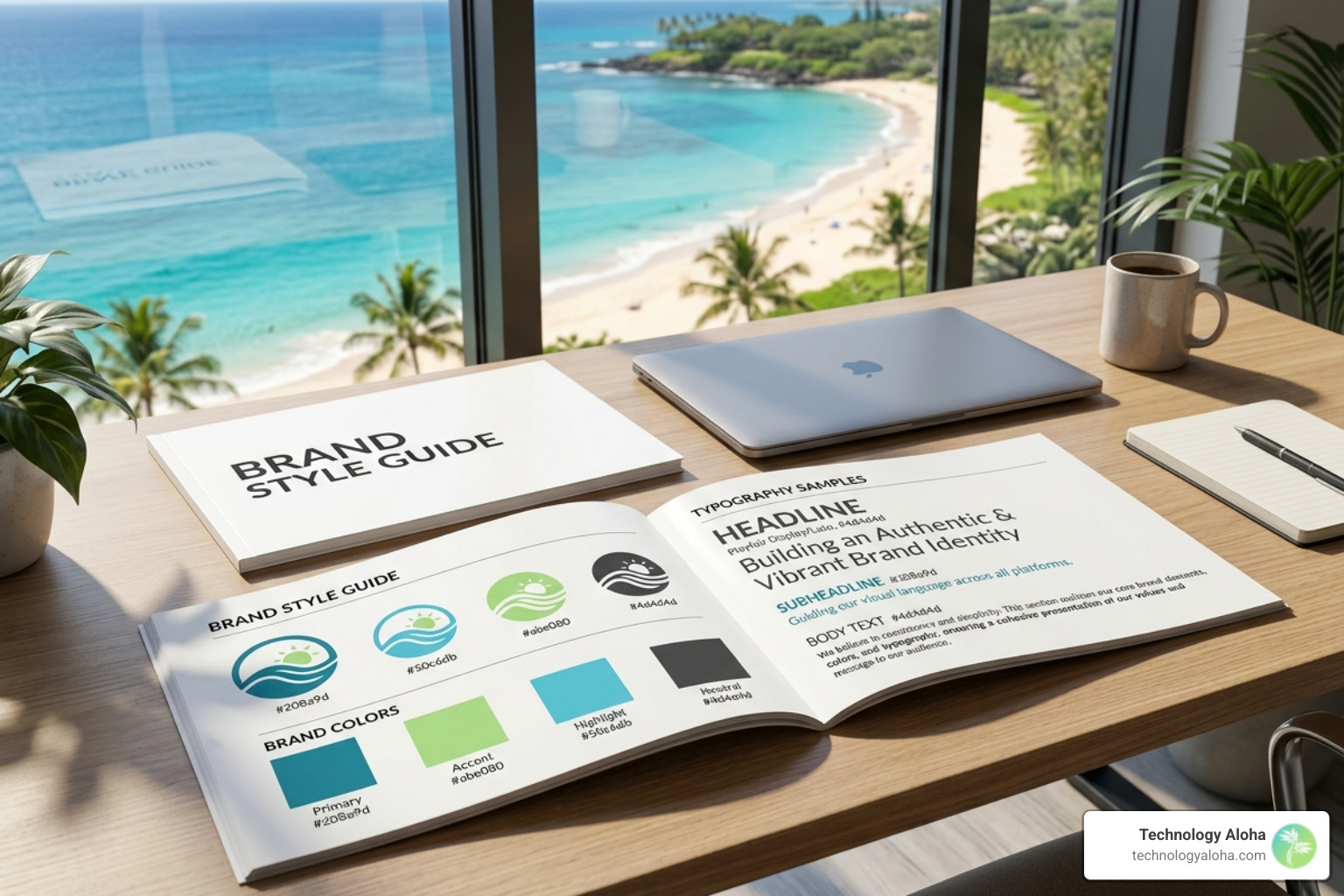
The Essential Brand Style Guide
The brand style guide is the instruction manual for your business. It dictates exactly how your assets should—and should not—be used. It prevents common mistakes, like stretching a logo or using a font that clashes with your brand personality.
A standard guide includes:
- Usage Rules: Clear instructions on “clear space” (the padding around a logo) and minimum sizing.
- Color Specifications: HEX codes for digital use and CMYK for professional printing.
- Brand Voice: Guidelines on the tone and language your business uses in its copy.
Consistent application is the only way to build a memorable brand. As Al Ries and Laura Ries explain in The 22 Immutable Laws of Branding, branding is about narrowing your focus and maintaining that focus over time. You can learn more about this in our guide on how a Brand Style Guide Your Key To A Consistent Brand Image.
Deliverables and File Formats
When you invest in a branding package for small businesses, you should receive a specific set of high-resolution files. If a provider only gives you a JPEG, you are being shortchanged. You need:
- Vector Files (AI, EPS, PDF): These are infinitely scalable without losing quality. Your printer will require these for signage, apparel, and high-end marketing materials.
- Web Files (PNG, JPG): PNGs are essential because they support transparent backgrounds, allowing you to place your logo over images or colored backgrounds without a white box around it.
- High-Resolution Assets: All files should be provided at 300 DPI for print and optimized for fast loading on the web.
Comparing the Main Types of Branding Packages
Not every business needs a five-figure agency rebrand. Choosing the right branding package for small businesses depends on your current revenue, your industry, and your growth goals.
Logo Only
This is the “bare necessities” approach. It typically includes a logo and perhaps a simple color palette. While affordable, it often lacks the strategic depth needed to differentiate you in a crowded market. It’s a starting point, but rarely a long-term solution.
Semi-Custom Suites
Often targeted at service providers and creatives, these are pre-designed “brand kits” where a designer swaps in your business name and colors. They are faster and more professional than a DIY attempt but lack the unique positioning of custom work.
Full Identity Package
This is the gold standard for businesses ready to scale. It includes deep strategy, custom visual design, and a full suite of collateral. This approach ensures your brand is built on a foundation of market research and target audience analysis. For those considering the DIY route first, see The Diy Guide To Creating A Brand Identity.
Custom Services vs. DIY Branding Kits
The temptation to use a $50 template is real. However, a DIY kit cannot provide strategic alignment. A professional designer looks at your competitors, identifies a “green space” in the market, and creates a visual identity that specifically targets your dream clients.
DIY tools like Canva are excellent for maintaining a brand, but they are often insufficient for creating one. A custom package offers:
- Scalability: Assets that grow with you.
- Unique Positioning: A look that no one else in your industry has.
- Expertise: Guidance on 5 Tips On How To Create A Professional Brand As A Small Business Owner.
Why a Branding Package for Small Businesses Fails
A package fails when it is treated as a decoration rather than a strategy. Common pitfalls include:
- Generic Design: Using “stock” icons that make you look like every other business in your niche.
- Lack of Strategy: Designing for what the owner likes personally, rather than what appeals to the target audience.
- Inconsistent Application: Having a great brand guide but never actually following it.
To avoid these traps, focus on Brand Positioning And Differentiation.
Investment and ROI: What to Expect in 2026
Budgeting for branding is a strategic decision. In 2026, the market has shifted toward value-based packages that prioritize digital-first assets.
| Package Tier | Typical Deliverables | Timeline | Strategic Depth |
|---|---|---|---|
| Starter | Logo, basic colors, fonts | 1–2 Weeks | Minimal |
| Growth | Full logo suite, style guide, social kit | 3–5 Weeks | Moderate |
| Premium | Strategy, full identity, website, collateral | 6–12 Weeks | High |
Most experts suggest spending 5–15% of your gross revenue on marketing, with a significant portion of that dedicated to creative assets during a launch or rebrand. For more on budgeting, see Positioning And Branding For Small Business.
Evaluating the ROI of a Branding Package for Small Businesses
The return on investment for branding isn’t always immediate, but it is profound. A professional branding package for small businesses supports:
- Customer Trust: People are more likely to buy from a business that looks established and professional.
- Higher Conversion Rates: Cohesive visuals reduce friction in the buyer’s journey.
- Brand Equity: A strong brand is a tangible asset that increases the total value of your company.
Investing in your identity is how you How To Build A Big Brand For Your Small Business.
Timeline Expectations for Custom Projects
Quality branding takes time. A typical custom project lasts between 3 and 8 weeks.
- Discovery Phase: 1 week of research and stakeholder interviews.
- Mood Boards: 1 week to align on the visual direction.
- Design & Refinement: 2–4 weeks of concept development and revision rounds.
- Final Delivery: 1 week for file preparation and guide creation.
Frequently Asked Questions about Branding Packages
How do I choose the right branding agency or freelancer?
Don’t just look at the pretty pictures. When reviewing a portfolio, ask: “Does this work solve a business problem?” Look for a partner who understands your industry and offers a strategic fit. Use these 5 Tips For Choosing The Right Branding For Your Small Business to narrow your search.
What additional services complement a basic branding package?
Once your visual identity is set, you may need:
- Social Media Kits: Templates for Instagram, LinkedIn, and Facebook.
- Packaging Design: If you sell physical products, the unboxing experience is a critical brand moment.
- Website Maintenance: Ensuring your digital home stays secure and aligned with your new look.
A strong website is the cornerstone of your digital presence. Learn more about Brand Website Design Business Success.
When is the right time for a small business to rebrand?
You should consider a rebrand if:
- Your target audience has shifted.
- Your visuals look like they belong in 2010.
- You are struggling to raise your prices because you look “cheap.”
- You’ve matured past the “startup” phase and need to look the part.
If you’re unsure, try to Answer These Simple Logo Design Questions To Nail Your Branding.
Conclusion
A branding package for small businesses is not a luxury; it is the foundation of your marketing strategy. When customers are bombarded with choices, a clear, cohesive, and professional brand is what makes you “pop” and stay top-of-mind.
At Technology Aloha, we believe in a data-driven approach to branding. We blend strategic positioning with high-conversion designs to ensure your brand doesn’t just look good—it performs. Whether you are launching a new venture in Kahului or refreshing an established Hawaii business, we are here to help you grow.
Ready to elevate your business? Explore our branding services and let’s build something remarkable together.