The Ultimate Guide to Construction Marketing Strategy
Why Most Construction Firms Lose Work Before the First Call
A strong construction marketing strategy is the difference between a pipeline full of qualified leads and a business that lives and dies by referrals.
Here’s what that looks like in practice — fast:
A construction marketing strategy covers six core areas:
- Positioning — what makes your firm the right choice for a specific client type
- Target market — which buyers, project sizes, and geographies you pursue
- Digital foundation — your website, local SEO, and Google Business Profile
- Content and authority — case studies, thought leadership, and project proof
- Lead generation — paid ads, email, referrals, and AI search visibility
- Measurement — tracking leads, win rates, and revenue — not vanity metrics
That’s the short version. The rest of this guide goes deep on each.
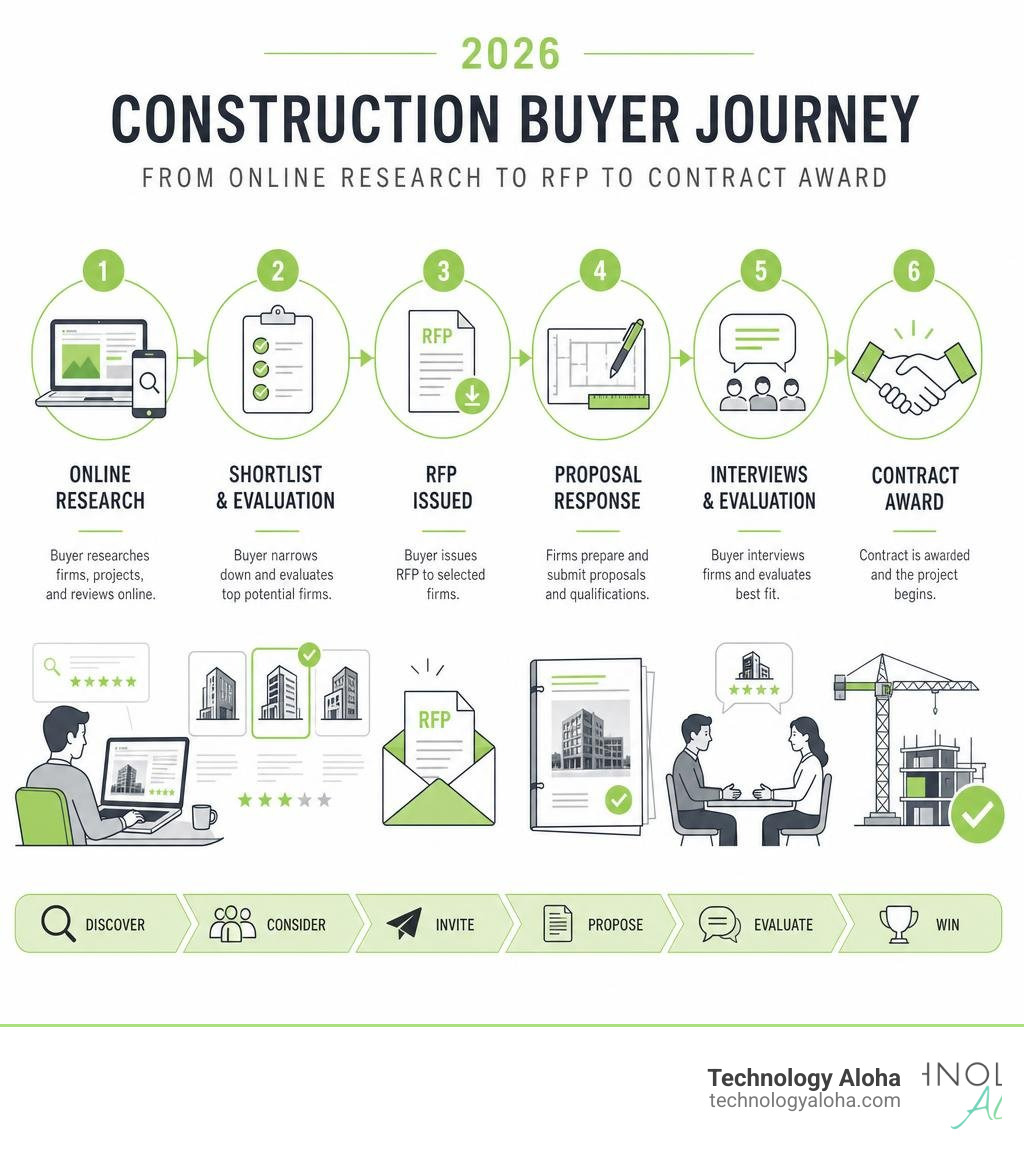
The construction industry has changed. 82% of construction buyers now research firms online before making contact. That means your firm is being evaluated — and often eliminated — before anyone picks up the phone.
Most construction companies respond to this by doing scattered things: a website here, some LinkedIn posts there, maybe a trade show booth. No system. No measurement. No clear path from visibility to winning work.
The research is consistent on one point: companies with documented marketing plans grow 30% faster than those without one.
This guide gives you that plan.
The 4 Ps of a Modern Construction Marketing Strategy
To build a sustainable pipeline of high-value commercial and residential projects in 2026, you must move past the idea that marketing is just “advertising.” True marketing begins long before you buy an ad. It starts with a structural framework that aligns your capabilities with market demand.
For construction firms, this framework is best understood through the classic 4 Ps of marketing—Product, Price, Place, and Promotion—re-engineered specifically for the building industry. As we discuss in The No-Nonsense Guide to Creating Your Small Business Market Strategy, separating these core pillars allows you to build a cohesive growth engine rather than relying on luck.
Defining the Construction Product and Value Proposition in Your Construction Marketing Strategy
In construction, your “product” is not merely the physical structure of steel, concrete, or wood that you erect. Your product is the entire operational experience you deliver to the client. This includes your pre-construction consulting, project management efficiency, safety record, and post-build support.
To stand out in a crowded market, your product must offer clear, specialized value. Generalists face fierce, margin-killing competition. Specialists, however, win on expertise rather than low bids. When defining your product, consider these specialized offerings:
- Pre-construction Consulting: Offering early-stage feasibility studies, value engineering, and permitting support. This positions your firm as a strategic partner before the design phase even concludes.
- Green Building and Climate Resilience: Sustainable building practices and climate-resilient designs are no longer optional. Specializing in LEED-certified construction, energy-efficient envelopes, or coastal-resilient structures directly meets local regulatory and environmental demands.
- Design-Build Integration: Bundling architectural design and construction services under a single contract simplifies communication for project owners and accelerates timelines.
By framing your services as comprehensive solutions to complex logistical challenges, you transform your construction offering from a commodity into a premium service. For more ideas on structuring these services, check out the resources in 12 Effective Construction Marketing Strategies | Indeed.com .
Pricing, Place, and Promotion in Commercial Contracting
Once your product is clearly defined, the remaining three Ps must be calibrated for the commercial and high-end residential landscape:
- Price: Pricing in construction is highly sensitive, but competing solely on the lowest bid is a race to the bottom. Instead, focus on value-based pricing models. Highlight how your accurate estimating systems prevent costly change orders down the road. Use flexible payment terms, such as milestone-based billing, to ease cash flow concerns for developers and project owners. Your pricing strategy should reflect your reliability, safety standards, and historical capacity to deliver projects on time and within budget.
- Place: In our industry, “place” represents both your physical geographic footprint and your virtual presence. Geographically, your strategy must account for local logistics—especially where island-specific shipping timelines, local permitting processes, and environmental regulations dictate project timelines. Virtually, “place” is where decision-makers find you. Your digital channels must make it incredibly easy for developers, architects, and procurement teams to access your portfolio and verify your credentials.
- Promotion: Promotion is the systematic process of getting your value proposition in front of the right decision-makers. It spans digital channels, targeted B2B networking, and regional community involvement.
To organize these elements into a functional roadmap, we recommend establishing a documented plan, as outlined in An Essential Guide to Marketing Plan for Small Business. A structured plan ensures that your pricing models, geographic targets, and promotional campaigns work in harmony to attract profitable contracts. For a deeper look at financial and operational planning, you can also consult the Marketing Plan For Your Construction Company framework.
Building a High-Conversion Digital Foundation
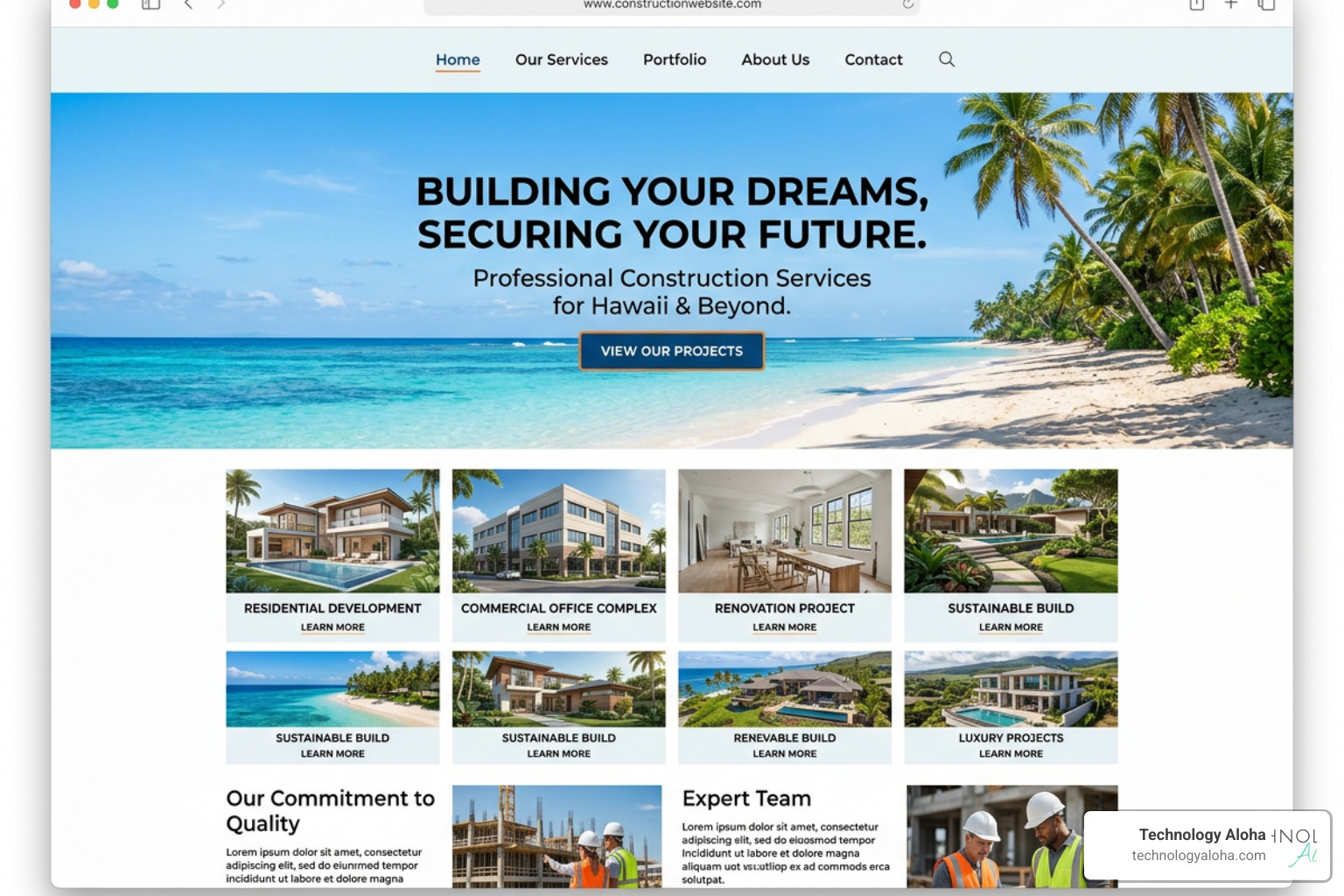
With 90% of buyers performing rigorous digital verification before they ever contact a contractor, your website is your most important sales asset. It is no longer acceptable to treat your website as a static online brochure. It must be designed to convert skeptical visitors into qualified leads.
A high-conversion website must load in under 2.5 seconds, function flawlessly on mobile devices used by developers in the field, and present clear visual proof of your capabilities immediately on the homepage. To learn more about the technical mechanics of conversion-focused web design, read The Complete Guide to High Conversion Websites.
Local SEO and Reputation Management for Contractors
For construction companies, local visibility is the highest-ROI channel available. When a developer or homeowner searches for a contractor, they look to the Google Local 3-Pack—the map listings that appear at the very top of search results. Dominating this space requires a combination of strict local search engine optimization (SEO) and proactive reputation management.
To secure your place in local search, you must maintain absolute consistency in your Name, Address, and Phone number (NAP) across all online directories. You must also build a robust profile of authentic client reviews. Because two in five customers read reviews every time they look for a business, and 92% care deeply about star ratings, your reputation is directly tied to your revenue. A one-star increase in your overall online rating can drive up to a 9% increase in revenue.
Essential Local SEO Citations for Construction Firms
To establish local authority, ensure your firm is accurately listed on these critical platforms:
- Google Business Profile: Fully optimized with high-resolution project photos, accurate service areas, and updated operating hours.
- Yelp for Business: Crucial for local residential and commercial search queries.
- Houzz: Highly relevant for residential remodeling and custom home builders.
- Associated Builders and Contractors (ABC) Hawaii: Essential for local B2B networking and industry credibility. Learn more about maximizing these benefits through the Maximize Benefits with Your Construction Association Membership guide.
- Local Chambers of Commerce: Strengthens your regional network and local search relevance.
To systematically gather reviews and optimize your local footprint, implement the practical tips found in 25 Practical Marketing Tips for Construction Businesses | Chase.com .
Transitioning from Traditional SEO to GEO and AI Search
While traditional SEO focuses on ranking your website in standard Google search results, the landscape in 2026 has expanded to include Generative Engine Optimization (GEO). Procurement teams and developers are increasingly using AI-powered search engines—such as ChatGPT, Perplexity, and Google AI Overviews—to research potential construction partners.
An AI search query might look like this: “Which commercial general contractors have experience with sustainable coastal builds and a strong history of finishing on time?”
To appear in the natural language answers generated by these AI platforms, your digital footprint must be optimized for AI crawlers:
- Publish Highly Specific, Technical Content: AI engines synthesize information from deep within web pages. Writing detailed case studies that explain how you solved complex structural or permitting challenges makes your site highly referenceable.
- Use Structured Schema Markup: Implement LocalBusiness, Project, and Service schema on your website. This structured data allows AI search engines to easily read and verify your services, location, and project history.
- Cultivate Third-Party Mentions: AI platforms look for consensus. Being mentioned in local news articles, industry association directories, and independent review platforms builds the digital authority required for AI search engines to recommend your firm.
Measuring ROI and Avoiding Costly Marketing Mistakes
One of the biggest mistakes construction firms make is treating marketing as an unmeasured cost center rather than a growth engine. To scale predictably, you must track the metrics that actually impact your bottom line, rather than focusing on vanity metrics like social media likes or generic website traffic.
By integrating your website contact forms with a robust Customer Relationship Management (CRM) system, you can track the entire lifecycle of a lead—from the first click to the signed contract. This data allows you to calculate your Customer Acquisition Cost (CAC) and evaluate which marketing channels yield the highest return on investment. To build a comprehensive framework for this data-driven approach, explore our guide on High Performance Digital Strategy.
| Marketing Channel | Key Performance Indicator (KPI) to Track | True Business Impact | Vanity Metric to Ignore |
|---|---|---|---|
| Local SEO & Google Business Profile | Inbound phone calls, direction requests, website click-throughs | Direct project inquiries and local lead generation | Total monthly search impressions |
| Paid Search (Google PPC / LSAs) | Cost per qualified lead, conversion rate of landing pages | Immediate pipeline growth and predictable lead flow | Click-through rate (CTR) without conversions |
| Content & Case Studies | Average time on page, document downloads, pre-RFP inquiries | Pre-RFP shortlist placement and authority positioning | Raw pageviews with high bounce rates |
| Email Newsletters | Open rates of segmented lists, reply rates, click-throughs | Nurturing long-term relationships with developers | Total subscriber count without engagement |
Content Marketing and the Commercial Authority Stack
In commercial construction, the procurement process is long, complex, and highly risk-averse. By the time a formal Request for Proposal (RFP) is issued, the buying committee has often already spent months conducting independent research. They have already formed an “Invisible Shortlist” of firms they trust.
To influence this pre-RFP window, you must deploy a content marketing strategy built around the Commercial Authority Stack. This framework sequences your content assets to address the specific evaluative questions asked by different members of the buying committee (developers, architects, and procurement directors).
- The Proof Layer (Case Studies): Developers want to see documented project outcomes. Your case studies should go beyond simple photos; they must detail the project scope, structural challenges, budget adherence, and final delivery timeline.
- The Expertise Layer (Technical Whitepapers): Architects and engineers evaluate your technical depth. Publishing content on advanced building techniques, local zoning codes, or material innovations proves your operational capability.
- The Trust Layer (Client Testimonials & Video): Procurement directors seek operational consistency and low risk. Video walkthroughs of active, organized jobsites and direct video testimonials from past clients build deep emotional trust.
- The Authority Layer (Thought Leadership): Executive interviews and industry outlook articles position your firm as a market leader, encouraging developers to seek your counsel before projects are even designed.
By systematically building this authority stack, you ensure that your firm is the obvious choice when the buying committee begins shortlisting candidates. For a broader look at how to integrate these content layers into your overall business framework, read From foundation to success: How to build a marketing strategy for construction .
Developing a Multi-Channel Construction Marketing Strategy
A successful construction marketing strategy requires distributing your high-value content across multiple digital channels to maintain top-of-mind awareness.
- Video Marketing: Video is one of the most powerful tools for building trust. 93% of B2B marketers report a strong ROI from video content. For construction firms, this does not require expensive, overproduced commercial shoots. Simple, authentic, high-resolution jobsite timelapses, drone flyovers of completed projects, and quick walkthroughs of active builds achieve massive organic reach.
- Segmented Email Campaigns: Email marketing remains incredibly lucrative, earning high returns for every dollar spent. However, generic, unsegmented blasts are ignored. Segment your email lists by audience type—sending technical project updates to architects, historical cost-saving data to developers, and maintenance tips to past clients. Segmented emails drive up to 50% more click-throughs than unsegmented ones.
- Thought Leadership on LinkedIn: LinkedIn is the premier platform for B2B construction networking. Encourage your project managers and executives to share real-time updates, safety achievements, and solutions to daily project challenges. This humanizes your brand and builds professional connections with local developers and real estate professionals.
To discover how to coordinate these channels into a predictable, always-on pipeline that prevents the devastating “feast-or-famine” cycle, read our insights on Why Your Business Needs a High Performance Digital Strategy.
Frequently Asked Questions about Construction Marketing
Navigating the transition from traditional, relationship-based sales to a modern digital marketing system can raise several strategic questions. Here are the answers to the most common queries we hear from construction executives.
What is the difference between a construction marketing plan and scattered tactics?
A construction marketing plan is a comprehensive, documented strategy that aligns your business goals with a systematic lead-generation system. It defines your target audience, clarifies your positioning, and outlines how your website, content, and advertising channels work together to drive revenue.
Scattered tactics, on the other approximation, are isolated, unmeasured activities—such as posting sporadically on social media, buying a billboard without tracking leads, or redesigning a website without a conversion strategy. As we explain in How to Create a Marketing Strategy for Your New Business, executing scattered tactics without a cohesive strategy wastes valuable budget and makes it impossible to measure ROI.
How much should a construction company spend on marketing in 2026?
Marketing budgets in the construction sector typically range from 1% to 10% of annual revenue, depending on your growth goals and target market:
- Baseline Maintenance (1%–3% of revenue): Ideal for established commercial firms that rely primarily on a stable network of repeat clients and long-term relationships but need to maintain professional digital visibility.
- Aggressive Growth (5%–10% of revenue): Necessary for firms entering new geographic markets, launching specialized services, or targeting high-value residential contracts.
High-growth firms typically allocate this budget across SEO, paid ads, and brand development to ensure a steady stream of inbound opportunities.
How do construction firms win commercial bids before the RFP is issued?
Winning commercial bids before the formal RFP process begins is entirely about securing a spot on the “Invisible Shortlist” during the pre-RFP research window. Commercial developers and procurement directors conduct independent online research months before issuing a solicitation.
By publishing highly specific technical case studies, maintaining an authoritative LinkedIn presence, and sharing educational content that addresses local building codes and logistical challenges, you position your firm as an indispensable expert. By the time the developer is ready to build, they will invite you to negotiate directly or ensure the RFP is tailored to your unique capabilities.
Conclusion
A successful construction marketing strategy is not about chasing superficial metrics or running flashy ads. It is about building a cohesive, data-driven system that transforms your real-world craftsmanship and operational reliability into undeniable digital proof.
At Technology Aloha, we specialize in helping businesses build market authority through strategic positioning, cohesive branding, and high-conversion web design. We understand the unique balance of local values, environmental compliance, and professional excellence required to stand out in a competitive construction landscape.
Ready to build a reliable project pipeline and secure your market authority? Let’s work together to design a system that keeps your business growing. Marketing Strategy with us today.