Direct Response Copywriting Turns Attention Into Measurable Action
Direct response copywriting is persuasive writing built to prompt one immediate, trackable action—such as making a donation, completing an intake form, downloading a resource, or booking a call.
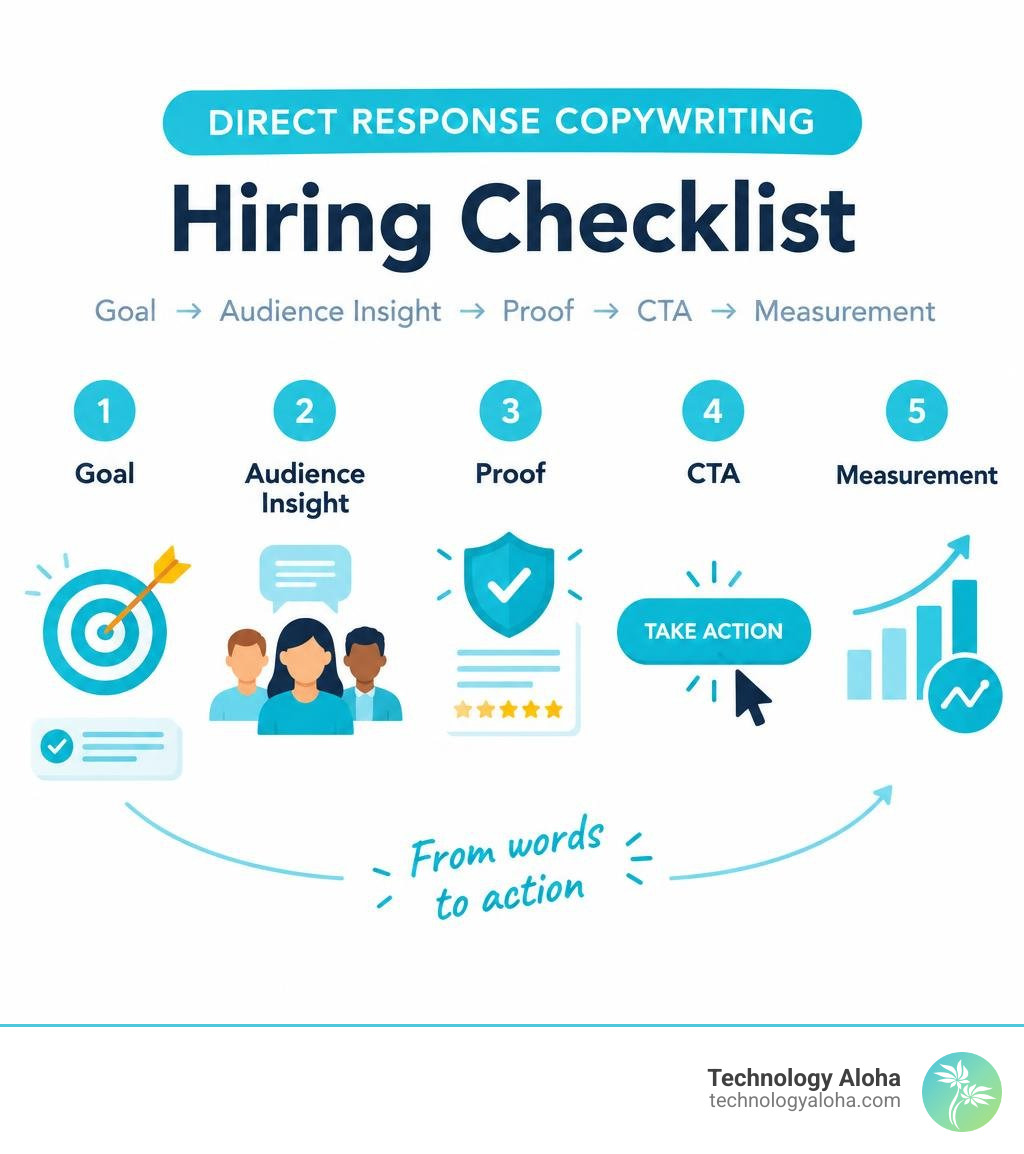
When hiring a direct response copywriting service, look for a partner that can:
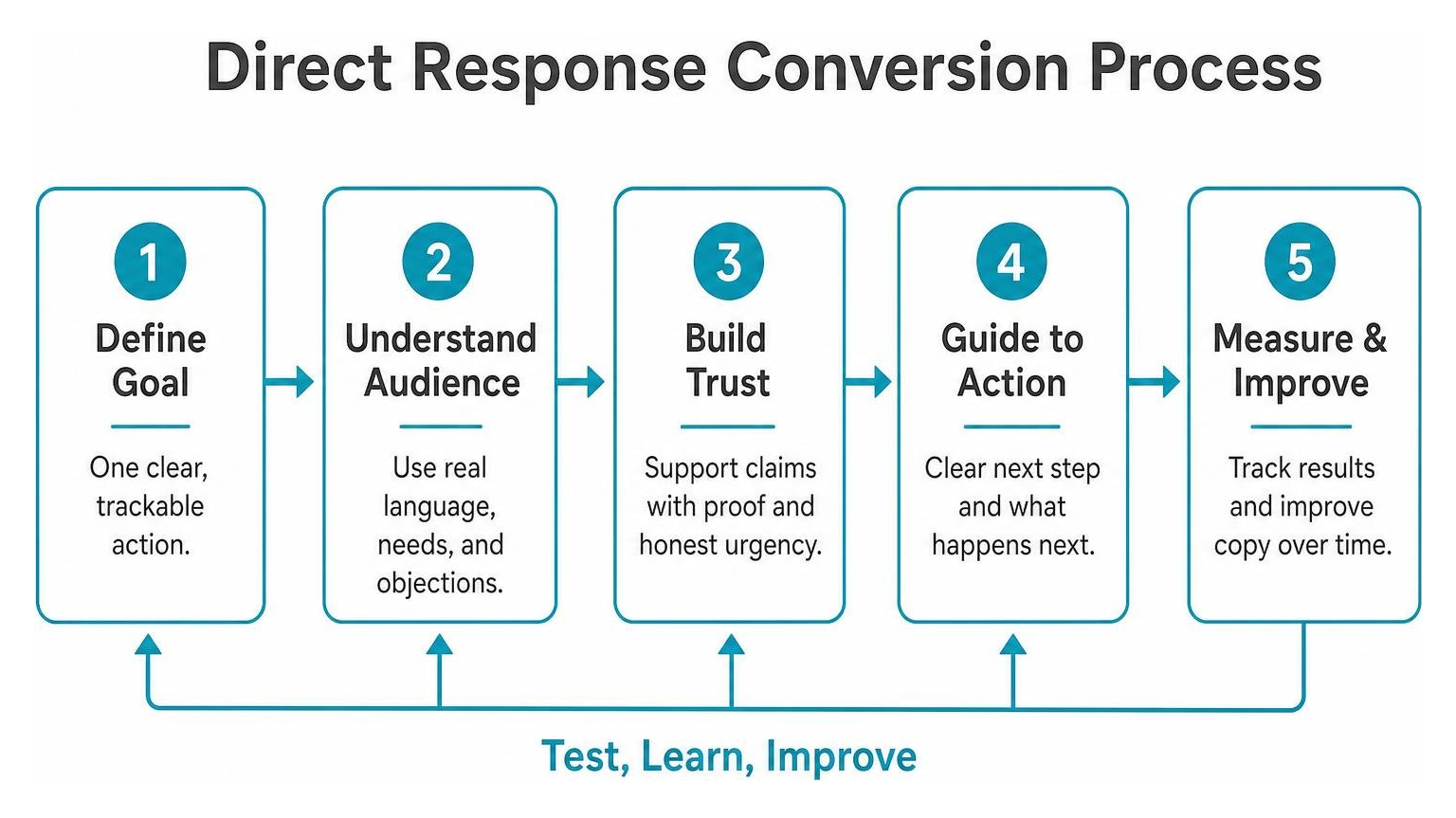
- Define one clear conversion goal for each page, email, or ad.
- Use your donors’ and clients’ real language, needs, and objections.
- Support claims with proof and use only honest urgency.
- Measure results and improve the copy over time.
For food banks and nonprofits, this means replacing vague messages with a clear answer to the visitor’s question: Why should I act now, and what happens next? A strong donation page can make the impact concrete. An intake page can reduce confusion. An email can turn passive support into a completed action.
Brand copy builds recognition over time. Direct response copy asks for a response now—and makes that response measurable. It should be compelling, but never misleading. The FTC’s advertising guidance is a useful baseline: claims must be truthful, supported, and clear.
Direct response copywriting resources to explore:
- The Definitive Guide to Evaluating Persuasive Copywriting Quality
- Hire a Sales Copywriter to Do the Heavy Lifting
- A-Z Guide to Copywriting for Digital Marketing
What Is Direct Response Copywriting and Why Is It Critical in 2026?
Direct response copywriting is the practice of crafting words specifically engineered to provoke a measurable, trackable response right away. Unlike institutional slogans or ambient marketing designed merely to float in a reader’s subconscious, direct response lives on a single scorecard: did the reader take the requested action or did they bounce?
In 2026, rising customer acquisition costs and audience fatigue make accountability essential. Businesses and mission-driven organizations can no longer afford to spend marketing budgets on vague digital impressions. Every campaign asset—from cold outreach emails to complex landing pages—must defend its existence with quantifiable return on investment. Exploring A Comprehensive Guide to Copywriting Services reveals that sustainable growth requires an intentional bridge between audience pain and decisive conversion.
Direct Response vs Brand Advertising: Two Scoreboards
Brand advertising aims for soft metrics: brand equity, broad sentiment, and top-of-mind awareness. It plays a long, expensive game where return on ad spend is often calculated over quarters or years.
Direct response operates on an entirely different discipline. It demands immediate conversion rates, tracks cost per acquisition, and links specific words directly to revenue or completed actions.
| Strategic Dimension | Brand Advertising | Direct Response Copywriting |
|---|---|---|
| Primary Objective | Long-term brand recall and awareness | Immediate, single measurable action |
| Measurement Timeline | Quarters to years | Seconds, minutes, or days |
| Core Success Metrics | Impressions, sentiment, reach | Conversion rate, CPA, ROAS, pipeline velocity |
| Call to Action | Open-ended or absent | Explicit, singular, and low-friction |
| Messaging Focus | Corporate values and identity | Reader pains, concrete transformation, proof |
A high-converting direct response campaign delivers undeniable economic accountability. It treats written copy not as decorative web styling, but as a digital sales representative working uninterrupted around the clock.
The Psychology of Measurable Action
Converting a skeptical reader into an active participant requires addressing predictable human cognitive tendencies:
- Friction Reduction: Every unnecessary field on a form, ambiguous sentence, or generic button label introduces cognitive friction. High-converting copy removes these hurdles by telling the reader exactly what will happen next.
- Second-Person Centricity: Readers do not care about internal corporate milestones; they care about their own problems. Replacing “We provide services” with second-person (“You receive…”) messaging directly addresses user needs.
- The “Reason-Why” Instinct: People naturally look for logical justifications for intuitive decisions. Stating the exact “reason why” an offer exists or why a deadline is set reinforces authenticity and bypasses skepticism.
Core Principles and Persuasion Frameworks That Convert
Writing high-converting direct response copy relies on clear persuasion principles. Understanding The Definitive Guide to Evaluating Persuasive Copywriting Quality shows that effective conversion copy relies on structured architectures that methodically dismantle doubts.

Classic Frameworks for Direct Response Copywriting
Proven frameworks provide reliable structures for organizing persuasive sales narratives:
- AIDA (Attention, Interest, Desire, Action): Grabs attention with a compelling headline, sustains interest with relevant details, builds desire by outlining specific benefits, and concludes with a clear call to action.
- PAS (Problem, Agitation, Solution): Identifies an acute pain point, agitates the emotional and financial cost of leaving it unresolved, and presents your offer as the practical resolution.
- Star-Story-Solution: Introduces a relatable character (the Star), details their struggle against a core obstacle (the Story), and demonstrates how the mechanism solved the problem (the Solution).
For writers implementing these frameworks in modern workflows, referencing an open-source direct response copywriting skill file can help maintain strategic discipline across headlines, proof stacking, and transitions.
The Anatomy of Irresistible Offers and Risk Reversal
A compelling headline cannot rescue an ambiguous offer. Direct response success requires structuring the offer so that saying “yes” carries less perceived risk than doing nothing:
- Risk Reversal: Explicit money-back guarantees, trial periods, or transparent satisfaction covenants eliminate hesitation at the checkout or submission stage.
- Price Anchoring: Establishing the true value of the outcome before presenting the current cost makes the offer a logical choice.
- Honest Scarcity: False countdown timers destroy trust. Genuine operational limits—such as limited cohort capacities or matching gift deadlines—encourage prompt action.
Following the principles in How to Write Sales Pages That Sell Without Being Sleazy ensures your offers remain persuasive and authentic.
High-Converting Formats and Channel-Specific Patterns
Effective direct response copy adapts its structure to match the medium and the reader’s current level of awareness.

Long-Form Sales Pages and Landing Pages
Long-form sales pages provide the necessary space to answer every objection for complex or high-commitment offers. Research shows that long-form copy can outperform short-form variants significantly when higher trust and thorough explanations are required.
Key structural requirements for conversion landing pages include:
- A strong above-the-fold value proposition stating the core outcome.
- Clear typographic hierarchy using scannable subheadings, bullet points, and high-contrast call-to-action buttons.
- Specific case studies and quantifiable testimonials distributed throughout the page rather than isolated at the very bottom.
Direct Response Copywriting for Email Sequences and Paid Social
Direct response email marketing and paid social ads depend on quick pattern interrupts and clear narrative momentum. A practical guide on The Complete Guide to Email Campaign Copywriting Basics highlights several high-performing patterns:
- Cart and Form Abandonment Triggers: Deliver timely reminders emphasizing the benefits left behind and answering common last-minute objections.
- Curiosity-Driven Subject Lines: Use open loops and specific hooks to secure the open without resorting to deceptive clickbait.
- Paid Social Advertorials: Act as bridge assets, shifting cold traffic from curiosity to problem awareness before presenting a direct offer.
Applying the steps in our Step-by-Step Guide to Marketing Copywriting helps maintain strategic continuity across all touchpoints.
Measuring ROI and Scaling Your Conversion Engine
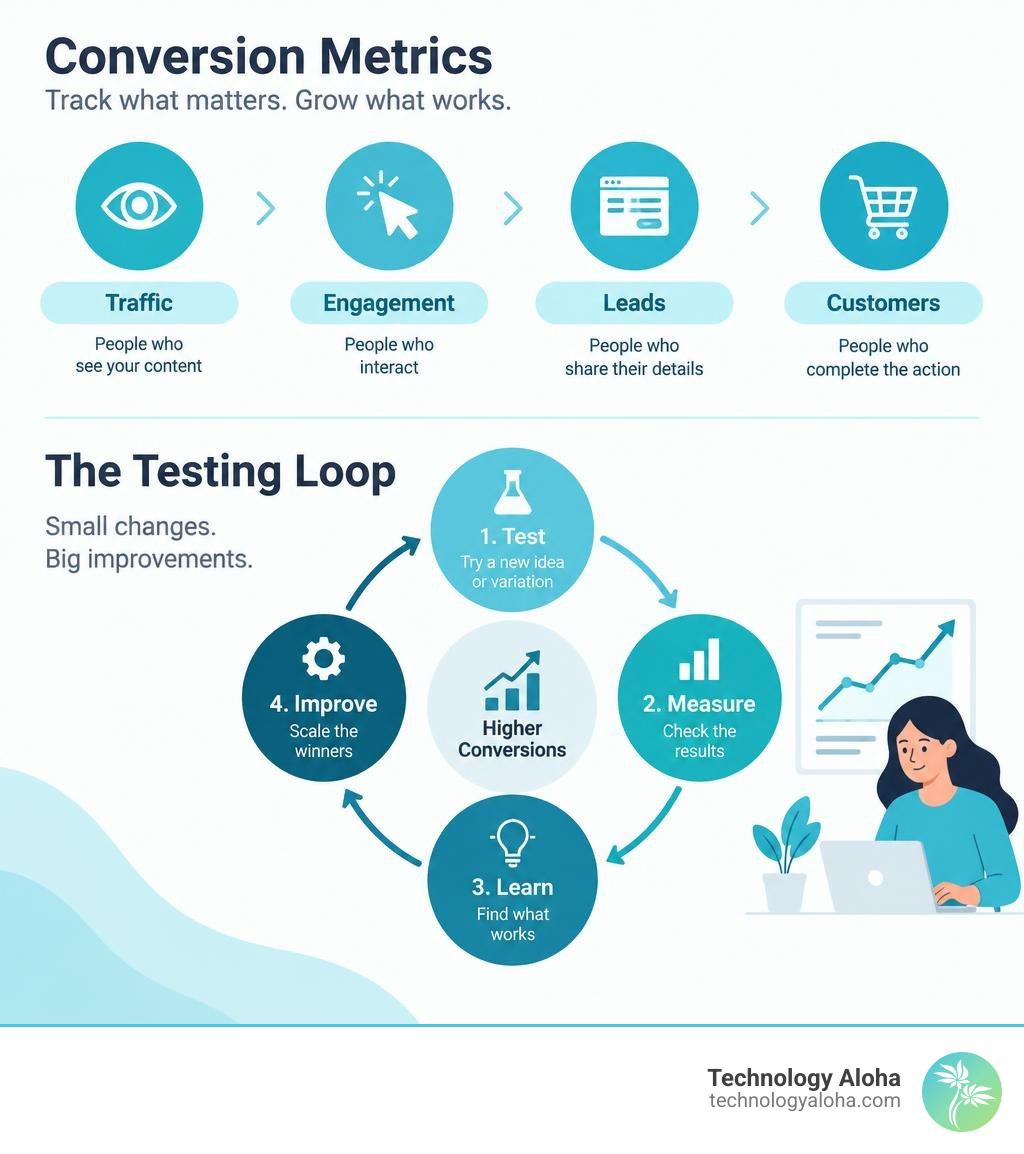
Direct response copywriting requires systematic validation. Every assumption is treated as a testable hypothesis to optimize performance over time.
Core Metrics and Split-Testing Best Practices
Evaluating copy performance involves tracking key quantitative metrics across the entire funnel:
- Conversion Rate (CR): The baseline percentage of visitors who complete the desired action.
- Cost Per Acquisition (CPA): The total ad and production spend required to generate a completed conversion.
- Return on Ad Spend (ROAS): Direct revenue generated relative to advertising dollars spent.
- Average Order Value (AOV) / Lifetime Value (LTV): The downstream financial impact driven by clear offer positioning.
When conducting split tests, isolate single variables—such as headlines, primary guarantees, or button text—to achieve clean statistical significance. If team bandwidth is limited, you can Hire a Sales Copywriter to Do the Heavy Lifting to design and run these optimization tests systematically.
Audience Research: Uncovering Voice-of-Customer Data
High-converting copy is discovered through thorough research rather than guesswork. Voice-of-Customer (VoC) mining involves:
- Analyzing support tickets, donor emails, and customer call transcripts to identify recurring concerns.
- Extracting the exact phrasing people use to describe their challenges from public reviews and discussion forums.
- Documenting unvarnished objections to address and resolve them directly in the body copy.
Matching your messaging to the audience’s genuine language dramatically improves response rates.
Frequently Asked Questions About Driving Immediate Action
How does direct response copywriting differ from content marketing?
Content marketing educates, entertains, and builds affinity over a longer editorial cycle. Direct response copywriting asks for a single, immediate, trackable action at a specific conversion moment. Both disciplines support each other, but direct response is specifically optimized for conversion velocity.
What is the expected ROI when hiring a direct response copywriter?
ROI depends on existing traffic volume, offer clarity, and baseline conversion rates. Because direct response directly targets friction points, successful rewrites can produce substantial gains in conversion rates, lower customer acquisition costs, and increase overall revenue.
How does AI assist direct response copywriting workflows in 2026?
AI tools help synthesize audience research, generate headline angles, and draft initial variations quickly. However, human copywriters remain necessary for strategic positioning, genuine empathy, brand voice governance, and uncovering nuanced emotional hooks.
Conclusion: Transforming Traffic into Predictable Action
Generating web traffic without a clear direct response strategy leads to missed opportunities. Every landing page, email sequence, and ad campaign should serve as a high-performing digital bridge that guides readers into meaningful action.
At Technology Aloha, we build scalable digital infrastructure for nonprofits, food banks, and purpose-driven organizations. By pairing intentional design with conversion copy that reduces friction, we help our partners expand their community impact and drive sustainable results.
To upgrade your messaging and turn passive visitors into engaged supporters, explore how you can partner with our copywriting and editing services to build high-converting web experiences today.