Why Copywriting for Digital Marketing Is Your Highest-Leverage Business Asset
Copywriting for digital marketing is the practice of writing persuasive, strategically structured text across websites, emails, ads, and social media so people can understand an offer, trust it, and take the next step.
Here is the short answer if that is all you need:
| What it does | Where it lives | Why it matters |
|---|---|---|
| Turns website visitors into leads | Homepage, service pages, landing pages | Clear pages help scanning users decide whether they are in the right place |
| Drives email opens, clicks, and replies | Subject lines, nurture sequences, follow-ups | Weak copy prevents the offer from being considered |
| Makes ads worth clicking | Paid search, social ads, retargeting | Copy turns attention into qualified traffic |
| Builds trust before the sales call | About pages, testimonials, FAQs | Trust concerns are a documented cause of checkout abandonment, according to the Baymard Institute’s Cart Abandonment Rate Study |
| Helps search systems understand the page | Blog posts, meta titles, structured content | Clear structure connects user intent with useful answers |
Most business websites have the same core problem: they are written about the business, not for the buyer.
The homepage talks about values. The service page lists features. The CTA says Submit. The visitor leaves because nothing on the page answers the question in their head.
This is not a design problem. It is a copy problem.
Effective digital copy does one job: it answers the right question, at the right moment, clearly enough to earn the next click. No cleverness required. Just clarity, specificity, and an honest understanding of what the buyer wants.
According to research from the Nielsen Norman Group’s article, How Little Do Users Read?, users often read only about 20–28% of the words on a page. They scan. They look for something relevant. If they do not find it fast, they leave.
That is the leverage point. Better copy improves the value of the traffic you already have. It sharpens positioning, reduces confusion, answers objections, and gives each visitor a clear next step.
This guide covers the strategy, frameworks, platform-specific tactics, pricing, tools, and measurement needed to make copy a business asset instead of a decorative layer.
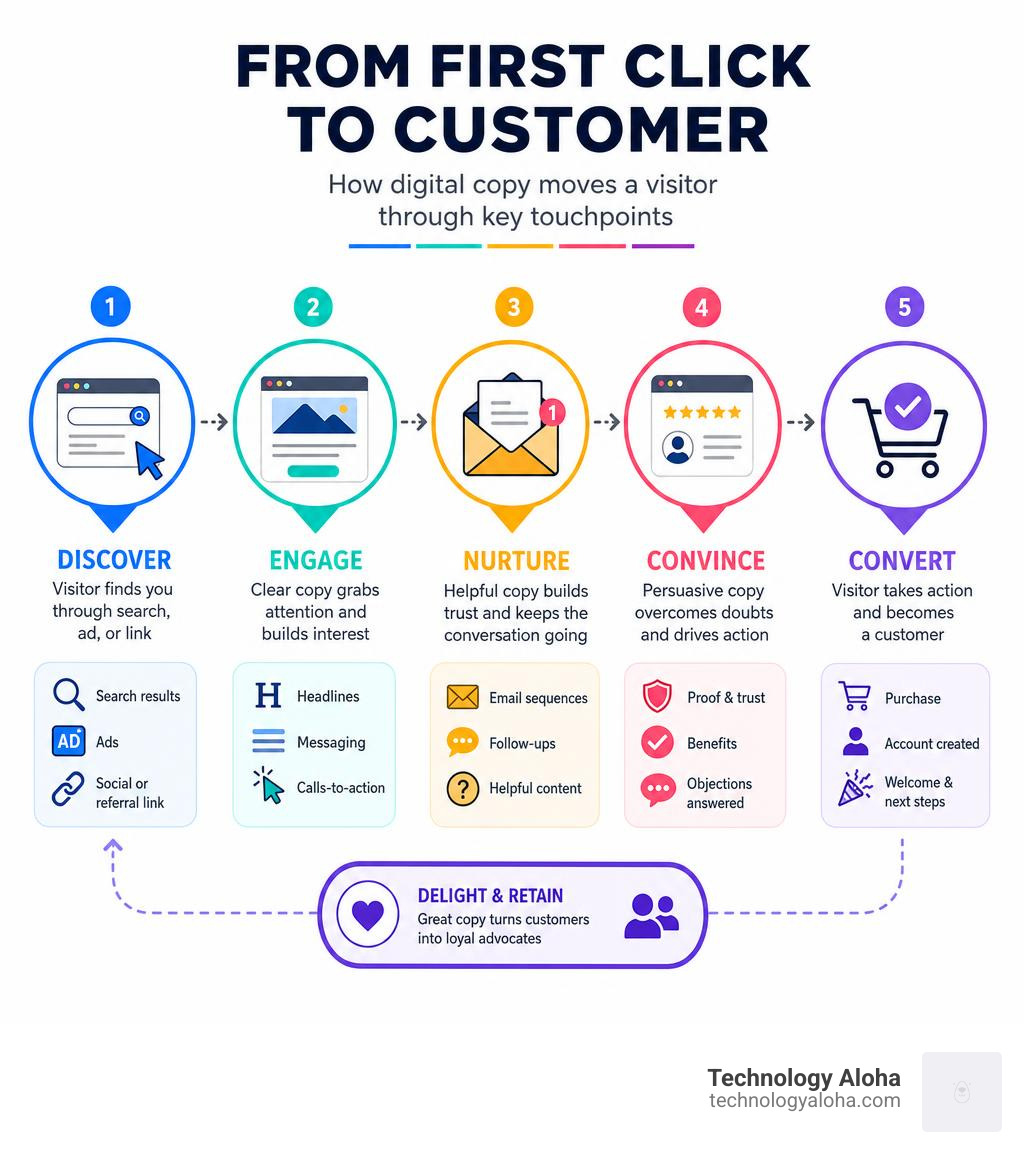
Essential copywriting for digital marketing reading:
- Hire a Sales Copywriter to Do the Heavy Lifting
- SEO Copy Writing 101: Crafting Content That Ranks
- How to Write Sales Pages That Sell Without Being Sleazy
What Copywriting for Digital Marketing Means in 2026
In May 2026, digital copy is no longer filler text wrapped around a design template. It is the connective tissue of your online presence.
Every digital touchpoint, from an organic search listing to a checkout form, requires a deliberate choice of words. Unlike traditional print advertising, digital copy must serve two audiences at once: the skeptical human user and the search systems that help that user find you.
| Feature | Traditional Copywriting | Digital Copywriting |
|---|---|---|
| Primary Goal | Brand awareness and broad-scale persuasion | Direct user action, lead generation, and conversions |
| Reading Style | Linear, deep engagement in print or brochures | Non-linear scanning and fast evaluation on screens |
| Feedback Loop | Delayed through sales reports and brand surveys | Immediate through clicks, bounce rates, heatmaps, and A/B tests |
| Optimization | Static brand voice and creative concepts | Dynamic brand voice, SEO, and UX microcopy |
| Audience Intent | Passive consumption | Active, intent-driven search and navigation |
How copywriting for digital marketing differs from traditional copywriting
Traditional copywriting relies on passive attention. A billboard on the H-1 freeway or a print ad in a local magazine has to interrupt the reader to make an impression.
Online, users are active. They do not read in a neat line from top to bottom. They scan, compare, click, search again, and decide quickly whether a page deserves more time. This behavior demands copy built for rapid eye movement, mobile screens, hyperlinks, and immediate next steps.
Digital copywriting is also measurable. We do not have to guess whether a headline works. We can test it, review the click-through rate, inspect scroll depth, and compare conversion rates. Digital copy can also be personalized based on traffic source, device, location, or previous behavior, then connected to landing pages, email funnels, social posts, and paid ads.
What effective digital copy is hired to do
Good copywriting is not hired to sound clever. It is hired to create business outcomes. Those outcomes include:
- Generating high-quality leads: Converting anonymous traffic into email subscribers, consultation requests, or form fills.
- Driving conversions: Moving a buyer from evaluation to action by removing friction and answering objections.
- Retaining audiences: Keeping readers engaged long enough to understand the offer and trust the brand.
- Building trust: Establishing authority, clarity, and credibility early. Lack of trust is one documented reason shoppers abandon checkout, according to the Baymard Institute’s Cart Abandonment Rate Study.
Where copy fits inside branding, web design, and marketing
Copy should never be the final step in a website project. When copy is treated as an afterthought, designers use generic placeholder text, forcing the real message into arbitrary boxes.
A better process starts with the message. Copy defines the hierarchy, maps the user journey, and determines what each page must prove before asking for action. When brand voice, visual design, and content strategy are aligned from day one, the website becomes easier to understand and easier to act on. For a deeper look at this integration, see our guide on How to Write the Best Copy for Your Website.
Core Strategy: Research, Persuasion, SEO, and Conversion
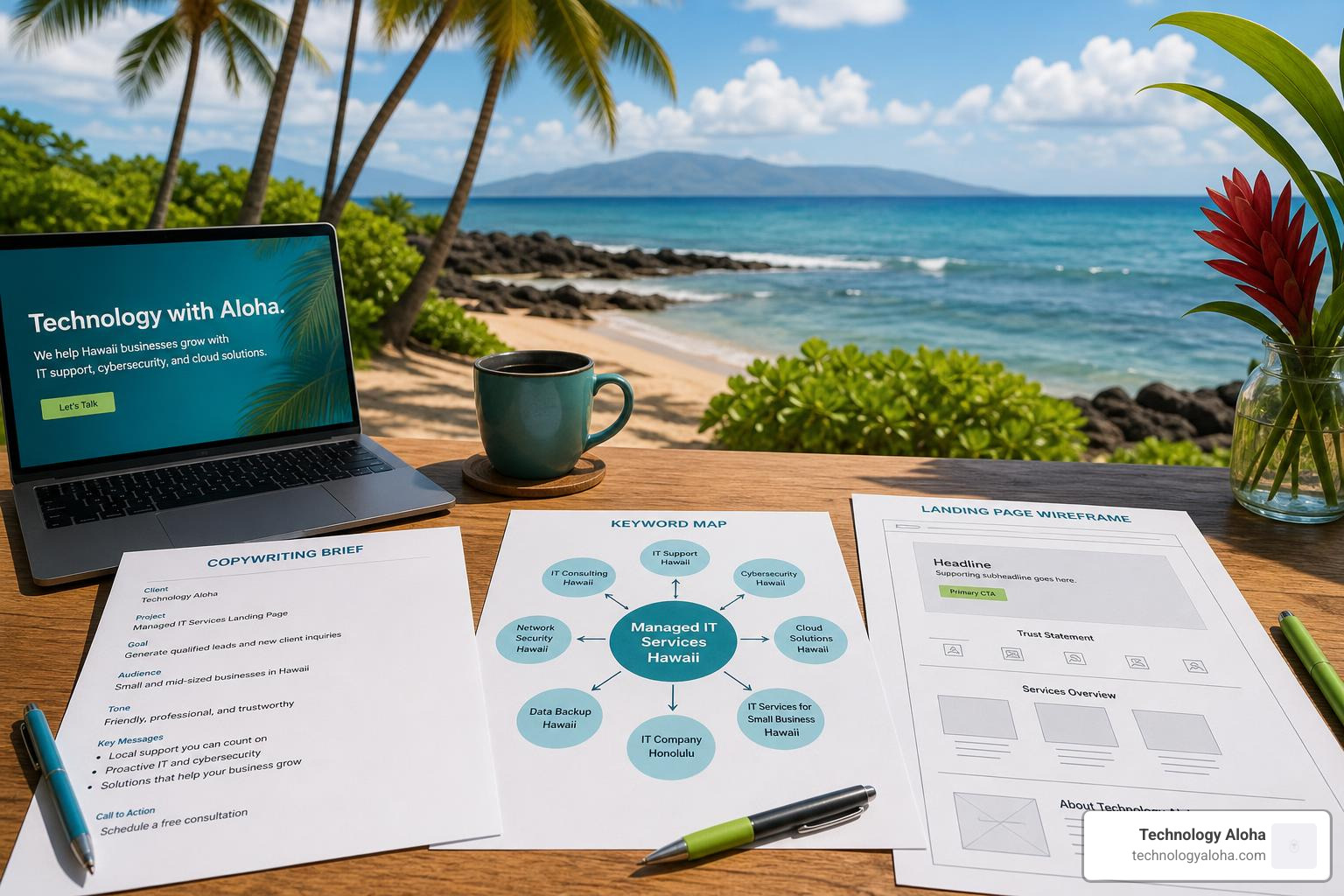
Research before writing a single line
The biggest mistake a writer can make is starting with a blank page and a creative idea. The best copy is not guessed into existence. It is assembled from research.
To write copy that resonates, you must understand the exact language customers use, the problems they want solved, and the objections that keep them from buying.
We gather these insights through a structured research process:
- Voice-of-Customer (VoC) Mining: Reviewing customer support tickets, sales transcripts, surveys, and online reviews to find exact phrases, patterns, and emotional triggers.
- Buyer Personas and Interviews: Speaking with current clients to understand why they chose you, what almost stopped them, and what they compared you against.
- Competitor Gap Analysis: Reviewing other businesses in the same market to identify weak positioning, overused claims, and unanswered buyer questions.
- Objection Mining: Listing every reason a prospect might say no, including price, timing, trust, fit, and internal approval, then addressing those concerns directly in the copy.
Persuasive frameworks that keep copy focused
Frameworks keep writing structured and useful. They stop a page from becoming a handsome brochure with no job.
Here are the most reliable formulas used in copywriting for digital marketing:
- PAS (Problem-Agitate-Solution): Identify a painful problem, explain the cost of leaving it unsolved, and present the offer as the clear solution.
- AIDA (Attention-Interest-Desire-Action): Earn attention with a strong headline, build interest with relevant proof, create desire by showing the outcome, and drive action with a clear CTA.
- FAB (Features-Advantages-Benefits): Do not stop at what the product or service includes. Explain why the feature matters and how it improves the buyer’s situation.
- The Inverted Pyramid: Put the most important information first, then add supporting detail. Hurried readers should understand the point before they scroll.
Headlines, hooks, CTAs, and proof that convert
Your headline has one job: earn the next moment of attention. The best headlines focus on a specific outcome or address a real pain point. Avoid vague claims. Instead of Innovative Digital Solutions, write: Get More Enquiries from Your Website Without Spending More on Ads.
To turn attention into action, your copy must include:
- Specific Hooks: Start by validating the problem, naming the desired outcome, or stating a relevant fact.
- First-Person CTAs: Shift button copy from generic commands like Submit or Click Here to action-oriented language such as Get My Custom Strategy.
- Strategic Social Proof: Place real, specific testimonials near CTAs and decision points. Vague praise is decoration. Specific proof reduces risk.
- Risk Reversal: Use clear guarantees, transparent expectations, and helpful microcopy to answer objections where hesitation happens. Learn how to balance these elements without sounding pushy in our guide on How to Write Sales Pages That Sell Without Being Sleazy.
How SEO turns copywriting for digital marketing into discoverable demand
SEO copywriting is the art of writing copy that can rank in search while remaining useful to human readers. In 2026, keyword stuffing is dead weight. Search engines reward helpful content, strong structure, clear intent alignment, and credible expertise.
To build an effective SEO copy strategy:
- Align with Search Intent: Before writing, search the target keyword and study what is ranking. If the results are informational guides, write a guide. If they are service pages, build a better service page.
- Build Topic Clusters: Create comprehensive pillar pages supported by focused, internally linked sub-articles to establish topical authority.
- Optimize On-Page Elements: Use the primary keyword naturally in the title, opening section, at least one H2 heading, and meta tags. Keep the meta description concise so it does not get cut off in search results.
- Structure for Featured Snippets: Use clear question-and-answer formats, short lists, descriptive subheadings, and plain definitions so search engines and AI assistants can understand the page.
For practical implementation, explore our resources on 10 Simple SEO Copywriting Tips for Your Small Business and SEO Copy Writing 101: Crafting Content That Ranks.
Platform Strategies for Website, Landing Page, Email, Social, and Ads

Website and landing-page copy
Your homepage must pass the 5-second test. Within five seconds of landing on your site, a visitor should answer three questions: What do you do? Who is it for? What should I do next?
When structuring your website pages:
- Above-the-Fold: Keep it simple. Use a bold, benefit-driven headline, a supportive subheadline that adds specificity, and one prominent, low-friction CTA.
- Service Pages: Lead with the problem, show the cost of inaction, present your service as the logical solution, and outline a clear three-step process.
- Pricing Pages: Reduce anxiety with straightforward tier names, clear feature lists, and answers to common billing questions.
- UX Microcopy: Pay attention to small text: error messages, form labels, field instructions, and button descriptions. Clear microcopy reduces cognitive load and keeps users moving.
For a Hawaii business, local relevance matters. A Kahului dental practice, a Kihei dental practice, and a Honolulu dental practice may serve the same market with different positioning: emergency availability, family care, cosmetic expertise, insurance support, or proximity. The structure stays the same: clear promise, specific audience, credible proof, and one next step. For writing frameworks, review our guides on How to Write the Best Copy for Your Website and How to Write Sales Pages That Sell Without Being Sleazy.
Email copy that earns opens, clicks, and replies
Email marketing is personal because the inbox is personal. Your copy has to earn attention without acting as if attention is owed.
- Subject Lines: Keep them short. Use curiosity, specificity, or urgency without spammy clickbait.
- Preview Text: Treat it as a second headline. Use it to support the subject line and give the reader a reason to open.
- Body Copy: Write to one person. Use plain language, short paragraphs, and one clear call-to-action.
- Nurture Sequences: Deliver value before asking for a sale. Answer common questions, share customer success stories, and handle objections early.
To refine your email strategy, read How to Write Marketing Emails That Convert and Stop Getting Ghosted with Better Sales Email Copywriting.
Social media and paid ad copy
On social platforms, your copy competes with family photos, breaking news, work updates, and algorithmic distractions. Your writing must be immediate, relevant, and easy to process.
- Thumb-Stopping Hooks: Start with a bold statement, an open-ended question, or a specific pain point to interrupt the scroll.
- Platform-Specific Formatting: Use short sentences. On LinkedIn, use line breaks to make the copy easy to scan on mobile.
- Clear, Single Offers: Do not ask users to do three different things. Focus each ad on one action: download a resource, register for a webinar, request a quote, or book a call.
Quick Platform Copy Rules:
- Facebook/Instagram Ads: Combine emotional hooks with clear, benefit-driven value propositions. Keep the primary text focused on the user’s pain point.
- LinkedIn Posts: Focus on professional insights, industry lessons, and peer-to-peer value. Use a professional, conversational tone.
- Google Search Ads: Match the user’s search query closely. Put the primary keyword in Headline 1 and use Headline 2 to highlight a specific benefit, proof point, or guarantee.
Copywriting Services: Workflow, Pricing, Tools, ROI, and FAQs
How to choose and brief a digital copywriter
When hiring a professional copywriter, you are not paying for correct grammar. You are hiring strategic judgment: customer psychology, positioning, search intent, conversion flow, and editorial discipline.
A strong copywriter asks hard questions before drafting a headline. They need the business goal, audience, offer, sales process, proof points, objections, and conversion path. They can also explain the strategy behind the copy, not just present polished sentences.
Avoid writers who promise instant rankings, ignore customer data, or move straight to drafting without a brief. For a complete guide on how to evaluate professionals and find the right fit for your business, read Hire a Sales Copywriter to Do the Heavy Lifting and Stop Boring Your Readers: Top Copy Writing Companies to Hire.
How copywriters should price and quote clients
Copywriting pricing varies by scope, research load, page count, channel mix, revision rounds, timeline, and strategic complexity. Common pricing models include:
- Project-Based Pricing: A flat fee for a defined scope of work, such as a 5-page website rewrite. This is usually the clearest option because cost is tied to deliverables rather than hours.
- Retainer Agreements: A monthly fee for ongoing deliverables, such as blog posts, email newsletters, landing-page updates, or ad copy testing.
- Value-Based Pricing: Pricing based on the expected business impact of the copy, often used for high-leverage sales pages, product launches, or major campaigns.
Processes and tools that improve copy quality
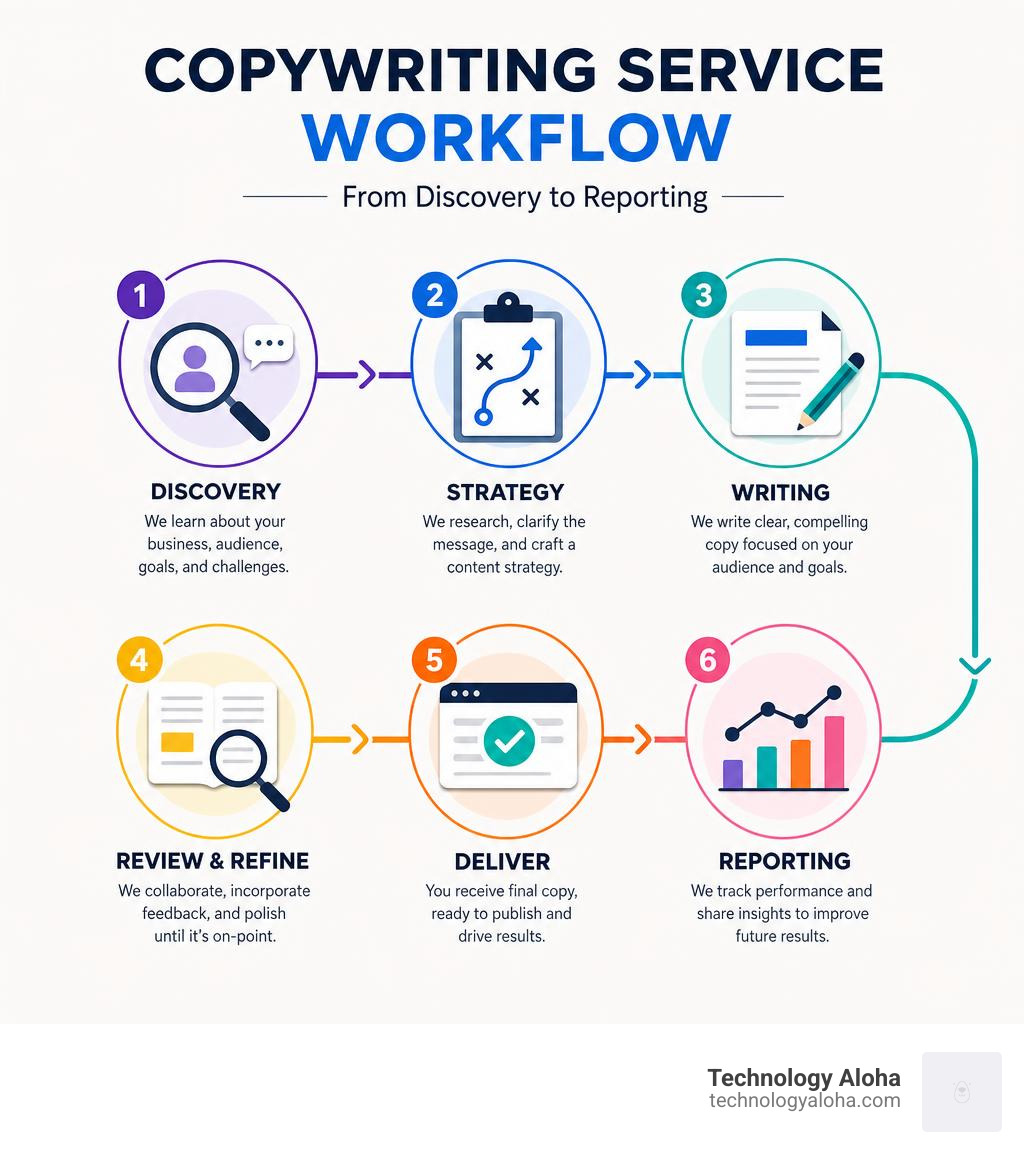
Professional copy improves when the process is explicit. The work should move through strategy, research, drafting, editing, approval, launch, and measurement.
A reliable workflow includes:
- Strategy and Research: Use a creative brief to align on goals, audience, offer, brand voice, proof points, and objections.
- Message Mapping: Define the primary promise, supporting arguments, proof, CTAs, and page hierarchy before drafting.
- Readability Checks: Review sentence length, paragraph density, jargon, scannability, and mobile readability.
- Keyword Optimization: Use a keyword map to align copy with search intent, internal links, headings, and metadata.
- Quality Control: Maintain an editorial checklist for accuracy, accessibility, brand voice, formatting, and legal or compliance requirements.
- Continuous Improvement: Review performance metrics and refresh important pages every 6–12 months.
For a process overview, read The Essential Guide to Becoming a Web Copy Writer.
How businesses measure copywriting success and ROI
Copywriting is an investment, so it needs clear measurement. Start with the business action the copy is meant to influence, then connect that action to revenue where possible.
$$\text{Copywriting ROI} = \frac{\text{Revenue Generated from Copy} – \text{Cost of Copywriting}}{\text{Cost of Copywriting}} \times 100$$
To measure the effectiveness of your copy, track these key performance indicators (KPIs):
- Conversion Rate: The percentage of visitors who take the desired action, such as filling out a form, booking a call, or making a purchase.
- Click-Through Rate (CTR): The percentage of people who click on your ad, search listing, email link, or CTA.
- Bounce Rate and Time on Page: High bounce rates and low time-on-page can indicate that the copy does not match intent or fails to engage the reader.
- Lead Quality: Track whether the leads generated by the copy become qualified opportunities and paying customers.
- Search Visibility: Review rankings, impressions, and organic traffic for pages built to capture search demand.
- Email Replies and Sales Conversations: For nurture and follow-up copy, measure replies, booked calls, objections raised, and closed deals.
FAQs about copywriting for digital marketing
What is the difference between SEO copywriting and conversion copywriting?
SEO copywriting focuses on visibility: helping content rank in search and answer the user’s query. Conversion copywriting focuses on action: moving the reader to buy, book, subscribe, or request a quote. The strongest digital marketing combines both.
How long should digital copy be?
Copy should be as long as necessary to answer the reader’s questions and handle objections, and not longer. A simple service page may need a concise explanation. A competitive guide may need deeper coverage, examples, FAQs, and internal links.
Can AI content rank on Google?
AI-assisted content can perform when it is useful, accurate, specific, and edited for human readers. Unedited AI content often lacks customer insight, real-world specificity, and brand voice. AI can assist with structure, summaries, and variation. Human strategy and editing are still essential.
What makes digital copy ethical?
Ethical copy is accurate, specific, and transparent. It does not manufacture scarcity, exaggerate results, hide material terms, or pressure readers with false urgency. It gives the buyer enough information to make a confident decision.
Conclusion: Turn Better Copy Into Measurable Growth
In 2026, copywriting for digital marketing is not about clever slogans or filling templates with words. It is the discipline of making digital decisions easier: what the offer is, who it serves, why it matters, what proof supports it, and what action comes next.
Better copy does not decorate a weak strategy. It exposes it. If the message is vague, the page feels vague. If the offer is sharp, the page can move quickly.
Start with the buyer’s question. Answer it in order. Remove friction. Prove the promise. Ask for one clear next step. That is how copy becomes a measurable business asset.