Why Sales Email Copywriting is Essential for Your Business
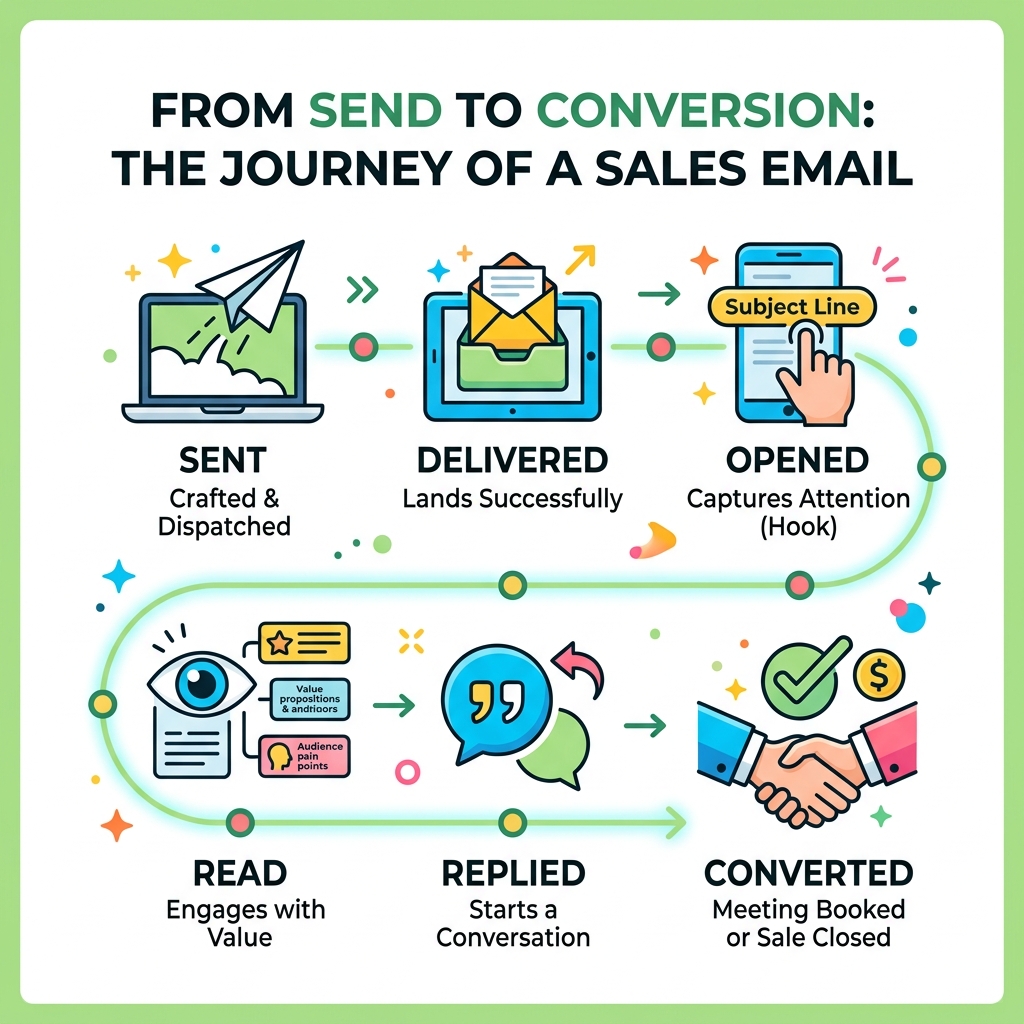
Sales email copywriting isn’t just about sending messages—it’s about sparking conversations and closing deals. If you want to write sales emails that actually get replies, focus on these core principles:

- Know Your Audience: Understand their pain points and needs before you write.
- Hook Them Fast: Craft subject lines and opening sentences that demand attention.
- Offer Value: Show how your solution directly addresses their challenges.
- Clear Next Steps: Guide them with a single, easy call-to-action.
- Follow Up Smart: Provide continued value without being pushy.
- Test and Learn: Use data to constantly improve your approach.
In today’s crowded digital landscape, your inbox is a battlefield. The average professional receives 121 emails daily, making it tough for any single message to stand out. While email marketing boasts an impressive $36 return for every $1 invested, generic sales emails often get ignored. Industry averages show only 23.9% of emails get opened, and a mere 8.5% receive a response. This means that to stop getting ghosted and turn prospects into clients, you need a precise, strategic approach to your sales emails. This guide will show you how to cut through the noise and connect with your audience.
The Strategic Mindset of Sales Email Copywriting
Writing an email that asks for money or time can feel like walking onto a quiet beach in Kahului and shouting through a megaphone. We often worry about being a nuisance or sounding “salesy.” However, the most successful sales email copywriting comes from a place of service, not solicitation. When we shift our focus from “What can I get?” to “How can I help?”, the entire tone of our outreach changes.
Overcoming the Dread of Selling
The dread of selling is real, but it is usually based on the fear of rejection. In email, rejection often looks like an unsubscribe. Here is a secret we have learned: unsubscribes are actually a gift. They help with list hygiene by removing people who aren’t interested in what you offer, which improves your deliverability to the people who do care.
To keep your audience engaged and reduce that selling anxiety, we recommend the 3:1 rule. For every one sales-focused email you send, provide three emails packed with high-value, free information. This builds a “value bank” you can draw from when it is time to make an offer. Business survival depends on direct outreach. If you don’t tell people how you can solve their problems, you are denying them the help they need.
Adopting a Value-First Approach
A value-first approach is rooted in human connection and reciprocity. Instead of listing your product features, focus on the recipient’s world. What keeps them up at night? What are their goals for 2026? Your writing should be customer-centric. Every sentence should prove you understand their unique challenges. This builds trust, and as scientific research on social proof shows, people are far more likely to take action when they see that others in their position have found success with you. This is why a solid Marketing Strategy always prioritizes the prospect’s needs over the company’s ego.

Foundational Steps Before You Write
Great sales email copywriting happens long before you open a blank draft. It starts with deep research and organization. If you try to write to “everyone,” you will likely resonate with no one.
Organizing Your Swipe Files
One of the most effective habits we can adopt is creating a “swipe file.” This is a digital folder where you save emails that actually made you stop, click, or buy. We suggest categorizing them into two folders:
- Sales Emails I Opened: Analyze the subject lines. What made you curious?
- Campaigns That Made Me Buy: Look at the sequencing. How did they build tension or desire over three or four emails?
By modeling success, you aren’t copying; you are learning the rhythm of effective persuasion. You can find more Copywriting & Editing to help refine this process if you find yourself stuck.
Segmenting for Relevance
Sending the same email to a new lead and a long-term customer is a recipe for low engagement. Research on email list segmentation shows that targeted campaigns are significantly more effective. We recommend segmenting your list based on:
- Engagement Levels: Are they “super-fans” who open everything, or “ghosts” who haven’t clicked in months?
- Product Relevance: Only send information about services they actually need.
- Trigger Events: Did they just hire a new VP of Sales or raise a round of funding?
Tailoring your message to these specific signals makes your email feel like a personal note rather than a mass broadcast.
Anatomy of a High-Conversion Sales Email
Structure matters. In 2026, the majority of your recipients will read your email on a mobile device while multitasking. If your email looks like a wall of text, it’s going straight to the trash. We need to design for scannability and impact.
Crafting Irresistible Sales Email Copywriting Subject Lines
Your subject line is the gatekeeper. Nearly half of all recipients decide whether to open an email based on the subject line alone. To win this 3-second battle, keep your subject lines between 6 and 10 words. Research on subject line length indicates that this range maximizes open rates.
Use urgent language sparingly—it can boost opens by 22%, but overusing it leads to “spam fatigue.” Emojis can also be a powerful tool, with some brands seeing a 56% open rate when using them thoughtfully. Most importantly, write like a human. A subject line like “Question re: your 2026 growth goals” feels much more authentic than “!!! DISCOUNT INSIDE !!!”
Opening Lines and Body Copy that Hook
The first sentence of your email is the most expensive real estate you own. Avoid generic openers like “I hope this email finds you well.” Instead, use a “signal” that proves you’ve done your homework. For example: “I saw your team just hit its 50th employee milestone—congratulations!”
The body copy should be lean. Research on email length suggests that emails between 50 and 125 words often get the best response rates. Focus on one clear pain point and one clear benefit. Use storytelling or a brief case study to illustrate your point, rather than just listing features.
Phrasing Calls-to-Action in Sales Email Copywriting
The biggest mistake we see is the “Specific CTA” that asks for too much, too soon. Asking a stranger for a 30-minute meeting is a high-friction request. Instead, we advocate for the “Interest CTA.”
According to research on Interest CTAs, asking “Would you be interested in learning more?” resulted in a 30% booked meeting rate, compared to just 15% for specific time requests. It gives the prospect autonomy and feels like a conversation rather than a demand.
The Fortune is in the Follow-Up
Most sales are not made on the first touch. In fact, only 2% of sales happen during the first contact. To be successful, we must be persistent, but there is a fine line between being a helpful resource and being a digital pest.
Strategies for Persistence Without Annoyance
A single follow-up email can boost your response rate by a staggering 220%. We have found that a three-email campaign is the “sweet spot” for most outreach.
- Email 1: The initial value-driven pitch.
- Email 2: A “bump” email sent 2–3 days later, adding a new piece of value or a case study.
- Email 3: The “Breakup” email. This isn’t aggressive; it simply acknowledges that now might not be the right time and leaves the door open for the future.
Research on follow-up frequency shows that most sales require at least five follow-ups to close, but for initial cold outreach, three is often enough to gauge interest without burning the bridge.
Adding Value in Every Touchpoint
Never send an email that just says “just checking in.” That provides zero value to the recipient. Instead, use every follow-up to share something useful:
- A relevant industry article.
- A brief video testimonial from a similar client.
- A specific observation about their website or LinkedIn profile.
- An invitation to a webinar or local Hawaii business event.
By consistently showing up with value, you position yourself as an expert rather than a salesperson.
| Email Attempt | Response Rate | Strategy |
|---|---|---|
| 1st Email | 8.5% | Value-led Problem/Solution |
| 1st Follow-up | 18% | Case Study / Social Proof |
| 2nd Follow-up | 27% | Specific Resource / Insight |
| 5+ Follow-ups | 80% (Long-term) | Consistency & Relationship |
Leveraging AI and Data for Optimization
In 2026, we have tools that our predecessors could only dream of. However, AI should be used to enhance our humanity, not replace it. Data-driven insights allow us to stop guessing and start knowing what works.
Scaling Personalization with AI Tools
Writing personalized emails for hundreds of prospects is time-consuming—it can take up to 21% of a salesperson’s day. AI tools can now assist by researching prospects and suggesting “icebreakers” based on recent news or social media activity. We use AI to generate context-aware drafts that we then refine with our own voice and brand standards. This allows us to scale our outreach while maintaining a high level of relevance. You can learn more about How to Write Marketing Emails That Convert to see how these tools fit into a larger funnel.
Measuring Success and Iterating
You cannot improve what you do not measure. We track four key metrics for every campaign:
- Open Rate: Indicates if your subject lines are working. Aim for 23% or higher.
- Click-to-Open Rate (CTOR): Shows if your body copy is engaging enough to drive action.
- Positive Reply Rate: The ultimate goal of cold outreach.
- Unsubscribe Rate: A high rate might mean your list segmentation is off.
Research on email deliverability also shows that including images can increase conversion rates by 42% without hurting your ability to reach the inbox. We always recommend A/B testing one variable at a time—like testing two different subject lines—to see what resonates best with your specific Hawaii-based audience.
Avoiding Common Mistakes and Spam Filters
Nothing kills a sales campaign faster than landing in the spam folder. With strict Google sender guidelines in place for 2026, technical deliverability is just as important as the words on the page.
Technical Deliverability Essentials
To ensure your emails actually reach your prospects, your domain must be authenticated. This involves three key protocols:
- SPF (Sender Policy Framework): Specifies which mail servers are authorized to send email on behalf of your domain.
- DKIM (DomainKeys Identified Mail): Adds a digital signature to your emails, proving they weren’t tampered with in transit.
- DMARC (Domain-based Message Authentication, Reporting, and Conformance): Tells receiving servers what to do if an email fails SPF or DKIM.
Without these, bulk senders are often blocked by major providers like Gmail and Yahoo.
Copywriting Pitfalls to Evade
Even with perfect technical setup, your copy can still trigger spam filters. Avoid “spammy” words like “Free,” “Cash,” or “No catch.” Also, steer clear of fake urgency (e.g., “LAST CHANCE TO SAVE YOUR BUSINESS”) and excessive punctuation.
The biggest copywriting mistake, however, is being “Me-Focused.” If your email uses the words “I,” “Me,” or “Our company” more than “You” and “Your,” you are likely boring your prospect. Keep the focus entirely on their goals and how you can help them achieve them.
Frequently Asked Questions about Sales Email Copywriting
How often should I send sales emails to my list?
We recommend the 3:1 value-to-sales ratio. For a dedicated sales sequence, sending 3–5 emails over a 14-day period is generally effective. After that, move non-responders to a long-term nurture list where they receive monthly updates or helpful content.
Do I need a massive email list to see results?
No. In fact, a small, highly engaged list of 500 people is often more profitable than a stale list of 10,000. Focus on the quality of your leads and the relevance of your sales email copywriting. An engaged list in a specific niche—like the Hawaii tourism or tech sector—will always outperform a generic mass list.
Is it a bad sign when people unsubscribe from my sales sequence?
Not at all. As we mentioned earlier, unsubscribes are a natural part of list hygiene. They help you focus your time and energy on the people who are actually interested in your services. If your unsubscribe rate is consistently above 1%, you may need to look at your targeting, but a few “goodbyes” are perfectly normal.
Conclusion
Mastering sales email copywriting is a journey of constant refinement. By shifting your mindset to a value-first approach, organizing your research, and structuring your emails for maximum impact, you can transform your inbox from a source of dread into a powerful engine for growth.
At Technology Aloha, we believe that great design and data-driven insights should work hand-in-hand. Whether you are looking for strategic positioning, a user-centric website, or a cohesive branding strategy that converts, we are here to help your business thrive in Hawaii and beyond. Copywriting & Editing that speak directly to your customers’ hearts—and their needs. Let’s make 2026 the year your sales emails finally get the attention they deserve.