A Comprehensive Guide to Brand Activation Plan
What a Brand Activation Plan Actually Is (And Why You Need One Now)
A brand activation plan is the strategic roadmap that turns your brand positioning from a document into a lived experience—one that moves real people to take real action.

If you’ve just launched a product, completed a rebrand, or finished a round of market research, you already have the raw material. The activation plan is how you use it.
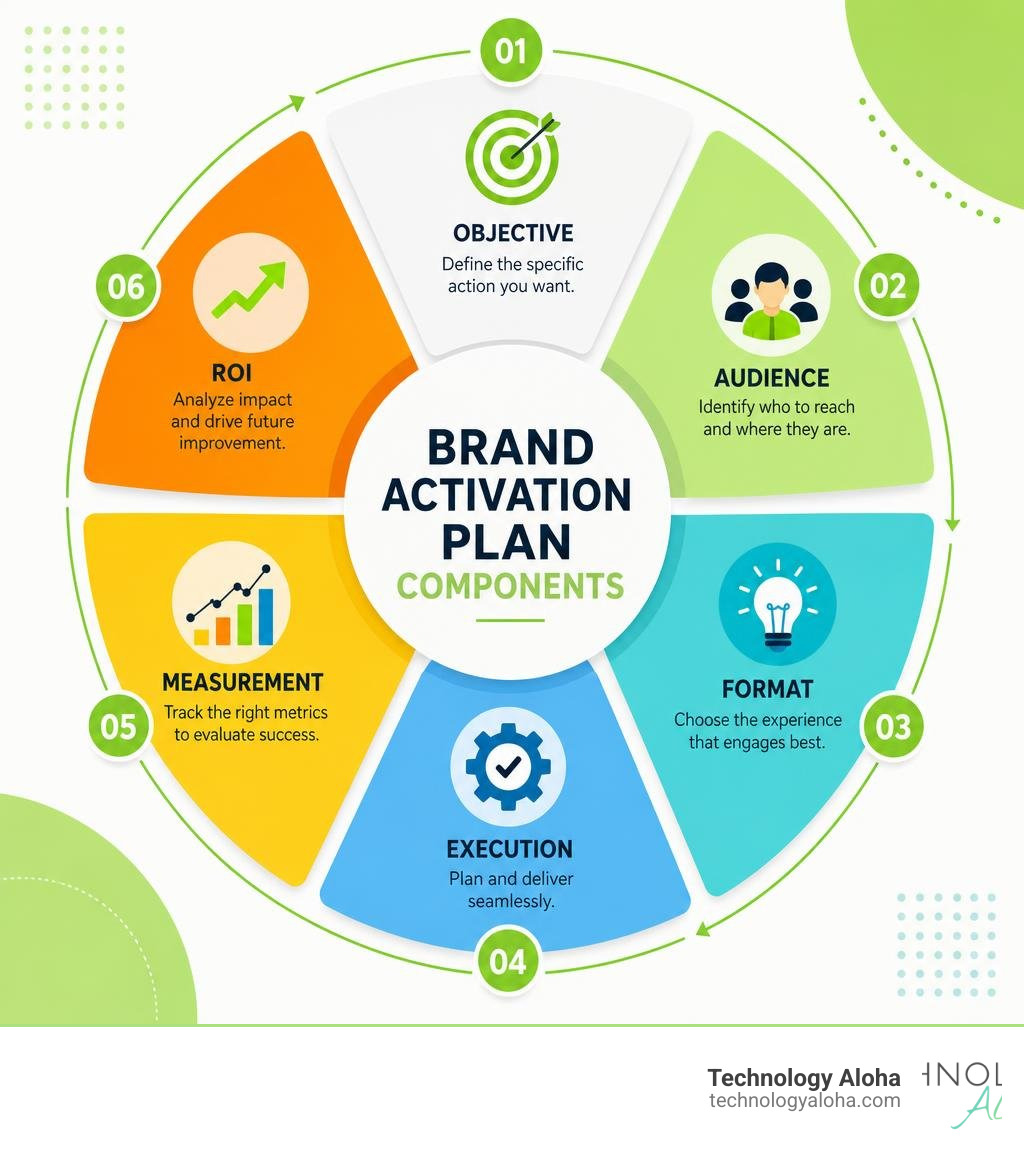
Quick answer: Here’s what a brand activation plan covers:
- Objective — What specific action do you want consumers to take?
- Audience — Who exactly are you trying to reach, and where are they?
- Format — What type of experience will engage them best?
- Execution — How will you deliver it, operationally and creatively?
- Measurement — How will you know it worked?
That’s the core of it. The sections below go deeper on each.
Most small businesses skip this step entirely. They build a brand, maybe even a solid one, and then… wait. They assume awareness will convert on its own. It won’t.
74% of consumers say engaging with a branded event or experience makes them more likely to buy the product. That’s not a passive stat—it’s a direct argument for doing something your audience can participate in, not just observe.
The gap between a brand that exists and a brand that performs is activation.
Glossary for brand activation plan:
What is Brand Activation and Why Does It Matter?
Brand activation is the process of bringing your brand to life through experiences and campaigns that allow consumers to interact directly with your brand’s story. It is the practical execution of your broader strategy, shifting the focus from passive promotion to active, engagement-based marketing.
At its core, a brand activation plan translates research and positioning into tangible business realities. Insights are only valuable when they inspire ideas, inform decisions, and build real momentum. By creating immersive environments, you forge an emotional connection that builds enduring relationships, turning passive observers into active participants and loyal advocates. To understand how this fits into your overarching business trajectory, review our foundational guide on Branding Strategy 101.
For a deeper dive into how strategy transitions into execution, you can explore the Best Guide to Brand Activation Strategies & Planning – MaterialPlus.io .
Brand Activation vs. Traditional Marketing
Traditional marketing relies on one-way communication. It pushes a message out to a passive audience, prioritizing broad reach and passive exposure. Brand activation, by contrast, is a participatory, two-way engagement.
While traditional advertising builds awareness, brand activations build memory. People remember how an experience made them feel. By inviting active participation, you cut through the modern sensory clutter and achieve much higher brand recall.
| Feature | Traditional Advertising | Brand Activation |
|---|---|---|
| Communication Flow | One-way (brand to consumer) | Two-way (interactive dialogue) |
| Audience Role | Passive observer | Active participant |
| Primary Goal | Broad awareness and reach | Emotional connection and direct action |
| Impact Metric | Impressions and CPM | Engagement rate, leads, and conversion |
| Core Outcome | Brand recognition | Brand memory and loyalty |
Why Your Business Needs a Brand Activation Plan
Developing a new brand positioning strategy or launching a new product is a major milestone, but it is only the beginning. Without a dedicated activation plan, your new assets sit quietly in a folder.
An activation plan is essential for:
- Building Consumer Trust: Real-world, physical, or highly interactive digital experiences prove that your brand is more than just a slick website design. They demonstrate your values in real time.
- Securing Market Traction: When launching a product, you need immediate feedback and trial. Activations lower the barrier to entry by giving consumers a direct way to sample, test, or experience your offer.
- Differentiating Your Brand: In crowded markets, a memorable experience sets you apart far more effectively than a slightly lower price point or a louder ad campaign.
To ensure your brand has a stable foundation before you launch, read The Ultimate Guide to New Brand Development.
Core Components of a Comprehensive Brand Activation Plan
A successful brand activation plan requires a balanced strategic framework. It is not a collection of random creative ideas; it is a disciplined, step-by-step strategic planning process. Every element must align with your primary business goals to protect your budget and maximize your return on investment.
Internal Stakeholder Alignment
You cannot activate your brand externally if your team does not understand it internally. Securing employee buy-in is a strict prerequisite.
We recommend scheduling a dedicated share-out session with your essential internal stakeholders—including marketing, sales, customer service, and product development. During this meeting, present your research findings, explain the business reasoning behind the campaign, and distribute a comprehensive brand toolkit. This toolkit should include updated logos, talking points, email signatures, and brand guidelines.
When your team is aligned, they act as natural brand ambassadors, delivering a consistent experience across every single customer touchpoint.
The Brand Playbook
To keep your activation consistent over time, document your core strategy in a brand playbook. This playbook serves as the operational manual for any creative partner or internal team member executing your campaigns.
Your playbook must document:
- Value Propositions: The specific, tailored benefits you promise to your target customer segments.
- Brand Voice and Tone: How your brand sounds—whether authoritative, playful, warm, or direct.
- Brand Personality and Character: The human traits associated with your brand.
- Reasons to Believe: The functional and emotional proof points that validate your brand promises.
For a complete breakdown of what to document, read our guide on The Most Important Elements of Your Brand.
Strategic Brand Activation Playbook: Formats and Tactics
An effective activation strategy establishes an omnichannel presence, meeting your audience exactly where they are. By blending physical and digital touchpoints, you extend the reach of your campaign far beyond its physical footprint.

Experiential Marketing and Live Activations
Experiential marketing is the broader strategy of engaging audiences through multi-sensory physical experiences, while brand activation refers to the specific, targeted campaigns designed to drive immediate action.
Some of the most effective live activation formats include:
- Pop-Up Shops: Temporary retail spaces that create urgency, allow you to test new product lines, and offer exclusive, photogenic brand playgrounds.
- Product Sampling: Highly effective for consumer goods. Giving people a direct, risk-free trial of your product generates immediate feedback and rapid purchase intent.
- Immersive Installations: Transforming a physical space—such as a local event venue or a pedestrian plaza—into a sensory representation of your brand story.
For businesses looking to launch live campaigns in our local region, partnering with specialists who understand the local landscape is vital. You can explore regional production strategies with resources like Experiential Marketing in Hawaii – Makai Inc , review local build designs via Luxury Event Activations in Maui, Hawaii , or find professional planners through Top Experiential Activation Planners In Hawaii | PartySlate .
Digital Integration and Social Amplification
Modern brand activations must be designed for amplification. A physical event that only reaches the people in the room is a missed opportunity.
To scale your impact:
- Build Shareability into the Concept: Create visually striking “share triggers”—highly photogenic installations, unique interactive elements, or dramatic reveals that naturally encourage visitors to post on social media.
- Leverage AR Overlays and QR Codes: Integrate interactive digital layers. A simple QR code can lead to a custom landing page, an augmented reality product try-on, or a lead capture form.
- Feature Social Media Walls: Display user-generated content (UGC) in real time at your event to build social validation and encourage more attendees to participate.
To build a structured strategy that seamlessly connects your physical and digital assets, read the step-by-step advice in How to Create a Brand Activation Strategy | Rocket-X .
Strategic Partnerships and Cause Marketing
Collaborating with aligned organizations, local creators, and community groups can dramatically expand your activation’s reach and establish immediate trust.
Cause marketing is particularly powerful because modern consumers factor brand values into their purchasing decisions. For example, in his book The Power of Moments (which you can find on Amazon), authors Chip Heath and Dan Heath explore how creating defined, positive peaks in a customer journey builds lifelong loyalty. Aligning your brand with a meaningful cause creates those emotional peaks.
When designing partnerships:
- Ensure Value Alignment: Partner with groups that genuinely share your core values.
- Focus on Real Impact: Avoid superficial campaigns. Create activations that provide tangible support to a community need.
- Leverage Local Relevance: If you are activating locally, design campaigns that respect and support the local community and environment. For a great regional example of value-driven community alignment, study the Maui Emergency Marketing Campaign Led by HVCB .
How to Build and Execute Your Strategy
Executing a brand activation plan successfully requires transition from creative thinking to strict operational discipline. The strongest concept will fail if the logistics, staffing, and compliance are poorly managed.

Step-by-Step Guide to Executing Your Brand Activation Plan
We recommend a disciplined, phased approach to move your activation from concept to reality. Use the following framework to guide your team:
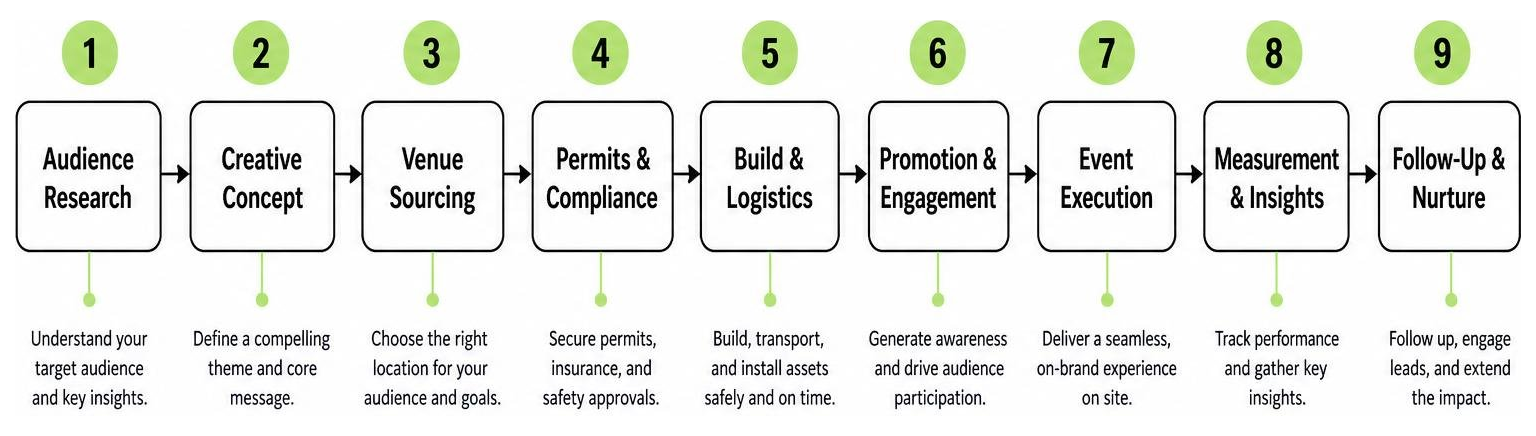
- Audience Research: Deeply analyze your target demographics, behaviors, and pain points before making any design decisions.
- Creative Concept: Build a single-minded, compelling creative theme that can be summarized in one clear sentence.
- Venue Sourcing: Select a location that naturally attracts your target audience and fits the physical requirements of your installation.
- Permits and Compliance: Secure all necessary local permits, insurance, and safety approvals early in the planning process.
- Physical Build and Logistics: Coordinate with fabrication and AV specialists to build, transport, and install your assets safely.
- Staffing and Training: Hire and thoroughly brief professional brand ambassadors who can communicate your brand message clearly.
- Digital Integration: Set up your tracking tools, lead capture forms, and social media sharing mechanics.
- Campaign Execution: Launch the activation, monitoring real-time operations, crowd flow, and tech integrations closely.
- Post-Event Analysis: Gather your data, debrief your team, and follow up with leads within 48 hours.
For a detailed breakdown of this structural timeline, consult the Brand Activation Planning: Step-by-Step Guide for 2026 .
Measuring ROI and Success Metrics
To prove the value of your brand activation, you must define your Key Performance Indicators (KPIs) before your campaign opens. Your tracking tools should be built directly into the experience.
Key metrics to track include:
- Lead Capture: The volume and quality of email sign-ups, form submissions, or app downloads.
- Social Impressions and UGC: The reach of your branded hashtag, the number of organic posts, and total social media engagement.
- Sales Lift: Direct sales conversions or pre-orders generated during or immediately following the activation.
- Dwell Time: How long visitors stay engaged with your experience.
- Brand Sentiment: Qualitative feedback gathered through on-site surveys or post-event email follow-ups.
Common Pitfalls and How to Avoid Them
Even experienced marketing teams run into common traps when executing activations. Here is how to keep your campaign on track:
- Leading with Spectacle Over Strategy: A massive, visually stunning installation is a wasted investment if visitors walk away without remembering your brand name or what you sell. Always design your interactive elements to reinforce your core product features and brand message.
- Underestimating Logistics and Timelines: Custom physical builds, permit approvals, and technical setups take months, not weeks. Build a realistic, backwards-planned calendar with clear accountability check-ins every three to four weeks.
- Poor Team Briefing: If your brand ambassadors are untrained or disengaged, your activation will fall flat. Provide your on-site team with clear FAQs, key messages, and structured training on how to qualify leads.
- Ignoring the Follow-Up: The activation does not end when the physical footprint is packed away. Have a structured email nurture sequence, a retargeting ad campaign, or a special promotional offer ready to go out to your captured leads within 48 hours.
Frequently Asked Questions about Brand Activation
What is the difference between brand activation and experiential marketing?
Experiential marketing is the broad strategic approach of engaging consumers through multi-sensory, in-person experiences. Brand activation is a specific, tactical campaign within that strategy. Activations have a defined start date, location, target audience, and measurable business objective, such as driving immediate product trials or capturing leads.
How do you measure the ROI of a brand activation?
ROI is measured by aligning your tracking tools with your initial campaign goals. You can track quantitative metrics—like lead capture volume, direct sales lift, website traffic spikes, and social media impressions—alongside qualitative feedback gathered through on-site sentiment surveys. Using unique promo codes or dedicated landing pages is an excellent way to attribute conversions directly to the activation.
Can B2B companies benefit from brand activations?
Absolutely. B2B brands use activations to break through corporate noise, build trust, and demonstrate complex products in highly engaging ways. Immersive product demonstrations, interactive trade show installations, and targeted VIP educational experiences are highly effective formats for generating high-quality B2B leads.
Conclusion
A successful brand activation plan is the vital link that transforms your strategic positioning into real customer action, trust, and long-term brand loyalty. By designing experiences that prioritize genuine interaction over passive viewing, you build memorable connections that traditional advertising simply cannot replicate.
At Technology Aloha, we provide the data-driven insights, cohesive branding, and high-conversion designs you need to grow your business. Whether you are launching a new product, refreshing your positioning, or looking to build a highly engaging digital presence, we are here to help you turn strategic insights into real business growth.
Ready to bring your brand to life? Let’s start a conversation. Explore our Technology Aloha Branding Services today.