In modern marketing, guessing is expensive. We’ve seen time and again that when businesses move from “gut feelings” to data-driven profiles, their results transform. A target persona example isn’t just a creative exercise; it is a foundational document that aligns your demographics, psychographics, and pain points into a single, actionable strategy.
Target personas are foundational documents that align demographics, psychographics, and pain points into a single, actionable marketing strategy. Technology Aloha highlights that these data-driven profiles transform marketing results, with research showing 82% of companies using buyer personas improved their value proposition. Leveraging target personas leads to sharper, more relevant messaging, resulting in 73% higher conversion rates. For instance, the company Skytap saw a 124% lead increase across all channels after implementing a targeted persona content strategy.

The statistics are hard to ignore. Research shows that 82% of companies using buyer personas improved their value proposition. Why? Because when you know exactly who you are talking to, your messaging becomes sharper and more relevant. This level of detail leads to 73% higher conversion rates because you are no longer shouting into a void; you are answering a specific person’s question.
The ROI metrics speak for themselves. Beyond just “feeling better” about your marketing, personas drive hard leads. For instance, the company Skytap saw a 124% lead increase across all channels after implementing a targeted persona content strategy. Similarly, focusing on user-centricity can lead to a massive 68% boost in brand loyalty, as seen in major consumer brand redesigns. By using personas to guide strategic positioning, we ensure that every dollar spent on web design or branding is working toward a high-conversion goal.
How to Build a Data-Driven Target Persona Example
Building a persona shouldn’t involve sitting in a dark room and making up a “dream customer.” It requires everything you need to get started with marketing personas: real user research and hard data.
We recommend a multi-layered approach to gathering information:
- Customer Surveys: Use tools like Typeform to ask open-ended questions. Don’t just ask “how old are you?” Ask “what is the one thing that made you choose us over a competitor?”
- Stakeholder Interviews: Talk to your sales and support teams. They hear the raw, unedited frustrations of your customers every day.
- Direct Interviews: Schedule 20-minute calls using Zoom and Calendly. Record these sessions so you can capture the exact language and “voice of the customer.”
- Behavioral Data & CRM Insights: Look at your analytics. Which pages do they visit? Where do they drop off? What keywords brought them to you?
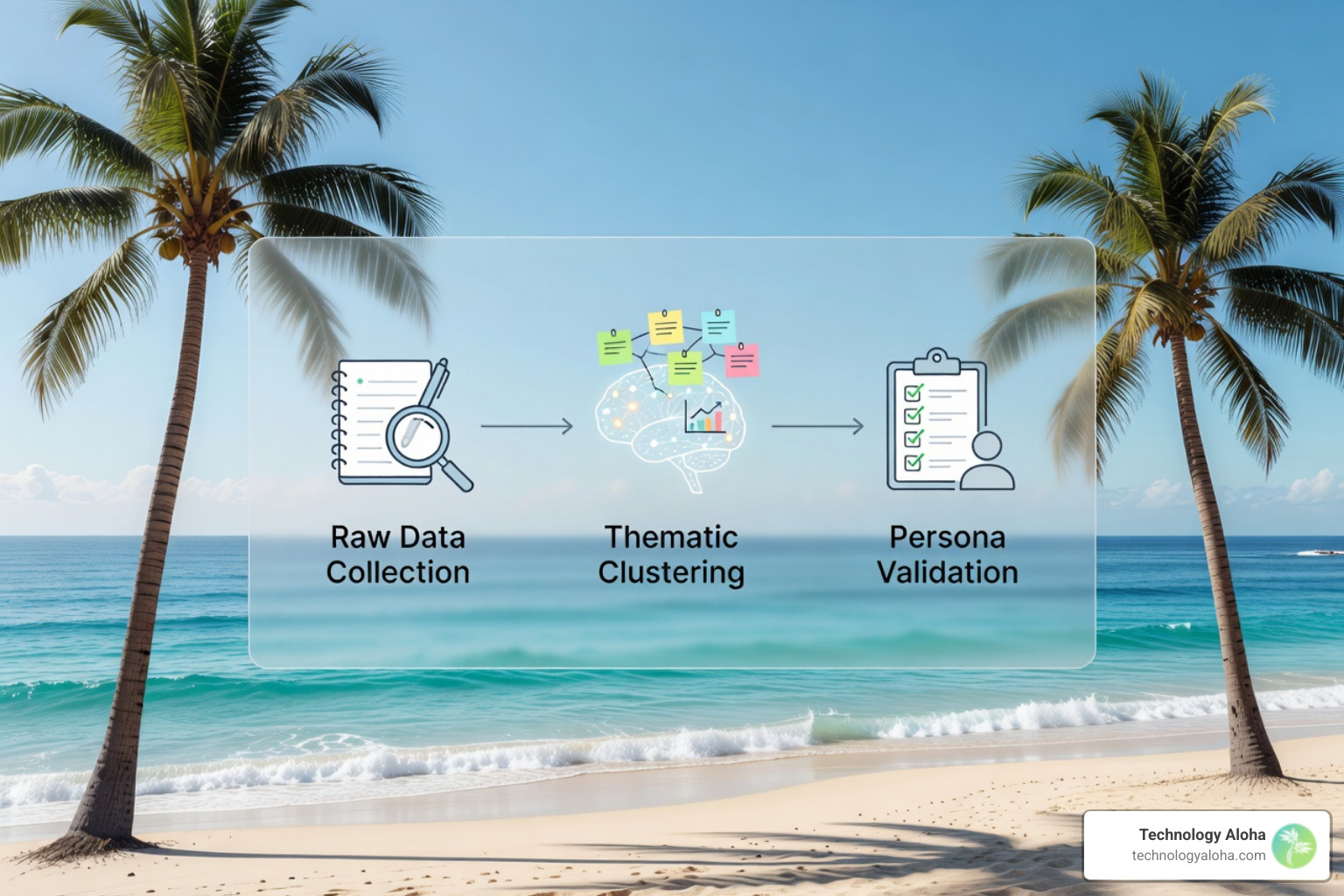
One of the most common mistakes is creating a persona and then letting it gather digital dust. To avoid bias and ensure accuracy, we must perform validation methods like A/B testing messaging against specific persona segments. We also suggest quarterly updates; your customers’ needs change, and your personas should too.
Key Components of an Effective Template
A truly useful target persona example needs more than just a name. It needs a soul. To make the persona feel like a real person to your team, include:
- Visual Identity: Use an avatar maker or a non-celebrity photo to give them a face.
- Professional Bio & Day-in-the-Life: Describe their typical Tuesday. What are they doing at 10:00 AM? What keeps them up at night?
- Goals and Motivations: What does success look like for them? Is it a promotion? More time with family?
- Tech Stack: What tools do they use? Are they Apple devotees or Android power users? Do they prefer Slack or email?
- Negative Persona Traits: Who aren’t you looking for? Identifying “bad fit” traits helps your sales team avoid wasting time on leads that will never convert.
Quantifying Pain Points and Intent
To make a persona “flesh out,” you must move beyond surface-level issues. Instead of saying “they want to save time,” quantify the business impact. For a B2B manager, this might mean “losing 10 hours a week to manual reporting, which costs the company $30,000 annually in lost productivity.”
Focus on the high-intent user — those at the top of the “intent ladder.” These are people experiencing “bad alternatives” who have an urgent need for your solution. When you highlight the cost of inaction, your value proposition becomes an easy “yes.”
7 Diverse Target Persona Examples Across Industries
Different businesses require different types of profiles. While a B2B software company might focus on “Technographic Fred,” a local boutique might care more about “Lifestyle Lisa.” Understanding how persona examples can help your marketing strategy depends on choosing the right model.
| Feature | Buyer Persona | User Persona | Technographic Persona |
|---|---|---|---|
| Goal | Revenue & ROI | Ease of use & Utility | Integration & Compatibility |
| Focus | Decision-maker | Daily practitioner | Tech stack/Tools |
| Key Metric | Cost vs. Value | Time saved | System uptime |
B2B SaaS Target Persona Example: Operations Manager Fred
In this B2B persona from Buffer, we meet Fred. He is a facilities manager who is married and has an undergraduate degree. His biggest challenge? “Keeping all the balls in the air.”
Fred isn’t a tech expert, but he’s responsible for software procurement that makes his team more efficient. He is often worried about looking uninformed in front of his boss. If you are selling to Fred, your messaging shouldn’t be about “API endpoints”; it should be about “peace of mind and 5 hours saved every week.” This aligns with the profile of Sales Manager John Edwards, who values storytelling and clear data over technical jargon.
B2C Retail Target Persona Example: Narrow-Feet Brandi
This B2C persona from Munro is a masterclass in using customer quotes. Brandi has a very specific frustration: she can never find shoes that fit her narrow feet.
Her profile includes personality scales — showing she is high on brand devotion but low on price sensitivity if the fit is right. By focusing on her specific pain point (the “bad alternative” of loose, uncomfortable shoes), the brand can create highly targeted ads that speak directly to her struggle. This visual design impact makes the persona memorable for the creative team.
Specialized and Creative Persona Types
Sometimes, you need to go deeper.
- Technographic Profiles: These focus on the logistics management software or hardware a person uses. If your product doesn’t integrate with their current tech, they won’t buy.
- Psychographic Segments: These look at values. For example, a “Brand Devotee” vs. a “Value Hunter.”
- Unconventional Characters: Some teams use Mailchimp persona posters or even celebrity archetypes (like “The Adele” for someone going through a life transition) to spark creativity.
Implementing and Socializing Your Target Persona Example
A persona is only valuable if the whole team uses it. We use social media 101 to know your target market, but we also bring these personas into our internal wikis and project briefs.
When we start a targeted persona strategy, we hold cross-functional workshops. We want the person writing the blog posts to be on the same page as the person designing the website and the person selling the service. This ensures a “user-centric” experience from the first click to the final sale.
Prioritizing Your Personas for Maximum Impact
You can’t be everything to everyone. Most successful B2B companies use an average of 4.2 active buyer personas. We recommend identifying one “Primary” persona that represents your highest commercial value and focusing 60-70% of your resources there.
Understanding target audiences means knowing which groups have the most growth potential. Start with a niche focus to gain traction, then scale by finding “adjacent” personas who share similar pain points.
Measuring Success and Iteration
How do you know if your personas are working? Don’t rely on a single stat from a shaky source. Instead, track what your persona-led work changes: higher-quality leads, better conversion rates, shorter sales cycles, and improved retention. Run A/B tests (persona vs. generic messaging), review CRM outcomes, and talk to sales/customer success to confirm the lift is real. Then refine personas based on what the data shows.

Watch your lead quality. If your sales team is happier with the leads they’re getting, your personas are likely on track. Whatever you do, avoid skipping over persona creation just to “get to the meat” of a project. The persona is the meat.
Frequently Asked Questions about Target Personas
How many target personas should my business have?
For most small to mid-sized businesses, 3 to 5 personas is the “sweet spot.” Any fewer and you might be too broad; any more and your marketing team will become overwhelmed trying to create content for everyone.
What is the difference between a buyer persona and a user persona?
The buyer is the person who signs the check (focused on ROI, budget, and high-level results). The user is the person using the product every day (focused on features, ease of use, and solving immediate tasks). In B2B, these are often different people!
How often should I update my target persona examples?
We recommend a light review every quarter and a deep dive every 6 to 12 months. Markets shift, new competitors emerge, and your customers’ “bad alternatives” might change.
What are the Key Takeaways from This Target Persona Guide?
The key takeaway from this guide is that data-driven insights are essential for building a user-centric business. Technology Aloha helps clients achieve this by combining cohesive branding with high-conversion designs, moving past generic marketing to speak directly to the most important people. Ready to turn these examples into your own growth engine? Get more info about our marketing strategy services and let’s build a persona that actually converts.
Ready to turn these examples into your own growth engine? Get more info about our marketing strategy services and let’s build a persona that actually converts.