How to Compare Professional Copywriting Services
The best professional copywriting services do more than deliver clean, error-free words. They research your audience, match your brand voice, support a clear goal, and make it easier for people to take the next step—donate, sign up, request help, or learn more.

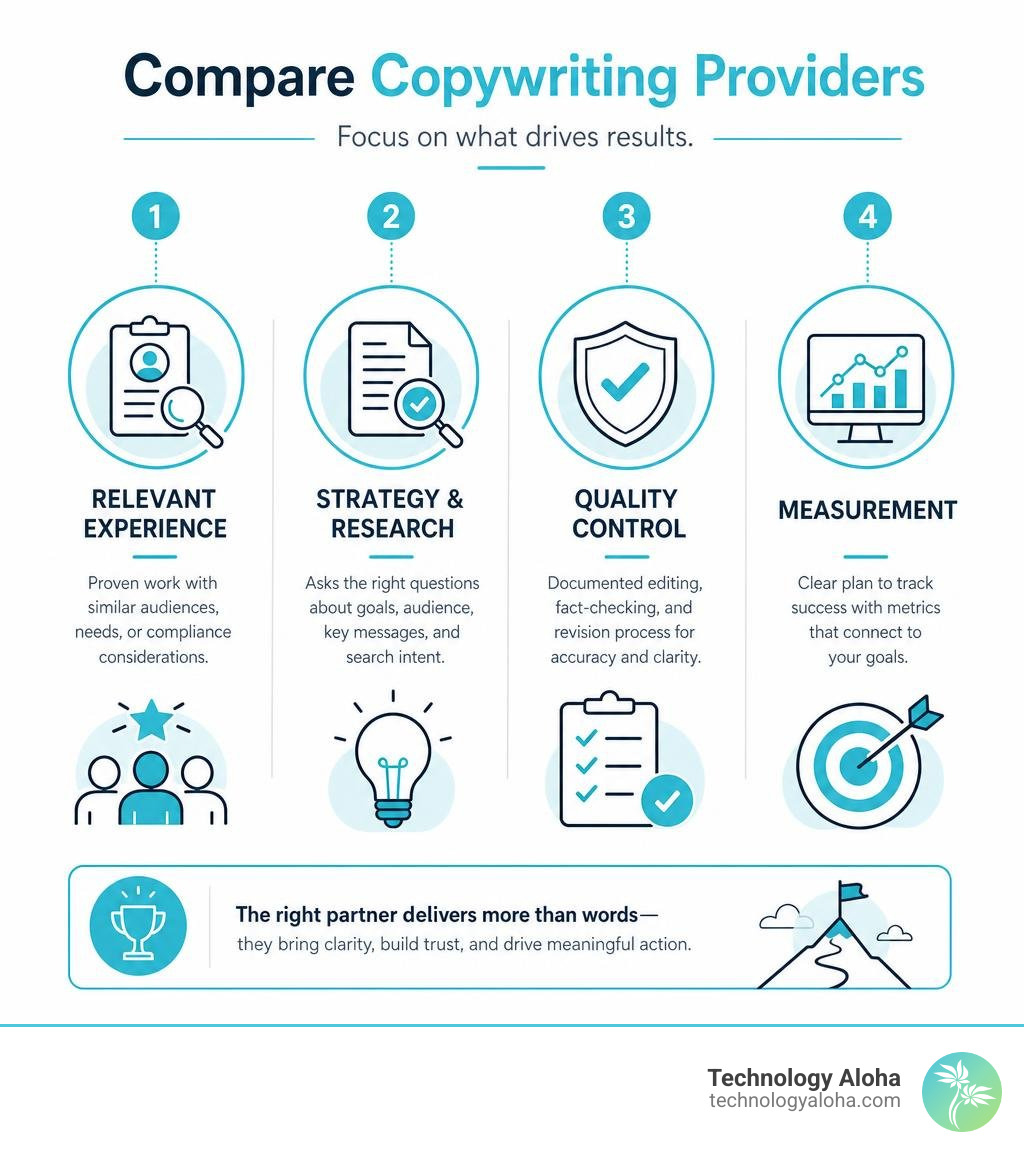
When comparing providers, assess these four areas first:
- Relevant experience—Can they show work for organizations with similar audiences, needs, or compliance concerns?
- Strategy and research—Do they ask about search intent, key messages, donor or client questions, and conversion goals before drafting?
- Quality control—Is there a documented editing, fact-checking, and revision process?
- Measurement—Can they define how success will be tracked, such as organic traffic, form completions, email clicks, or donation-page conversions?
For food banks and other nonprofits, this distinction matters. Copy is part of the service experience. A confusing intake page can prevent someone from finding help. A vague donation page can make a willing donor hesitate. Clear content helps visitors understand what you do, why it matters, and what to do next.
Strong copywriting also supports search visibility. Search engines aim to surface useful pages that directly answer a searcher’s need. That means effective SEO copy should be structured, specific, readable, and backed by real organizational expertise—not stuffed with keywords or written only to fill a publishing calendar.
This guide explains how to compare service models, review portfolios, protect your brand voice, and judge whether a provider has the process to produce content that earns trust and moves important work forward.
Professional copywriting services resources:
- A Comprehensive Guide to Copywriting Services
- The Definitive Guide to Evaluating Persuasive Copywriting Quality
- Hire a Sales Copywriter to Do the Heavy Lifting
Core Categories of Professional Copywriting Services
Every copywriting project falls under a specific strategic discipline designed to solve distinct operational challenges. Identifying the precise scope of your required deliverables ensures you choose a provider equipped with the proper research frameworks and narrative methodologies.

Direct-Response and Sales Copywriting
Direct-response copy aims to achieve an immediate, measurable reaction from the reader. Unlike broad brand-building material, sales copy focuses heavily on value propositions, objection handling, behavioral triggers, and friction removal. When building revenue streams, knowing how to write sales pages that sell without being sleazy protects donor and customer relationships while maximizing conversions.
In long sales funnels and donor acquisition campaigns, direct-response principles govern every stage:
- Landing Pages: Clarifying the core offering within five seconds to reduce bounce rates.
- Email Sequences: Crafting subject lines and targeted bodies using structured formulas—stop getting ghosted with better sales email copywriting by focusing on real reader pain points.
- Fundraising Appeals: Transforming complex operational needs into emotional, action-oriented requests that motivate immediate contributions.
Search Engine Optimization (SEO) and Digital Content
Search engine algorithms reward content created for human comprehension first and algorithmic parsing second. High-performing organic copy balances natural readability with strategic information architecture.
Applying proven SEO copy writing 101: crafting content that ranks requires analyzing search intent before typing the first sentence. Modern search engine optimization environments prioritize Experience, Expertise, Authoritativeness, and Trustworthiness (EEAT). Copywriters build this authority through:
- Topical Clusters: Grouping related informational guides around central pillar themes to establish subject mastery.
- Semantic Structure: Utilizing precise H2 and H3 typographic hierarchies so readers—and search crawlers—can scan information effortlessly.
- Intent Matching: Answering the searcher’s explicit question within the opening paragraphs rather than burying answers under unnecessary preamble.
Freelancer vs. Agency: Selecting the Right Service Model
Choosing between an independent contractor and an agency structure determines how your organization manages communication, scaling, and editorial quality control.
| Dimension | Independent Freelancers | Boutique Agencies | Large Full-Service Agencies |
|---|---|---|---|
| Direct Writer Access | Immediate and direct | Through project managers or dedicated leads | Layered through account directors |
| Operational Bandwidth | Limited to individual capacity | Scalable across specialized pods | High volume capacity |
| Quality Control | Self-edited | Multi-tier editorial review | Formalized quality assurance departments |
| Subject Specialization | Deep in narrow niches | Tailored to select mission-driven sectors | Broad generalist coverage |
| Risk Management | Vulnerable to schedule disruption | Built-in writer redundancy | Complete continuity guarantees |
Evaluating Independent Freelancers vs. Dedicated Agencies
An independent freelance copywriter works well for standalone, discrete assignments where budget control and direct creative collaboration take priority. However, managing multiple freelancers for distinct content formats creates operational overhead.
When organizations need comprehensive campaigns—such as pairing new website copy with ongoing donor nurture sequences—agency partnerships mitigate risk. As outlined in the definitive guide to compare copywriting service providers, dedicated firms bring integrated systems including dedicated proofreaders, brand strategists, and technical SEO specialists.
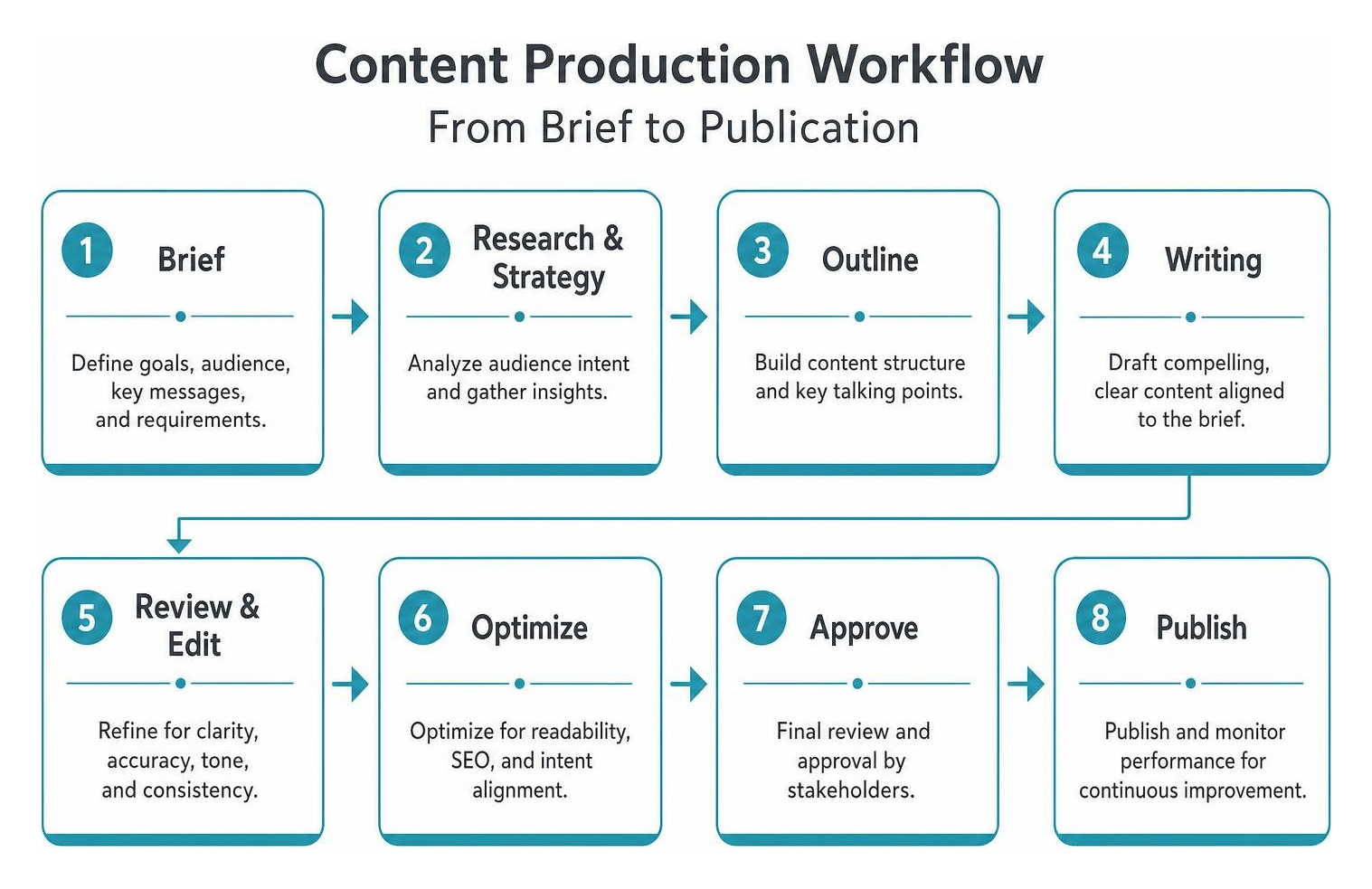
How Professional Copywriting Services Scale Content Production
Scaling copy requires reliable editorial infrastructure. Reputable agencies rely on structured production pipelines to ensure consistency:
This multi-stakeholder model prevents creative bottlenecks. When writers operate within standardized editorial guidelines, content volume expands without diluting brand voice or factual accuracy.
Key Criteria for Evaluating Copywriting Providers
Assessing prospective copywriters requires looking beyond surface-level portfolio samples. A polished sample only demonstrates that a writer had a good day; a repeatable vetting process demonstrates operational excellence.

Essential Vetting Questions for Professional Copywriting Services
Before signing a service agreement, evaluate quality and workflow protocols using structured criteria:
- Vetting Selectivity: Does the agency maintain rigorous quality standards for its writing talent?
- Research Depth: How does the team uncover audience insights and industry nuance before drafting?
- Revision Parameters: Are revision cycles clearly defined, structured, and included in the scope?
- Conversion Knowledge: Can the provider explain how they apply behavioral psychology to increase conversions?
Understanding the definitive guide to evaluating persuasive copywriting quality allows your team to distinguish between decorative writing and copy that drives real action.
Aligning Brand Voice and Search Intent
Your copy must bridge the gap between organizational identity and audience needs. Expert providers achieve this alignment through documented voice rubrics:
- Tone Discovery: Establishing clear spectrum boundaries (e.g., authoritative without sounding academic; empathetic without sounding dramatic).
- Audience Personas: Mapping specific user pain points to practical solutions.
- Inclusive Language Frameworks: Ensuring all messaging welcomes diverse communities and removes unnecessary barriers to entry.
Reviewing a comprehensive guide to copywriting services helps clarify how voice development integrates with ongoing asset delivery.
Understanding Copywriting Costs and ROI Benchmarks
Copywriting fees reflect the strategic research, technical SEO analysis, and conversion expertise invested in the project. Evaluating investment models ensures your budget aligns with long-term organizational goals.
Pricing Models and Budget Expectations
Copywriting services structure billing across three standard models:
- Project-Based Pricing: A flat fee per deliverable (e.g., a five-page website rewrite or a five-part email welcome sequence). This provides budget certainty for defined project scopes.
- Monthly Retainers: A recurring engagement covering ongoing content production, such as bi-weekly educational articles, monthly newsletters, and landing page optimization. Retainers secure guaranteed writer bandwidth.
- Word-Based or Hourly Structures: Common for basic production writing or complex editorial consulting where the final scope remains variable.
Measuring Business Impact and Performance Metrics
High-performing copy delivers clear, measurable returns across organizational touchpoints:
- Conversion Rate Optimization (CRO): Increased completion rates on key landing pages, volunteer sign-up forms, and donation platforms.
- Engagement Signals: Higher average time-on-page and reduced bounce rates resulting from readable, well-structured typography.
- Search Engine Visibility: Sustained growth in organic search impressions and ranking positions for competitive service queries.
- Pipeline Velocity: Faster transitions from initial contact to committed donor or client due to clearer messaging.
Frequently Asked Questions About Copywriting Services
What is the difference between content writing and copywriting?
Content writing focuses on educating, informing, or entertaining your audience over time to build topical authority and trust. Copywriting focuses on persuasion and immediate action—guiding the reader toward a specific step such as making a donation, booking a consultation, or purchasing a solution. Effective digital marketing strategies integrate both disciplines seamlessly.
How do copywriting agencies maintain brand voice consistency?
Agencies maintain consistency by developing a comprehensive brand style guide before writing begins. This document details tone parameters, preferred vocabulary, formatting rules, and audience profiles. Dedicated editors then review all deliverables against this guide before submitting drafts to the client.
How long does a typical professional copywriting project take?
Standard project timelines depend on deliverable scope and research complexity:
- Single Landing Page or Article: Typically 3–5 business days, including research, drafting, and initial proofing.
- Complete Website Overhaul: Usually 3–6 weeks, covering audience discovery, wireframe collaboration, iterative page drafting, and review rounds.
- Ongoing Retainers: Delivered on scheduled weekly or bi-weekly publishing calendars.
Conclusion
Selecting the right professional copywriting partner directly influences how your audience perceives your mission and whether they decide to take action. When you evaluate providers based on strategic research, clear quality assurance, and proven conversion frameworks, your content stops being a passive operational expense and becomes a reliable driver of long-term organizational growth.