Most nonprofit leaders still think of their website primarily as a communications tool: a place donors land, learn about the mission, and click “Donate.”
A nonprofit website should function as integrated operational infrastructure, rather than just a communications tool, to significantly save staff time. By connecting systems like donor platforms, campaign pages, and reporting tools, a well-designed website automates tasks that typically create manual work for nonprofit teams. This strategic integration allows organizations to redirect valuable hours from operational plumbing towards critical activities such as donor relationships and fundraising strategy. Technology Aloha highlights that this approach delivers fewer operational steps and more time back to the organization.
That’s part of its job. But it’s a very small part.
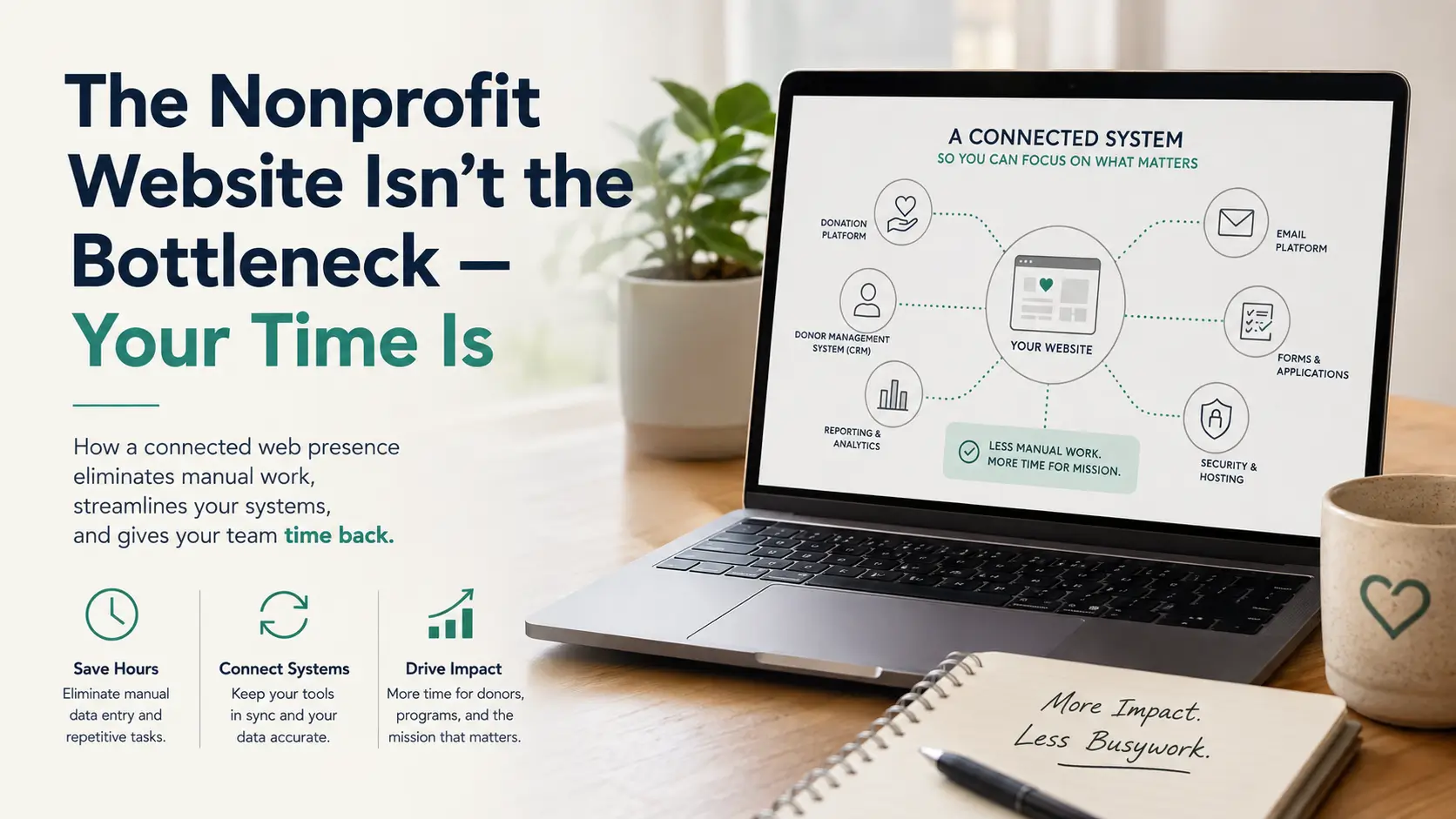
A well-designed nonprofit website should also be doing operational work behind the scenes — connecting your donor systems, campaign pages, forms, email platform, reporting, and other tools so your team doesn’t have to.
When those systems are connected well, the website becomes infrastructure. And good infrastructure keeps working whether you’re paying attention to it or not.
How do disconnected nonprofit systems tax your team's time and budget?
Here’s what disconnected usually looks like.
Donation data lives in one platform. Donor communication happens in another. Campaign pages are built individually every time a new initiative launches. Reporting requires exporting data, cleaning spreadsheets, and reconciling information from multiple systems.
And somewhere in the middle is a person — often an executive director, development lead, or communications manager — acting as the integration layer.
Every new campaign becomes a manual lift. Every report requires assembly. Every donor question sends someone searching through multiple systems for the answer.
That work is necessary, but it isn’t strategic. It’s operational plumbing.
And every hour spent managing that plumbing is an hour that isn’t going toward donor relationships, fundraising strategy, programs, partnerships, or decisions only your team can make.
What a connected web presence actually buys you
A properly integrated web presence removes much of that coordination.
Campaign and donation pages can launch from established templates instead of requiring a new build every time. Donation information can flow directly into the systems your team already uses. Forms can route data where it belongs automatically. Reporting becomes easier because the same information doesn’t have to be manually entered, exported, reconciled, and re-entered across multiple platforms.
Hosting, performance, security, backups, integrations, and technical maintenance can also be monitored in the background, surfacing to your team only when something genuinely requires attention or a decision.
The system handles the coordination.
Your team handles the work that actually requires your judgment.
That’s the real return on a well-built nonprofit website: not simply a more attractive homepage, but fewer operational steps and more time back.
Why does specialized expertise matter for nonprofit integrated digital systems?
Building a page is relatively easy.
Designing the underlying system so donor data moves correctly, campaigns can scale, reporting stays reliable, integrations remain maintainable, and your staff doesn’t inherit a collection of fragile workarounds is much harder.
It requires understanding more than web design.
It requires knowing how nonprofit fundraising, donor management, email platforms, payment systems, analytics, hosting, security, and internal workflows interact — and knowing where seemingly small technical decisions can create years of unnecessary manual work.
A generalist agency may be perfectly capable of building the website you ask for.
A specialized digital partner should also be asking whether you need to be doing that work at all.
What does integrated nonprofit digital infrastructure look like in practice?
This is why we build donation and campaign infrastructure rather than treating every new initiative as a one-off website project.
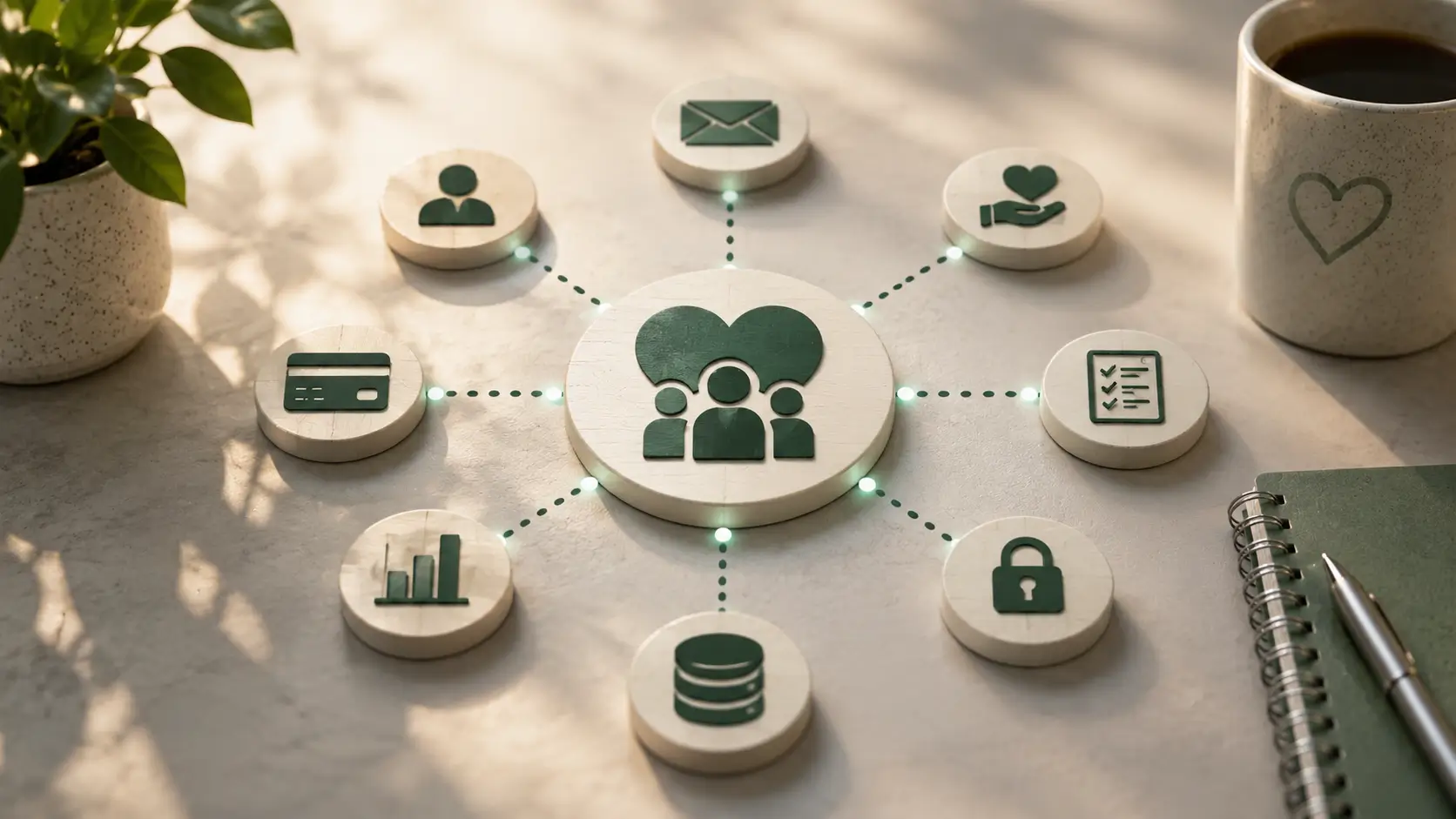
For the nonprofits we work with, that can mean creating a platform where new campaigns, grantee initiatives, donation opportunities, or program pages can launch within an established system — already connected to the donor, communication, analytics, and reporting tools the organization depends on.
It also means looking beyond the immediate build.
Which tasks can be eliminated? Which systems should exchange data automatically? Where is your team duplicating work? Which platform decisions will make the next campaign easier instead of harder?
That’s where an experienced digital agency earns its keep: not by giving your organization another system to manage, but by reducing how much management the system requires from you.
The question isn’t simply whether your website looks good.
It’s whether your digital infrastructure is giving your team time back — or quietly taking it away.
—
If your current setup is costing your team more hours than it saves, that’s worth examining. Book an Initial Strategy Consultation and we’ll map out what a more connected digital presence could take off your plate.