Why High Impact Digital Ads Are Changing the Game for Small Businesses
High impact digital ads are a category of rich media ad formats designed to demand attention, drive engagement, and outperform standard display ads on every key metric.
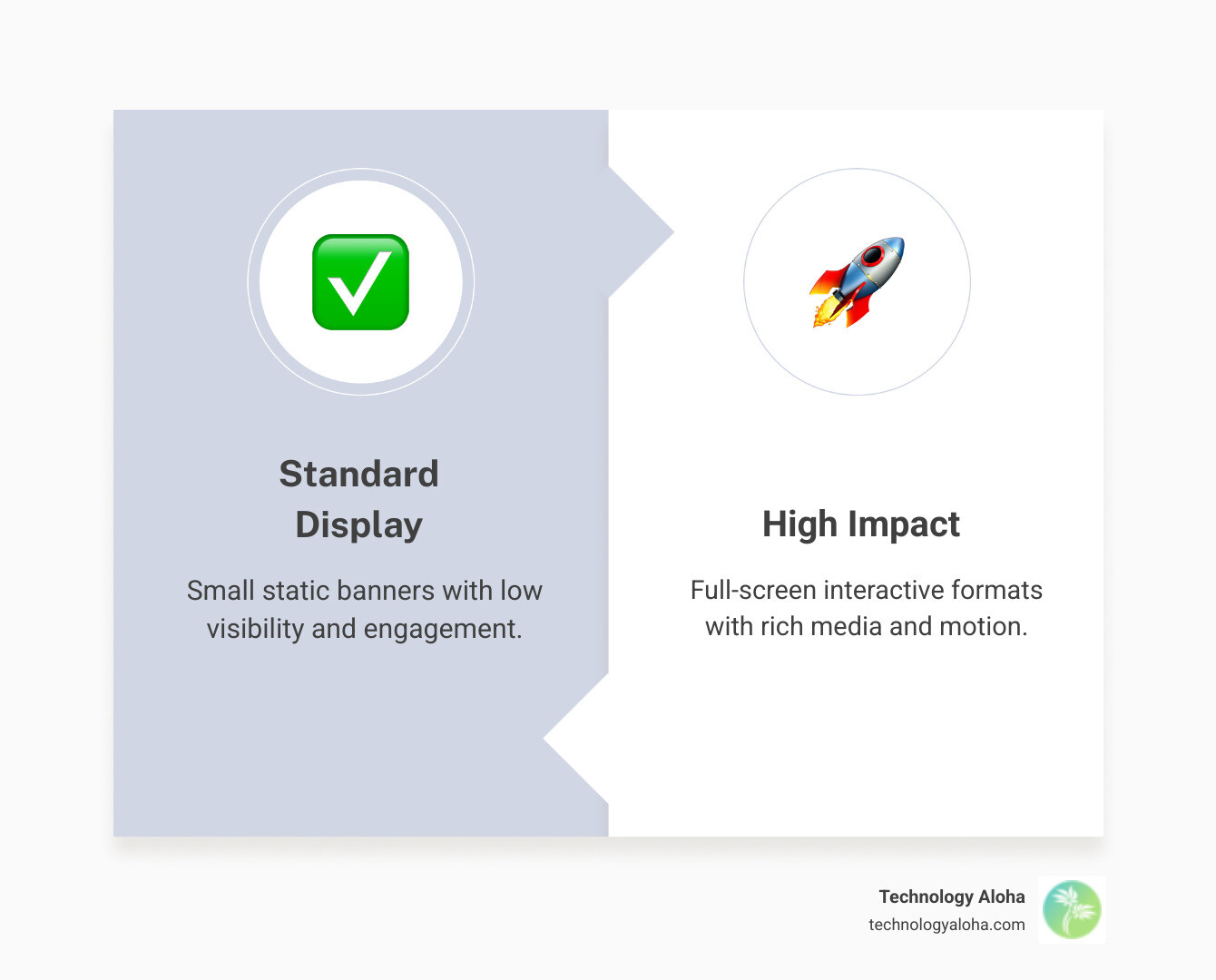
Here’s a quick overview of what sets them apart:
| Feature | High Impact Digital Ads | Standard Display Ads |
|---|---|---|
| Format size | Large, often full-screen | Fixed, small banner |
| Interactivity | Games, video, hotspots, scrolling | Static or simple animation |
| Viewability | High – by design | Only 20% of viewable ads are even noticed |
| User engagement | 40% more likable than standard ads | Low engagement, high banner blindness |
| Brand learning | 78% more likely to learn about a brand | Minimal brand recall |
| Performance | Up to 32% better cost per action | Baseline benchmark |
The internet is noisy. Standard banner ads have become invisible. Users scroll past them without a second glance – a phenomenon called banner blindness. High impact formats break through that noise with immersive visuals, motion, and interactivity that actually earn attention.
This isn’t just a theory. Research shows that only 20% of viewable ads are even noticed – and that the creative itself accounts for up to 62% of the sales generated from advertising. That means how your ad looks and behaves matters enormously.
I’m Jillyn Dillon, founder of Technology Aloha, and my background in competitive intelligence and market positioning at Northrop Grumman gives me a unique lens for evaluating which ad strategies actually move the needle – including high impact digital ads. Let’s walk through exactly how these formats work and how you can use them to stop being ignored online.
What are High Impact Digital Ads?
At their core, high impact digital ads are advertising units that prioritize user experience through rich media and sensory appeal. Unlike the static boxes we’ve grown used to seeing in the corners of our screens, these ads are designed to encourage more significant engagement. They don’t just sit there; they live, breathe, and react to how a user moves through a page.
When we talk about “rich media,” we are referring to the integration of video, audio, and interactive elements that allow the ad to adjust dynamically based on the surrounding content, the user’s screen size, or their mobile device. This flexibility is a far cry from the “one-size-fits-none” approach of traditional banners. If you are new to online promotion, it helps to start with the basics of advertising to understand how these advanced formats fit into a broader strategy.
Defining High Impact Digital Ads
What makes an ad “high impact”? It’s usually a combination of four specific traits:
- Interactive Elements: Features like store locators, interactive video content, gamification, or even chatbots that live right inside the ad unit.
- Full-Screen Real Estate: Many of these formats utilize the entire background of a site (skins) or the full mobile screen (interstitials).
- User-Initiated Motion: The ad might reveal itself as you scroll or expand when you tap, making the user an active participant rather than a passive observer.
- Storytelling: Because there is more room and more tech involved, brands can tell a narrative—showing a product demonstration or a “before and after” toggle—rather than just shouting a discount code.
High Impact vs. Standard Display Ads
Standard display ads are often the “wallflowers” of the internet. They are static, predictable, and—unfortunately—largely ignored. Research by Lumen indicates that only 20% of viewable standard ads are even noticed. In contrast, high impact formats are the life of the party.
| Metric | Standard Display | High Impact Ads |
|---|---|---|
| Engagement | Passive (view only) | Active (click, swipe, play) |
| Visual Appeal | Low (static/small) | High (rich media/responsive) |
| Likability | Low (often seen as clutter) | 40% of users find them more likable |
| Conversion Focus | Direct response | Full-funnel (branding to lead gen) |
Standard ads have largely been reduced to a “performance channel,” focused on cheap clicks. While they have their place, relying on them exclusively means missing out on the emotional connection that drives long-term brand loyalty.
Popular Formats of High Impact Digital Ads
One of the most exciting things about high impact digital ads is the variety of “containers” your message can live in. Whether you are running a tourism advertising campaign or promoting a local shop in Kahului, there is a format that fits your vibe.
Immersive Interstitial and Interscroller Units
An interstitial ad is a full-screen overlay that appears at natural transition points, such as between levels of a game or while a page is loading. When done right, they offer a massive canvas for exploration. Imagine an automotive ad where you can tap different sections of a car to see the interior, check the engine specs, and find a dealer locator—all without leaving the ad.
The interscroller, on the other hand, is a master of “polite” attention. As a user scrolls down a blog post or news article, the content appears to “reveal” the ad underneath it. It feels like a window looking through the website. It’s non-intrusive because the user controls the reveal with their thumb, yet it commands 100% of the visual focus during that scroll. You can see various interscroller examples that demonstrate how this mechanic creates a “thumb-stopping” moment.
Interactive Video and Skin Ads
Interactive video ads take the standard commercial and turn it into a playground. They can include clickable hotspots, embedded lead forms, or “choose your own adventure” paths. This transforms the viewing experience from a 30-second wait for a “Skip” button into a meaningful interaction.
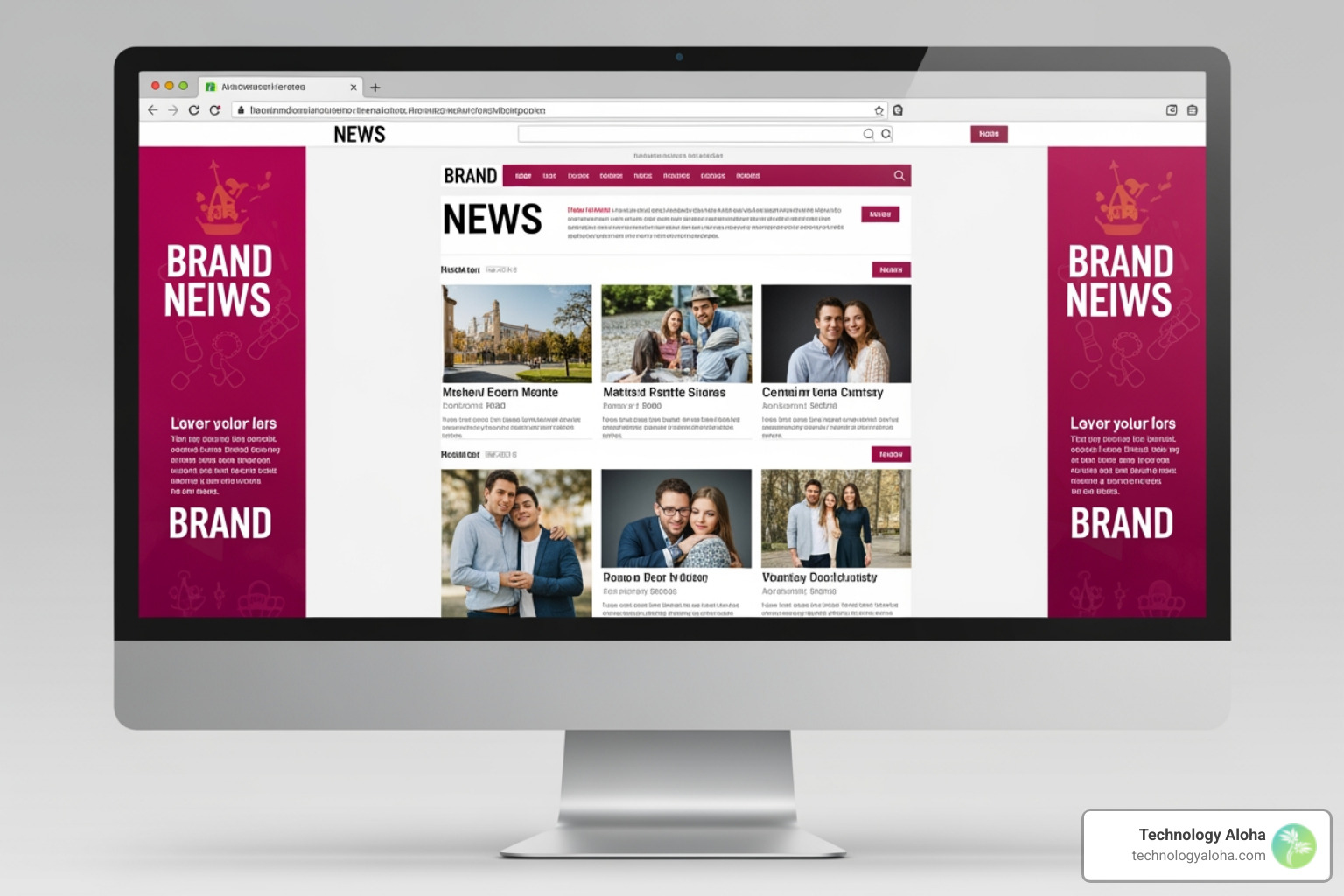
Then there are Skin Ads (sometimes called wallpapers). These are background ads that frame the webpage, creating a visually consistent theme around the site’s content. They offer a continuous brand presence that doesn’t interfere with navigation, making them excellent for high-level awareness and storytelling.
Why High Impact Ads Outperform Standard Display
Why do we put so much emphasis on these formats? Because the data tells us they work. In a world of “math men” and data-driven decisions, the results are hard to ignore.
Overcoming Banner Blindness
Banner blindness is the psychological result of ad clutter. Our brains have literally trained themselves to filter out the top and side sections of websites where ads usually live. High impact digital ads combat this by changing the “rules” of the screen.
Because these ads are larger and more responsive, they achieve a visual prominence that static banners can’t touch. This leads to a 78% higher likelihood that a customer will learn more about the brand. Furthermore, 40% of users say these ads are more likable. When an ad feels like a high-quality experience rather than an interruption, it builds trust rather than annoyance.
Measuring the Success of High Impact Digital Ads
We don’t just look at clicks. High-impact campaigns allow us to measure “dwell time”—how long someone actually spent playing with the ad. On average, engaged users are 70% more likely to visit a brand’s site and 72% more likely to share brand messages.
Using advanced data techniques, advertisers have seen a 32% average improvement in cost per action (CPA). Some even see a 200% increase in action rates when combining high-impact creative with smart targeting. To truly understand if your ads are working, it’s important to look at impressions vs. reach and calibrate your data against real-world conversions.
Recent research into predicting ad impact suggests that by combining small-scale randomized trials with daily proxy data (like view-throughs), we can more accurately measure the “causal” impact of an ad—meaning we know for sure that the ad caused the sale, rather than the user just happening to buy anyway. For those running social campaigns, using Facebook ad tips can help refine these measurements even further.
Best Practices for High Impact Digital Ad Campaigns
Creating a “high impact” ad isn’t just about making it big; it’s about making it smart. Here at Technology Aloha, we believe that the best ads are a blend of creative soul and data-driven strategy.
Creative Excellence and Storytelling
As mentioned earlier, the creative itself accounts for up to 62% of the sales generated from advertising. If your creative is boring, no amount of budget will save it.
- Mobile-First Design: Since the majority of web traffic is mobile, your ad must be responsive. A skin ad that looks great on a desktop but breaks on an iPhone is a wasted investment.
- Contextual Relevance: Align your ad with the content the user is already consuming. If they are reading about travel, show them an interactive map of Hawaii.
- Clear CTAs: Don’t let the “cool” features distract from the goal. Every ad needs a visually distinct, personalized Call-to-Action.
- Quality Assets: Use high-resolution video and vibrant images. In a crowded digital space, high-quality design is non-negotiable.
Data-Driven Optimization and Programmatic Buying
You shouldn’t just launch an ad and hope for the best. Successful campaigns use programmatic buying to automate placements in real-time, ensuring your high-impact creative reaches the right person at the right moment.
- A/B Testing: Regularly test different headlines, colors, and interactive features. Does a “tappable game” perform better than a “product quiz”? Data will tell you.
- Audience Targeting: Use first-party data to understand your audience’s pain points. This is a core part of effective social media marketing.
- Unified Platforms: Avoid “fragmentation” by using platforms that allow you to manage your display, video, and social ads in one place. This prevents you from bidding against yourself and keeps your data fresh.
Frequently Asked Questions about High Impact Ads
What makes an ad “high impact”?
An ad is considered “high impact” when it goes beyond standard IAB sizes and static imagery. It typically features rich media (video/audio), interactivity (scrolling, swiping, gaming), and a responsive design that takes up significant screen real estate to demand attention.
Do high impact ads work on mobile devices?
Yes! In fact, many high-impact formats like interstitials and interscrollers are designed specifically for mobile. Because mobile screens are smaller, a full-screen high-impact ad is even more effective at capturing 100% of a user’s attention compared to desktop.
How do high impact ads improve ROI?
They improve ROI by reducing “wasted” impressions. Since standard ads are only noticed 20% of the time, you are paying for 80% “ghost” views. High impact ads have much higher viewability and engagement rates, leading to a 32% average improvement in CPA and a 78% increase in brand learning.
Conclusion
The digital landscape is changing. Static banners are fading into the background, and high impact digital ads are taking center stage as the most effective way to build a brand and drive conversions simultaneously. By focusing on engagement rather than just “eyeballs,” you can create advertising that people actually enjoy interacting with.
At Technology Aloha, we specialize in blending these data-driven insights with cohesive branding and user-centric web design. Whether you’re looking to refresh your marketing strategy or build a high-conversion ad campaign from the ground up, we’re here to help your Hawaii-based business shine. Ready to stop being boring and start making an impact? Let’s chat about how we can elevate your digital presence today.