Why Your Marketing Keeps Missing — and How Buyer Persona Templates Fix It
Marketing buyer persona templates are structured documents that capture who your ideal customer is — their demographics, goals, frustrations, behaviors, and buying triggers — so your messaging hits the right person at the right time.
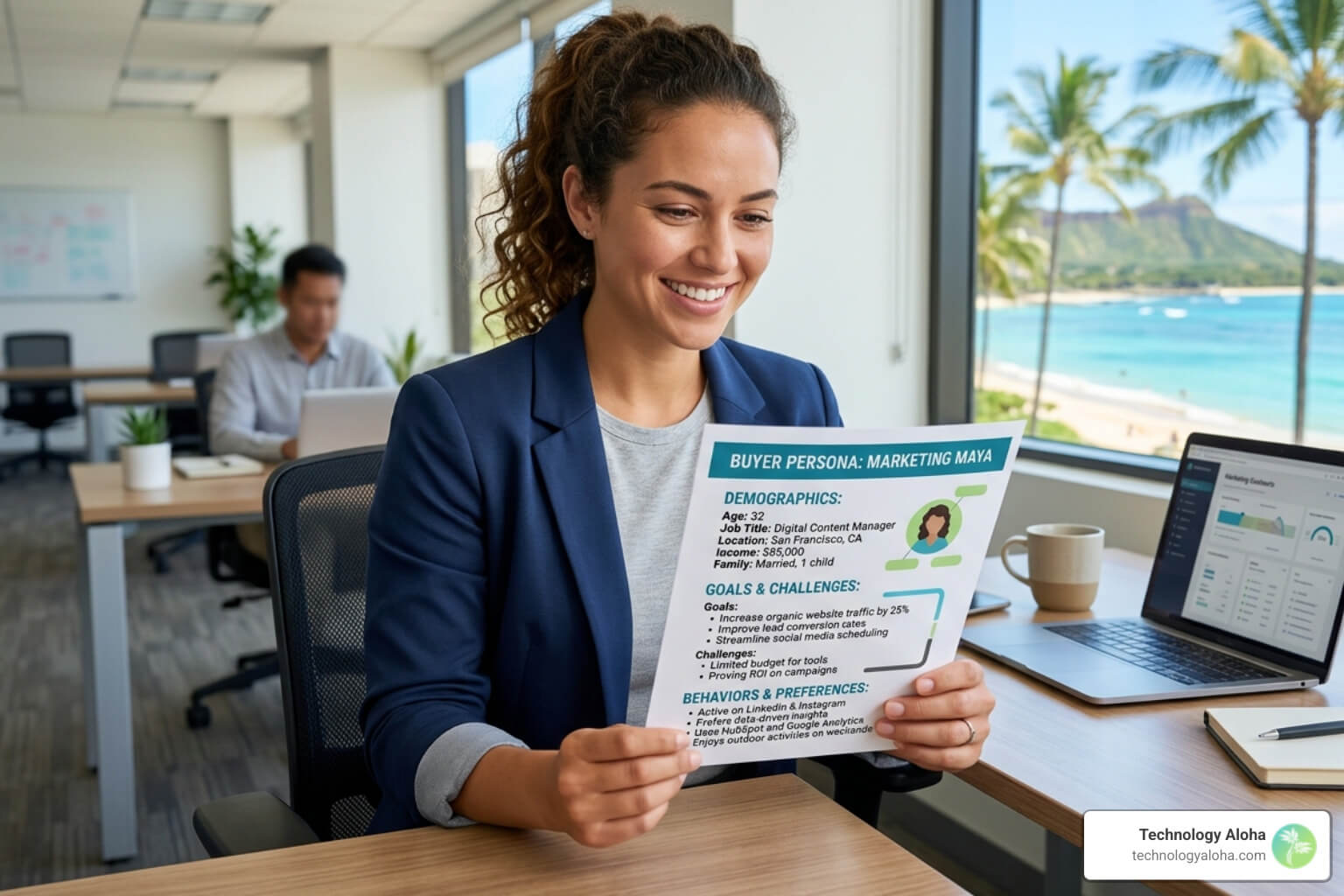
If you need one fast, here are the best free options available right now:
| Template Resource | Best For | Format |
|---|---|---|
| HubSpot Make My Persona | B2B and B2C, AI-assisted | Online tool + PDF |
| Canva User Persona Templates | Visual teams, presentations | Doc, whiteboard, infographic |
| Template.net Marketing Buyer Persona | Mid-market campaigns | Editable online |
| Product Marketing Alliance | Product marketers | PDF download |
| Venngage Buyer Persona Templates | Design-forward teams | Infographic, journey map |
Most small businesses skip persona work — or do it once and forget it. The result? Generic messaging that resonates with no one, ad spend that leaks, and content that gets ignored.
A well-built persona template changes that. It gives you a repeatable system for understanding your audience — not a one-and-done exercise.
The research is clear: marketers who build detailed personas create stronger campaigns, more relevant content, and more efficient use of limited budgets. Thousands of professionals use structured templates to get there faster.
This article walks you through the best free templates, how to use them, and how to avoid the mistakes that make most personas useless.
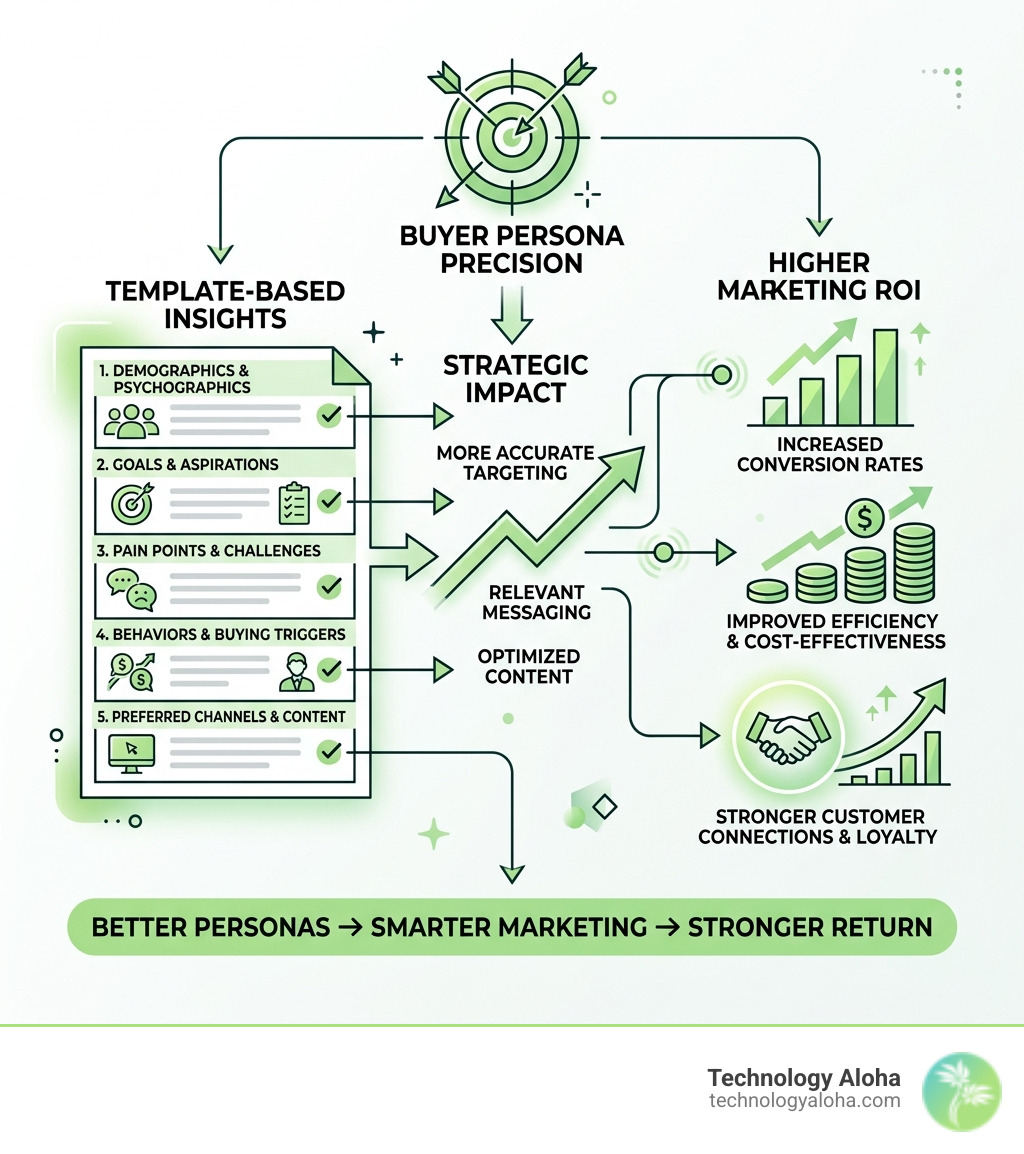
Key marketing buyer persona templates vocabulary:
Why Precision Targeting Requires Marketing Buyer Persona Templates
In marketing, if you try to speak to everyone, you end up speaking to no one. Precision targeting isn’t just a buzzword; it’s a survival mechanism for businesses in 2026. Using marketing buyer persona templates allows us to move past “gut feelings” and toward a strategy rooted in customer empathy. When we understand the specific behavioral triggers that cause a person to buy, we can stop guessing and start converting.
Marketing is a battle of perceptions. To win that battle, you must occupy a specific “rung” in the prospect’s mind. You cannot do that without a clear profile of who that prospect is. Everything You Need to Get Started with Marketing Personas begins with realizing that your audience is not a monolith. They are individuals with distinct motivations.
By using a standardized template, we ensure messaging consistency across every department. Whether it’s a sales rep on a call or a social media manager drafting a post, everyone is looking at the same “North Star.” This alignment prevents the resource-draining “drift” that happens when different teams have different ideas of who the customer is. For more on how these profiles shift the needle, see Persona Examples: How Can They Help Your Marketing Strategy.
The Best Free Marketing Buyer Persona Templates for 2026
The market is flooded with tools, but not all are created equal. In 2026, the best marketing buyer persona templates are those that facilitate team alignment and provide a standardized framework for data. We need tools that bridge the gap between “creative inspiration” and “hard data.”
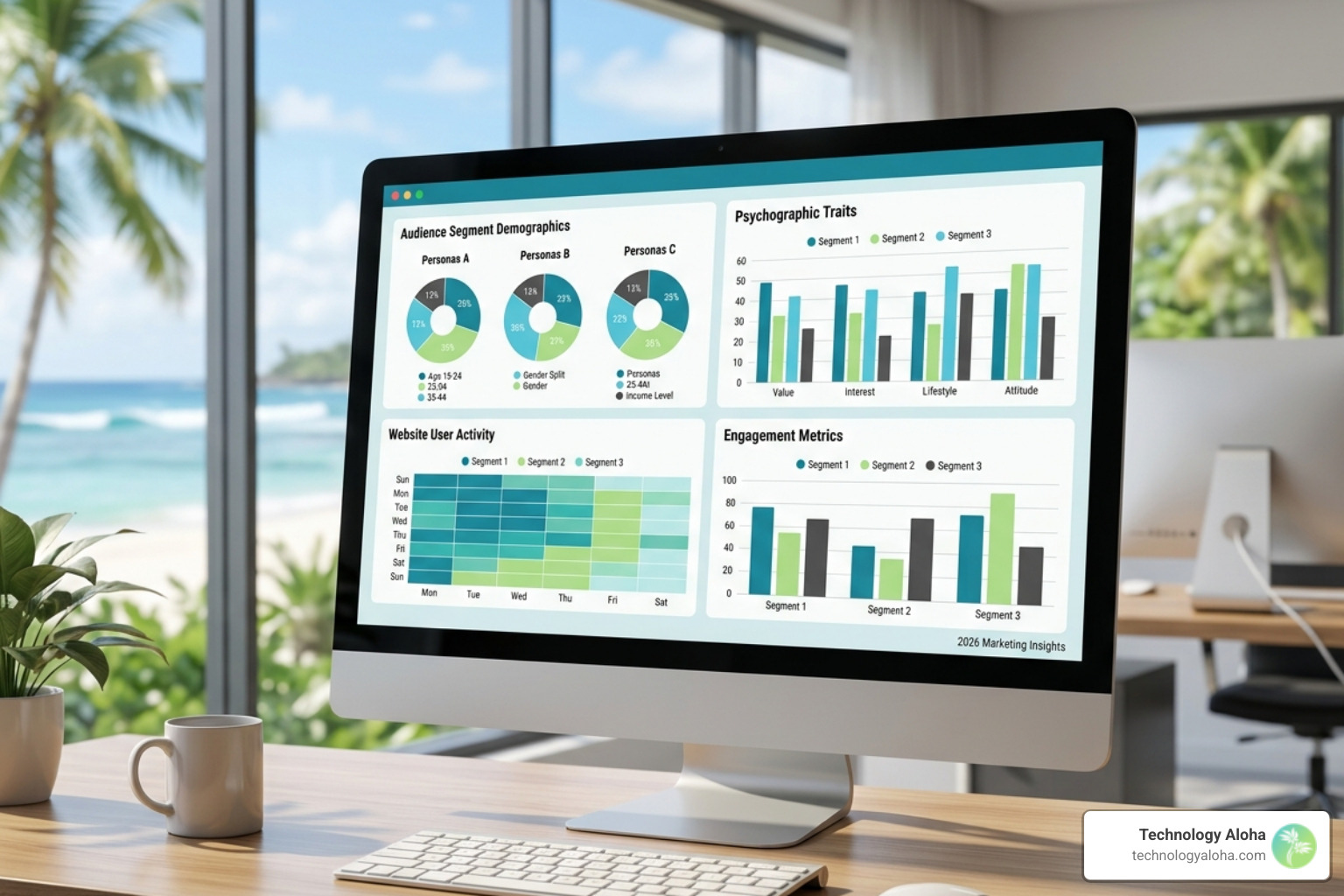
When choosing a template, it is vital to distinguish between B2B and B2C needs. B2B personas often require more focus on professional “validators” and buying committees, whereas B2C personas might lean heavily into lifestyle and emotional aspirations.
| Feature | B2B Persona | B2C Persona |
|---|---|---|
| Primary Focus | Job title, ROI, professional challenges | Lifestyle, interests, personal pain points |
| Buying Motivation | Efficiency, career growth, risk mitigation | Convenience, status, emotional fulfillment |
| Decision Length | Long (months to years) | Short (minutes to days) |
| Key Metrics | Case studies, 6-month ROI benchmarks | Social proof, ease of use, brand alignment |
For mid-market campaigns, the Free Marketing Buyer Persona Template from Template.net is an excellent starting point. It offers a structured layout covering demographics, professional information, and decision-making criteria.
While the Semrush Persona builder was a staple for many, note that some legacy tools have transitioned into broader content toolkits. Always ensure your chosen tool allows for easy sharing and updates, as a static PDF buried in a folder is a useless persona.
Visual Marketing Buyer Persona Templates for Creative Teams
Creative teams often struggle with text-heavy spreadsheets. They need “aesthetic clarity” to truly empathize with the customer. This is where Canva user persona templates shine. With over 15,579 templates available, Canva allows you to turn raw data into human-focused profiles.
Visual templates are particularly effective when presenting to stakeholders. A well-designed infographic or slide deck makes the persona feel like a real person—someone the team can actually “meet.” These templates often include space for brand archetypes, helping you define if your brand should speak like a “Sophisticated” mentor or a “Playful” friend. For inspiration on how to visualize these profiles, check out The Ultimate Target Persona Example Gallery.
Data-Driven Marketing Buyer Persona Templates for B2B Growth
For B2B organizations, the stakes are higher. You aren’t just selling to an individual; you are selling to a buying committee. The Make My Persona generator from HubSpot remains a gold standard. It simplifies the complex process of capturing technographic data and professional responsibilities.
In a B2B context, your marketing buyer persona templates must include ROI benchmarks and specific pain points like “budget constraints” or “internal alignment.” These details are what help sales teams close deals. To see this in action, review B2B Buyer Persona Examples That Actually Close Deals.
How to Build and Validate Your Persona from Scratch
Creating a persona isn’t a creative writing exercise; it’s a research project. If you base your personas on assumptions, you are essentially building your marketing strategy on sand.
- Gather Qualitative Data: Start with interviews. Speak to your actual customers. Ask them about their “why.” What was the specific moment they realized they needed a solution? What were they afraid of before they bought?
- Analyze CRM Data: Look at your existing data. What are the common job titles? What industries do they represent? How long is the average sales cycle?
- Psychographic Mapping: Move beyond “Age: 35-45.” What do they value? Are they “early adopters” who value innovation, or are they “traditionalists” who value stability?
- Validate with Sales: Your sales team is on the front lines. Show them your draft persona. If they say, “I’ve never met a customer who talks like this,” you need to go back to the drawing board.
For those looking to speed up this process, Buyer Persona Template Examples for Faster Strategy Building provide a roadmap for turning research into actionable profiles. There are over 300,000 professional benchmarks available through industry leaders to help you see how your personas stack up against global standards.
Common Pitfalls in Persona Development
Even with the best marketing buyer persona templates, it is easy to go off track. Here are the most common mistakes we see:
- Demographic Bias: Focusing too much on age and gender and not enough on behavior. A 60-year-old in Maui and a 25-year-old in Honolulu might have the exact same pain point regarding website speed.
- Static Profiles: Treating the persona as a “one-and-done” task. Markets shift. Consumer behavior in 2026 is not what it was in 2024.
- Over-Complication: Including 50 different fields that no one will ever read. Keep your personas to 10–12 essential fields. If it doesn’t change how you write an email or design a landing page, it doesn’t belong in the persona.
- Lack of Negative Personas: You need to know who you don’t want to sell to. Identifying “exclusionary personas” (like budget-hunters or those outside your service area) saves thousands in wasted ad spend.
- Confirmation Bias: Only looking for data that supports your existing ideas about your customers. Be willing to be wrong.
Frequently Asked Questions about Buyer Personas
What is the difference between a buyer persona and a user persona?
A buyer persona focuses on the individual who makes the purchase decision. They are concerned with ROI, price, and strategic alignment. A user persona focuses on the individual who actually uses the product or service daily. Their concerns are functional: ease of use, specific features, and daily efficiency. In B2B, these are often different people. In B2C, they are often the same.
How often should marketing personas be updated?
We recommend a quarterly review. At the very least, you should update them whenever you launch a new product, enter a new market, or notice a significant shift in your conversion data. Data decay is real; what motivated a customer six months ago might be irrelevant today due to market shifts or new 2026 consumer trends.
How many personas does a business actually need?
Most businesses find their “sweet spot” with 3–5 core personas. If you have too many, your messaging becomes diluted and your team becomes overwhelmed. Focus on your primary audience first, then develop 1–2 secondary personas for growth markets.
Conclusion
At Technology Aloha, we believe that great marketing starts with deep understanding. Our approach blends data-driven insights with cohesive branding and high-conversion design to ensure your business doesn’t just grow—it thrives. Based in Maui, we understand the importance of clear, authentic communication that resonates with your specific audience.
Don’t let your marketing miss the mark. Use these marketing buyer persona templates to ground your strategy in reality. When you’re ready to turn those personas into a powerhouse digital presence, we’re here to help. Start your growth strategy today and build a brand that truly connects.