Why Creating a Social Media Plan Matters
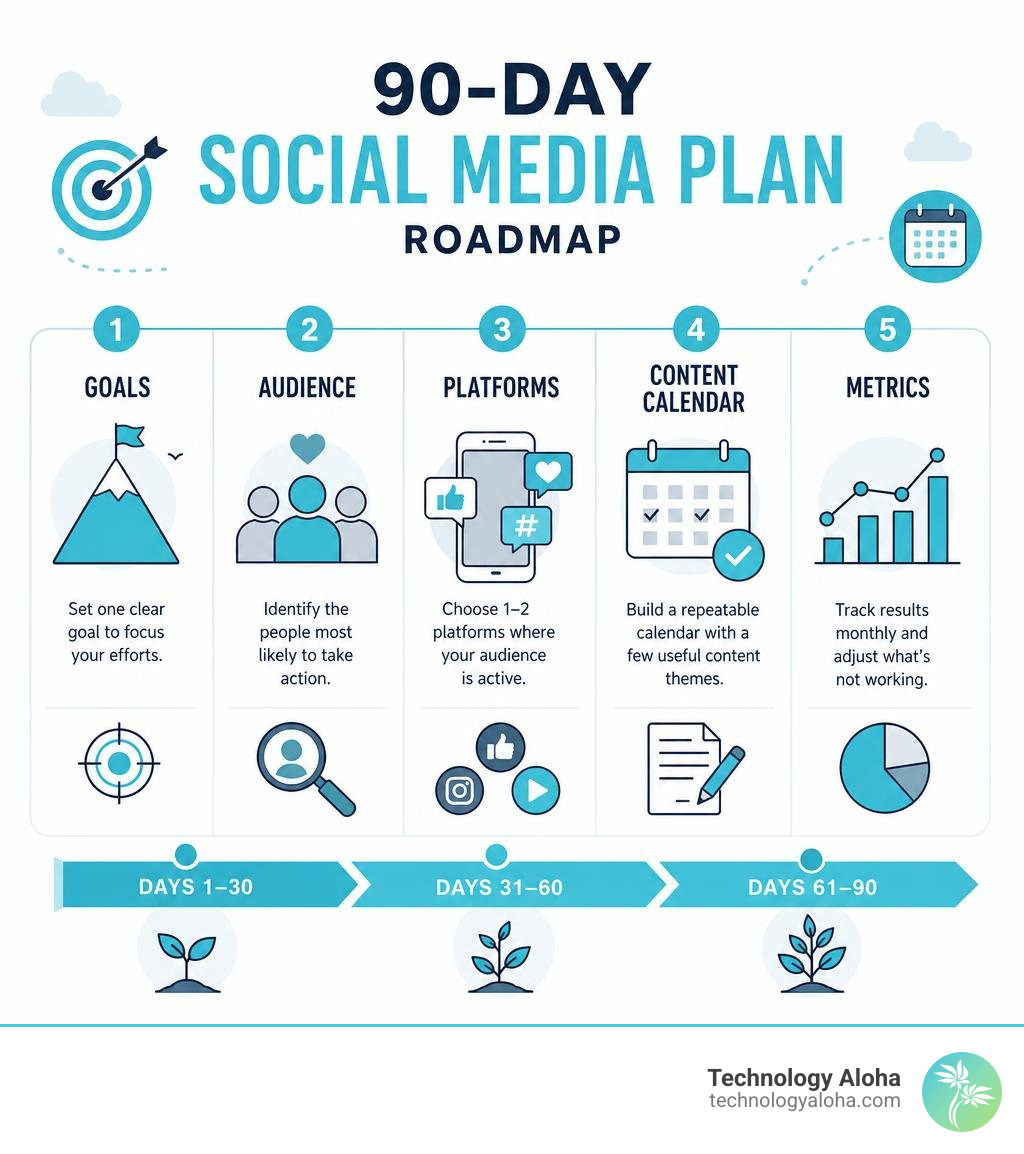
Creating a social media plan means deciding who you want to reach, which channels deserve your time, what you will publish, and how you will measure results before you start posting.

For a food bank or nonprofit, begin with this simple sequence:
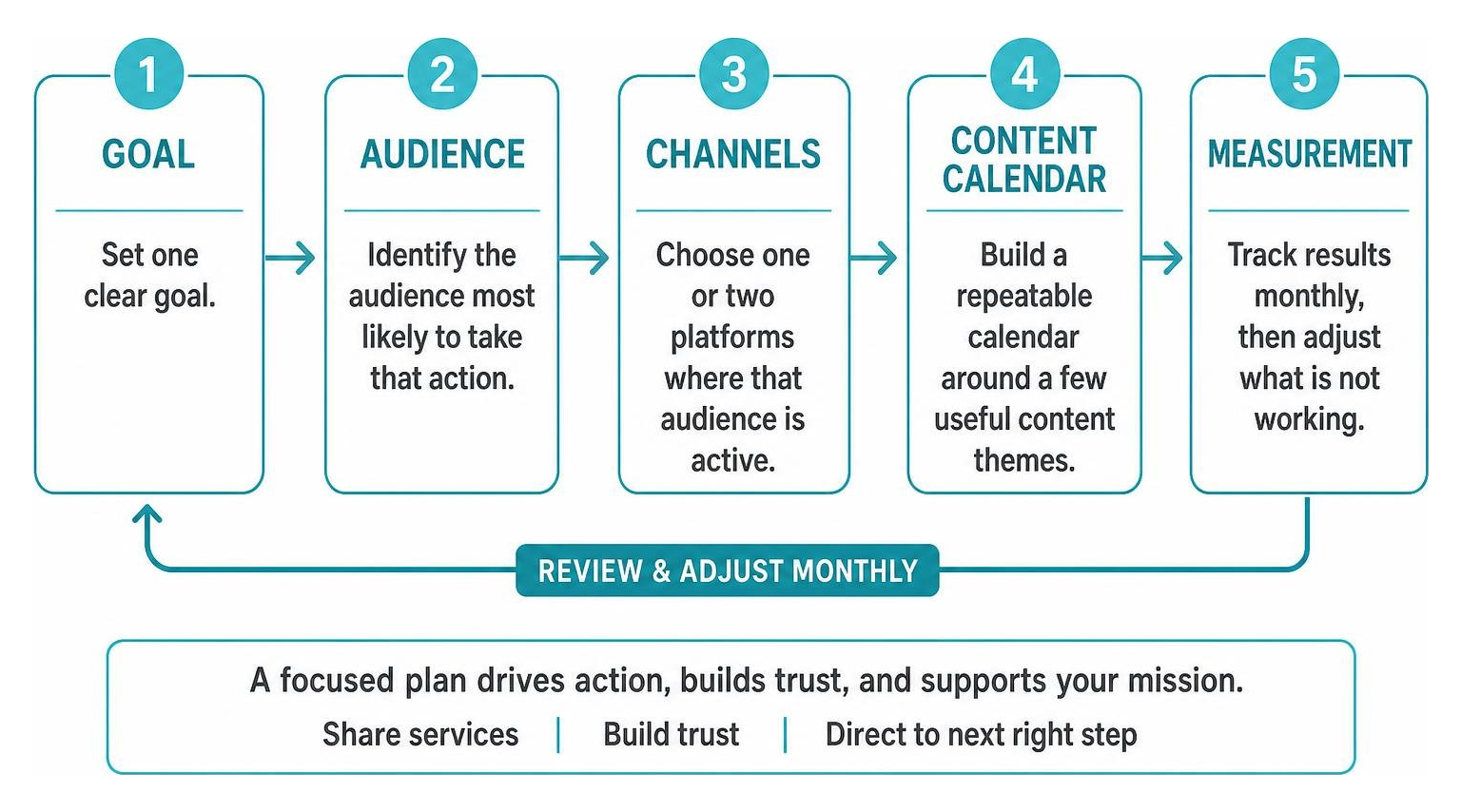
- Set one clear goal, such as increasing volunteer sign-ups, donor-page visits, or service awareness.
- Identify the audience most likely to take that action.
- Choose one or two platforms where that audience is active.
- Build a repeatable calendar around a few useful content themes.
- Track results monthly, then adjust what is not working.
A plan turns social media from a stream of last-minute posts into a practical system for sharing services, building trust, and directing people to the next right step. This matters when staff time is limited: many organizations manage multiple social networks while devoting only a few hours each week to communications. A focused plan helps prevent that effort from being spread too thin.
The goal is not to be everywhere. It is to show up consistently where your community, supporters, and partners can find useful information—and to know whether that work supports your mission.
Creating a social media plan resources you need:
- The Ultimate Guide to Marketing Plan
- Detailed Guide to Advertising Media Planning Basics
- The Complete Guide to Understanding the 4 Stages of Marketing Planning
The Core Foundations of Creating a Social Media Plan
A successful social media presence does not start with video editing apps or hashtag research; it starts with strategic alignment. Treating social channels as isolated broadcasting megaphones leads to wasted operational hours and disconnected messaging. Instead, your social efforts should plug directly into The Ultimate Guide to Marketing Plan, reinforcing your overarching mission, driving community discovery, and supporting long-term organizational stability.
To establish this foundation, focus on identifying audience segments through structured research. Rather than assuming what the community wants to read, look at real-world demographic data, program participant inquiries, and donor feedback. Understanding what your audience needs—whether it is real-time updates on local food pantry distribution schedules or transparent impact metrics on holiday fundraising drives—clarifies what content belongs on your public feeds.
Aligning Business Goals with Social Metrics
Every social media post should serve a purpose. Setting SMART (Specific, Measurable, Attainable, Relevant, and Time-bound) goals ensures your daily actions tie back to meaningful organizational milestones. For instance, rather than aiming to “get more followers,” a food security nonprofit might aim to “increase mobile clicks to our virtual donation page by 15% across Q3.”
Connecting high-level objectives to platform KPIs prevents teams from chasing vanity metrics:
- Awareness Stage: If your objective is building visibility within your service area, your primary KPIs are reach, post impressions, and brand mentions. This aligns directly with The Ultimate Guide to Creating a Brand Awareness Plan to introduce new supporters to your cause.
- Engagement Stage: If your goal is fostering trust and active dialogue, prioritize comments, shares, and saves over passive likes. Comments represent the highest-signal engagement metric across modern social algorithms.
- Conversion Stage: When driving action—such as volunteer shift registrations or monthly sustaining gifts—track custom link click-through rates (CTR), landing page conversion rates, and referral traffic in your web analytics platform.
When building your roadmap, refer to modern frameworks such as How to Create a Social Media Marketing Strategy in 2026 to structure your quarterly objectives effectively.
Auditing Existing Channels and Analyzing Competitors
Before rolling out new initiatives, conduct a thorough channel audit. Catalog every account associated with your organization, noting active platforms, dormant profiles, top-performing historical posts, and audience engagement rates over the past 90 days. This inventory reveals which channels generate real community interaction and which drain team bandwidth without delivering results.
Next, perform a competitive and peer analysis. Review 3–5 peer organizations operating within your niche or geographic region. Evaluate:
- Platform Focus: Which networks do peer organizations prioritize, and where is community engagement highest?
- Publishing Cadence: How frequently are they sharing updates, and which formats (video, image, carousels) dominate their feeds?
- Content Whitespace: What crucial topics, recipient stories, or logistical resources are your peers neglecting that your team can uniquely deliver?
Conducting regular social listening on community forums and local discussions will reveal common questions and service gaps, giving your team the exact material needed to provide immediate, actionable value.
Platform Selection and Content Architecture
Spreading a lean marketing or development team across half a dozen social networks is a fast track to burnout. Most community organizations and small businesses see far greater engagement by focusing on 1–2 primary channels where their target audience already spends time. For practical regional insights, explore these 6 Tips for Effective Social Media Marketing to understand localized community engagement.
| Platform | Core Demographics | Top-Performing Format | Benchmark Engagement Rate |
|---|---|---|---|
| Working professionals, corporate sponsors, B2B partners | Document carousels (PDF slides) | 21.77% median engagement | |
| Adults 18–34, visual storytellers, event supporters | Short-form video (Reels) | 2.25x reach multiplier | |
| Planners, resource curators, educational audiences | Native vertical video | 5.75% median engagement | |
| Adults 25–65+, local neighborhood groups, event attendees | High-resolution static images | 5.20% median engagement | |
| X (Twitter) | Journalists, civic leaders, real-time news seekers | Concise text-based updates | 3.56% median engagement |
Step-by-Step Workflow for Creating a Social Media Plan Content Pillar System
A sustainable content workflow relies on predefined content pillars—3 to 5 recurring thematic buckets that reflect your organizational expertise, community needs, and core mission.
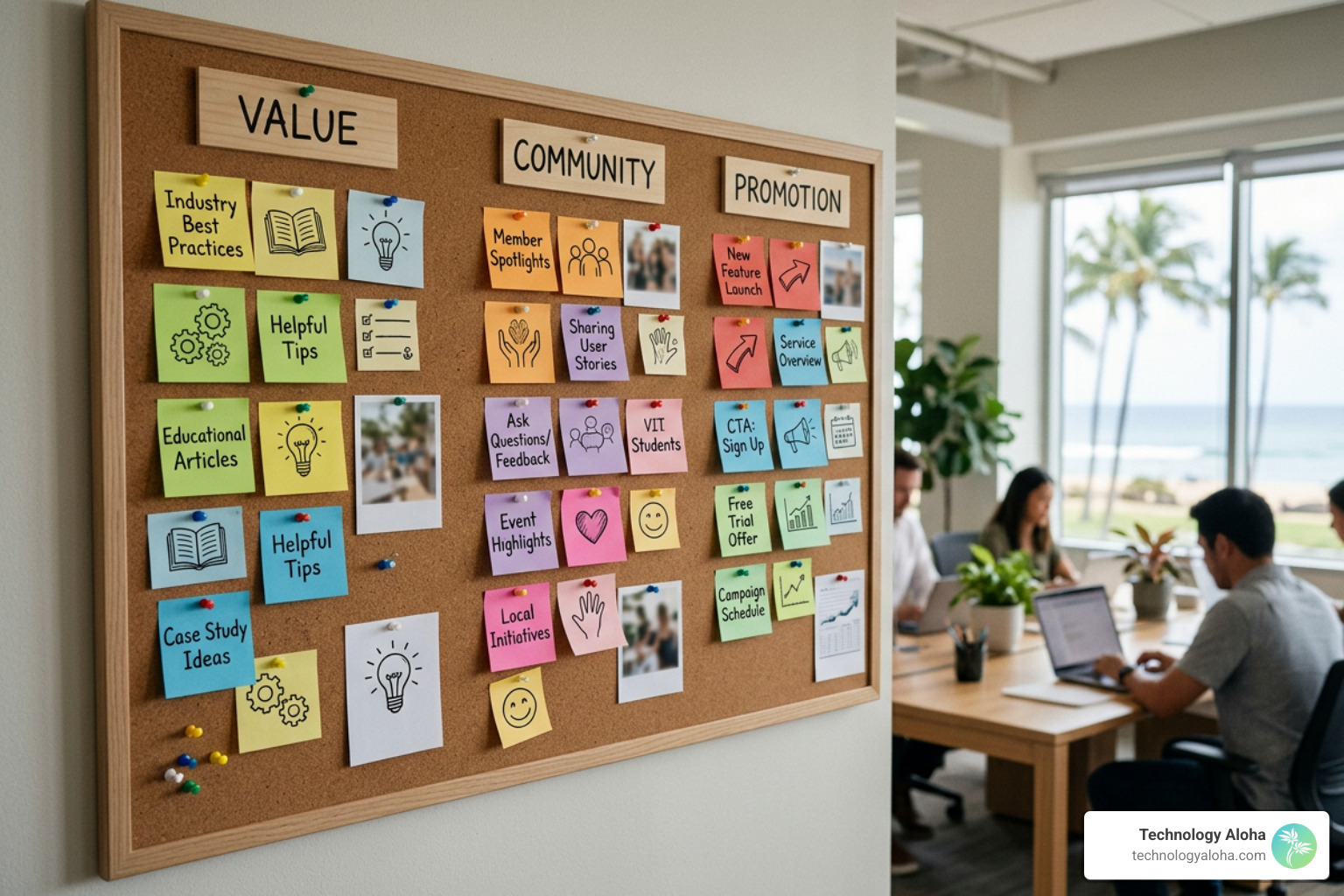
To build a balanced, value-first content engine, apply the 70-20-10 distribution framework:
- 70% Educational & Value-Driven Content: Practical, informative posts that address community challenges. For a food bank, this includes pantry operating hours, nutritional guides, mobile distribution maps, and food drive drop-off locations.
- 20% Community & Culture Storytelling: Behind-the-scenes glimpses into your daily operations, volunteer spotlights, recipient impact stories, and partner acknowledgments that build emotional connection.
- 10% Direct Promotional Asks: Action-oriented appeals, including fundraising campaign launches, corporate matching challenges, and urgent volunteer recruitment drives.
Structuring posts around these buckets prevents your feeds from turning into constant donation requests, preserving follower goodwill while maintaining clear conversion pathways.
Matching Formats to High-Performing Channels
Matching your core message to each platform’s preferred algorithmic format is critical for maximizing organic visibility:
- LinkedIn: Use multi-slide document carousels to break down annual impact reports, corporate partnership benefits, and operational milestones.
- Instagram & TikTok: Prioritize short-form video to deliver day-in-the-life walkthroughs of your distribution warehouse or quick volunteer orientations.
- Dynamic Visuals: Integrate high-retention visual assets—such as guidance found in The Ultimate Guide to Motion Graphics for Social Media—to explain complex data, such as supply chain logistics or community meal distribution metrics.
- Social SEO: Platforms increasingly function as keyword search engines. Write natural, descriptive post captions and incorporate on-screen text to ensure your content surfaces when local users search for community aid, volunteering, or donation options.
Execution, Scheduling, and Governance Workflows
Even the best creative ideas fail without an operational system to publish them consistently. Integrating your social workflows into The Secret Sauce to Creating Cohesive Marketing Ecosystems ensures that social content, website landing pages, and email newsletters work together smoothly.
Assign roles using a simple workflow:
- Content Creation: Drafting captions, designing visual cards, and producing video assets.
- Review & Approval: Verifying factual accuracy, logistical details, and brand consistency.
- Community Management: Monitoring notifications, answering user inquiries, and moderating comments.
Best Practices for Creating a Social Media Plan Calendar and Schedule
A centralized content calendar provides visibility into upcoming campaigns, preventing daily scrambles for post ideas.

Implement these best practices to maintain a sustainable publishing cadence:
- Batch Creation: Set aside 2–3 dedicated hours each week to draft captions, organize assets, and format posts in bulk rather than creating content ad hoc each day.
- Standardized Cadence: Consistency outperforms raw frequency. Publishing high-value posts 3 times per week on Instagram and twice per week on LinkedIn beats posting twice daily followed by weeks of silence.
- Automated Scheduling: Utilize scheduling tools to queue native assets in advance, freeing up daily operational time for direct community engagement.
Establishing Community Engagement and Crisis Response Protocols
Social media algorithms prioritize two-way communication. Brands that simply broadcast content and ignore responses experience steep declines in organic reach.
Establish an operational standard for community interaction:
- Response Windows: Aim to respond to public comments, direct messages, and service inquiries within 2–4 hours during regular business hours.
- Negative Feedback Protocols: When addressing public criticism or logistical complaints, respond calmly and publicly to demonstrate accountability, then transition sensitive conversations to direct messaging or email.
- Crisis Escalation Framework: Define a clear 24-hour escalation protocol for emergency communications, service interruptions, or public relations challenges, ensuring staff know who drafts, approves, and publishes emergency updates.
Performance Measurement and Iterative Optimization
Tracking performance data turns social media management into a predictable, measurable discipline. Reviewing your analytics monthly helps identify high-performing formats and messaging themes so you can refine your creative investments.
To ensure your social metrics support actual organizational outcomes, pair social data with web analytics tracking. When users click through to your website, Crafting Cohesive Digital Experiences That Actually Convert ensures they land on fast, mobile-optimized pages designed to facilitate frictionless donations or volunteer registrations.
Establish a regular review cadence:
- Weekly Operational Check: Spend 15 minutes reviewing active post engagement, responding to pending inquiries, and verifying scheduled posts.
- Monthly Channel Review: Audit top-performing posts by reach, click-through rate, and conversion actions to determine which content pillars delivered the strongest results.
- Quarterly Strategic Pivot: Evaluate overarching progress against your SMART goals. Double down on platforms and content formats that demonstrate measurable traction, and eliminate tactics that fail to generate community engagement.
Frequently Asked Questions About Social Media Planning
What is the difference between a social media strategy and a social media plan?
A social media strategy defines the “what and why”—your target audience, brand voice, positioning, and high-level business objectives. A social media plan provides the “how and when”—the operational roadmap, content calendar, asset formats, posting cadence, and daily workflows required to execute that strategy.
How many platforms should a small organization manage?
Most resource-constrained organizations and small teams should focus on just 1 to 2 primary platforms. Establishing a consistent, high-engagement presence on a few channels where your audience is active yields significantly better results than spreading limited staff hours across multiple neglected accounts.
How often should a social media plan be updated?
Review operational metrics and post-level performance monthly to make tactical adjustments. Overarching strategic plans, channel selections, and core SMART goals should be formally evaluated and updated every quarter (90 days) to allow enough time for campaigns to generate meaningful data.
Key Takeaways for Your Social Media Plan
Building a structured social media plan transforms online communications from an overwhelming chore into a scalable driver of community engagement and donor support. By establishing clear SMART goals, choosing platforms that fit your audience, producing value-first content pillars, and maintaining a disciplined calendar, your organization can build lasting authority.
To align broader organizational initiatives with a structured, high-performing roadmap, explore An Essential Guide to Marketing Plan for Small Business and build a sustainable foundation for long-term growth.