What Is Website Support — and Do You Actually Need It?
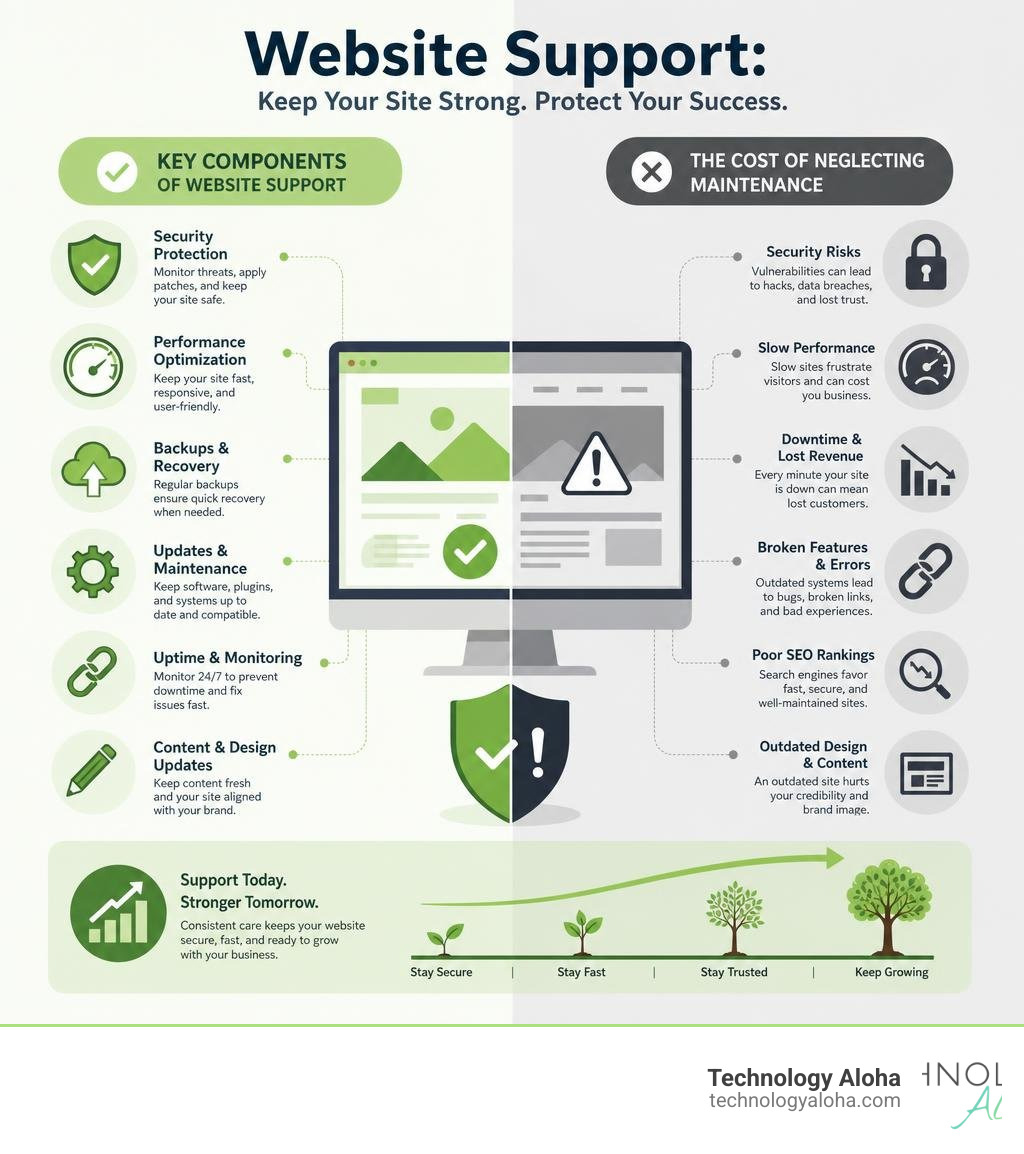
Website support is the ongoing technical care your site needs to stay secure, fast, and functional after it launches. It covers everything from software updates and security patches to performance monitoring, broken link fixes, and content changes.
Here’s a quick answer if that’s all you need:
| What It Is | What It Covers | Who Needs It |
|---|---|---|
| Ongoing site care | Security, speed, backups, updates | Every business with a website |
| Reactive support | Fixing errors, downtime, crashes | Sites with active traffic |
| Proactive maintenance | Audits, optimization, compliance | Growth-focused businesses |
Think of your website the way you’d think of a car. You don’t wait for the engine to fail before changing the oil. The same logic applies online — small, consistent maintenance prevents expensive emergencies.
And the stakes are real. Research shows 25% of users leave a website that takes more than three seconds to load. Every second of delay, every broken page, every security gap is a direct hit to your credibility and your revenue.
For small business owners competing in crowded markets, a poorly maintained website doesn’t just look bad — it actively works against you. Slow load times hurt your Google rankings. Outdated plugins create security holes. Inconsistent design erodes trust before a visitor even reads your headline.
This guide covers everything you need to know — from what website support actually includes, to how to choose the right model for your business and budget.
The Strategic Value of Ongoing Website Support
Many business owners view website launch day as the finish line. In reality, it is the starting line. Once your site is live in the wild, it is immediately exposed to security threats, software updates, and changing user behaviors. In 2026, a static website is a declining website. Ongoing website support is not a luxury; it is a critical strategy for business growth, user experience, and brand reputation.
Consider how your audience interacts with your brand. If a local resident in Kahului searches for your services, clicks your link, and encounters a slow-loading page or a database error, they will immediately click away. That is a lost lead and a damaged reputation. By investing in proactive support, you protect your revenue and ensure your digital presence reflects the high quality of your physical business.
When you understand the long-term benefits of keeping your digital storefront pristine, you realize that professional oversight is essential. To understand why this ongoing care is vital for your brand’s longevity, read our detailed breakdown on Professional Website Maintenance: Why You Need It.
Distinguishing Website Support from One-Time Web Development
It is common to confuse web development with ongoing website support. Web development is project-based. A developer builds your site, installs the initial design, configures the database, and hands over the keys. This is a one-time project with a clear beginning and end.
Website support, on the other hand, focuses on continuous optimization and lifecycle management. Think of web development as building a custom home, and website support as the ongoing plumbing, electrical work, and landscaping that keeps the home livable.
If you rely solely on one-time development, your site will quickly degrade. Plugins will fall out of date, security patches will be missed, and the content will become stale. A dedicated support partner acts as a continuous guardian for your digital assets. For a deeper look at this relationship, explore Why Your Website Needs a Forever Friend for Support.
The Core Pillars of Modern Website Support
A comprehensive website support strategy rests on three core pillars:
- Security Patches: Cyberthreats evolve daily. Regular security updates protect your customer data and prevent unauthorized access.
- Performance Optimization: Keeping your site fast and responsive to reduce bounce rates and keep users engaged.
- Content Updates: Ensuring your business hours, services, and announcements remain accurate and relevant.
Whether you use a custom platform or a managed content management system, support is required to keep things running smoothly. For those utilizing popular platforms, standard platform documentation offers helpful baselines, but professional, hands-on support is what truly keeps a business site competitive.
Common Types of Website Maintenance and Support Services
Not all support services are created equal. To find the right fit, you must understand the different types of maintenance and support available. These services generally fall into software updates, database management, and content optimization.

To help you visualize the difference between reactive and proactive approaches, we have broken down the two primary styles of website care:
| Feature | Reactive Support | Proactive Maintenance |
|---|---|---|
| Approach | Fixes issues after they break your site | Prevents issues before they affect users |
| Uptime Monitoring | None (you find out when a customer complains) | 24/7 automated checks with instant alerts |
| Security | Malware cleanup after a hack | Continuous scanning and patch management |
| SEO Impact | Risk of search engine blacklisting | Regular speed checks and structural audits |
| Cost Predictability | Unpredictable, expensive emergency fees | Consistent, predictable monthly retainer |
Technical Maintenance and Security Protocols
Technical maintenance is the foundation of a healthy website. This includes the installation of SSL certificates to encrypt user data, routine malware scanning to detect malicious code, and automated backups stored in secure, offsite locations.
If an update causes a conflict, having a clean, recent backup ensures your site can be restored in minutes rather than days. Large technology companies understand this necessity; for example, Official Apple Support and Microsoft Support dedicate massive resources to continuous security updates and data protection protocols. Your business website requires the same level of security vigilance, scaled to your specific needs.
Performance, Accessibility, and Compliance Standards
In 2026, website performance is directly tied to legal compliance and search engine rankings. Slow page speed drives up bounce rates, signaling to Google that your site does not provide a good user experience.
Furthermore, accessibility is no longer optional. Under the Americans with Disabilities Act (ADA), business websites must be accessible to users with visual, auditory, or motor impairments. Failing to meet these standards can lead to costly legal penalties and alienate potential customers.
Implementing accessibility features requires specialized technical knowledge. To ensure your digital presence is inclusive and compliant, consider partnering with a specialized service like our Managed Website Accessibility Service.
Choosing the Right Support Model for Your Business
When it comes to managing your website, you have three primary paths: building an in-house team, hiring freelancers, or partnering with a professional agency.

Each model has its distinct pros and cons:
- In-House Teams: This option gives you complete control and immediate access to staff. However, hiring full-time developers, designers, and security experts is incredibly expensive, making it impractical for most small to medium businesses.
- Freelancers: Freelancers are often budget-friendly for quick, one-off fixes. The risk is availability; a freelancer may not be available when your site goes down on a weekend, and they may lack the broad skillset required to handle both complex security issues and creative design updates.
- Agency Partnerships: Partnering with a professional agency gives you access to an entire team of specialists—including developers, copywriters, and SEO experts—for a fraction of the cost of a single full-time hire. This model provides peace of mind, consistent uptime, and strategic growth.
If you are operating in Hawaii, working with a local team that understands your market and your community is invaluable. Local organizations, from the Maui County, HI – Official Website to local schools like Kahului Elementary School, rely on robust digital infrastructure to serve our community. To find the right local experts to protect your digital presence, check out our guide on The Best Local Pros for Hawaii Website Maintenance.
Evaluating Support Plans and Pricing Models
As you research options, you will encounter several common pricing structures:
- Monthly Retainers: You pay a flat monthly fee for a set number of support hours, proactive updates, security monitoring, and backups. This is the most popular model because it offers predictable costs and proactive care.
- Hourly Blocks: You purchase a block of hours upfront and use them as needed. This works well for businesses with occasional update needs but lacks the preventative benefits of 24/7 monitoring.
- Service-Level Agreements (SLAs): These are formal agreements that guarantee specific response times (e.g., critical issues resolved within 4 hours). This is essential for e-commerce and high-traffic websites where downtime translates directly to lost revenue.
Frequently Asked Questions About Website Maintenance
What are the risks of neglecting regular website updates?
Neglecting updates is the single most common cause of website crashes and security breaches. When your CMS, plugins, or themes are left outdated, you leave open known security vulnerabilities that hackers can easily exploit.
Additionally, outdated code eventually becomes incompatible with modern web browsers and hosting servers, leading to broken layouts, non-functional contact forms, and severe search-engine penalties.
How does website speed affect search engine optimization (SEO)?
Google uses page load time as a direct ranking factor. If your website takes more than three seconds to load, search engines will deprioritize your content in favor of faster competitors. Slow speeds also increase your bounce rate, telling search engine algorithms that your site does not satisfy user intent, which further damages your organic rankings.
Why is 24/7 uptime monitoring essential for e-commerce sites?
For e-commerce sites, every minute of downtime is a direct loss of sales. If your site crashes during a peak shopping hour, customers will experience transaction failures, abandon their carts, and likely purchase from a competitor.
24/7 uptime monitoring ensures that if your site goes down, technical support is alerted instantly to resolve the issue before it impacts your bottom line or erodes customer trust.
Conclusion
Your website is the digital face of your business. It is where first impressions are made, leads are captured, and relationships are built. Leaving its health to chance is a risk you cannot afford.
At Technology Aloha, we provide data-driven insights that blend cohesive branding with high-conversion designs to help your business grow. Located in Kahului, HI, we understand the unique needs of Hawaii businesses and are dedicated to providing the reliable, professional care your digital presence deserves.
Ready to protect your investment and free up your time to focus on what you do best? Let us handle the technical heavy lifting. Explore our comprehensive Website Maintenance plans or visit our Support page to find the perfect fit for your business today.